We research every product we recommend. We may earn a commission from the links on this page.
Electronics › Portable Bluetooth Speakers

Bluetooth Speakers Drop Signal in Your Pocket — Here’s the Physics

We compare published specifications and marketplace data. We do not test these products.

Bluetooth Range Shrinks When the Speaker Faces Away
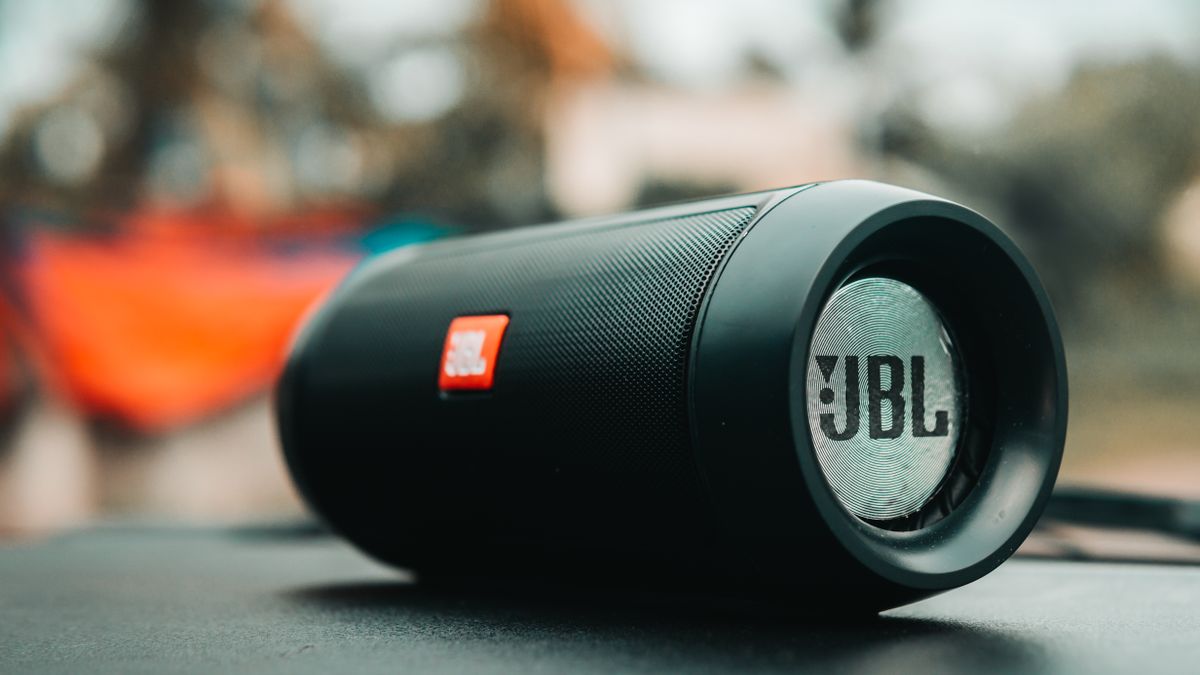
Photo by jovan curayag on Pexels

Your Bluetooth speaker works fine on a table. Clip it to your backpack or drop it in a jacket pocket and the music stutters at half the distance. The problem isn’t your phone, your walls, or a weak battery — it’s the few centimeters of metal and magnet between the antenna and the outside world. Every speaker enclosure creates dead zones where the signal can’t escape cleanly, and the shape, size, and sealing of that enclosure determine where those zones land.

Affiliate disclosure: This article contains affiliate links. We may earn a commission if you buy through them, at no extra cost to you.

Everything we looked at
4 picks

How we picked

We do not field-test Bluetooth speakers. Judgments rest on published antenna standards, enclosure geometry, and aggregated marketplace performance data.

Antenna clearance, not size

Distance between the Bluetooth module and internal magnets or drivers — enclosures that crowd the antenna create range gaps regardless of rated class.

IP rating implementation, not number

Gasket material and vent placement — sealed enclosures block RF unless the seal design accounts for signal paths, not just water entry.

Clip and mount material

Metal hardware placement relative to the antenna side — conductive clips touching or shadowing the radio create orientation-dependent dead zones.

Form factor and use position

Whether the speaker moves with the user or stays stationary — wearable and desktop designs solve the shadow problem in opposite ways.
What’s Actually Blocking the Signal

Bluetooth operates at 2.4 GHz. At that frequency, metal reflects radio energy and dense materials absorb it. That matters because every Bluetooth speaker is built around three chunks of metal: the driver magnet, the battery cell, and the circuit board.

The driver magnet is typically a neodymium-iron-boron alloy — ferromagnetic, dense, and positioned right at the center of the enclosure. It’s there because it has to be; that’s where the voice coil converts electrical signal into sound. But it also blocks radio waves in whatever direction it faces.

The battery is wrapped in a metal or metalized-polymer pouch. It sits wherever the remaining space allows, which in a small speaker means pressed against the antenna’s side or back. And the PCB itself, with its ground planes and copper traces, adds another layer of shielding the antenna was never designed to work through.

In free space, the antenna would radiate equally in every direction. Inside the enclosure, these obstructions carve out shadow zones — directions where signal strength drops by half or more. The result is a speaker that connects beautifully from one angle and drops out from another, and the user has no way to know which angle is which without trial and error.

Why Summer Makes It Worse

On a desk, shadow zones don’t matter much. The speaker sits in one orientation, your phone sits nearby, and the signal path is short and unobstructed. Move that same speaker to a pocket, a bag, or a belt clip and three things change at once.

First, your body enters the signal path. A hand cupped around a small speaker, a hip pocket pressing fabric and flesh against the case, a backpack strap sandwiching the speaker between nylon and your shoulder blade — each adds attenuation the antenna wasn’t fighting indoors.

Second, orientation becomes unpredictable. Walking rotates the speaker constantly, swinging the shadow zones through the signal path to your phone. A connection that holds while you’re standing still stutters the moment you move.

Third, distance increases. The patio is bigger than the desk. The pool is farther than the nightstand. Bluetooth signal strength drops with the square of distance in open air, and when you add the near-field shadows from the enclosure, range collapses faster than the rated spec suggests.

This is why the same speaker that worked all winter in a bedroom suddenly seems broken at a barbecue. The speaker didn’t change. The geometry did.

Form Factor Decides Where the Shadows Fall

A speaker the size of a thumb has different constraints than one the size of a water bottle. The antenna, the driver, and the battery all compete for the same few cubic centimeters, and the engineering trade-offs land differently depending on what the speaker is shaped to do.

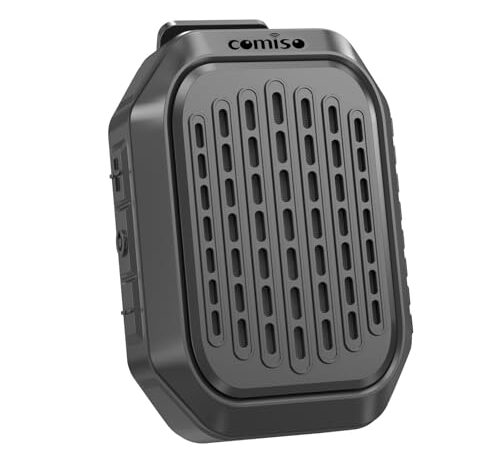
A wearable clip-on speaker forces everything into a package small enough to hang from a collar or strap. The antenna sits millimeters from the battery and the driver magnet, with no room for separation. Clip it to a metal carabiner or a backpack buckle and you’ve added another reflector right against the case — the speaker’s own mounting hardware becomes part of the shadow.

A handheld portable has more internal volume, which means the antenna can sit farther from the driver magnet. But higher wattage demands a larger driver and a bigger battery, and both are metallic. More power means more sound, but it also means more mass between the antenna and the world.

A desktop unit trades portability for space. The antenna doesn’t need to fight a pocket or a clip, and the enclosure can position obstructions with more breathing room. But add secondary electronics — a charger circuit, a display driver — and the internal landscape gets crowded again in a different way.

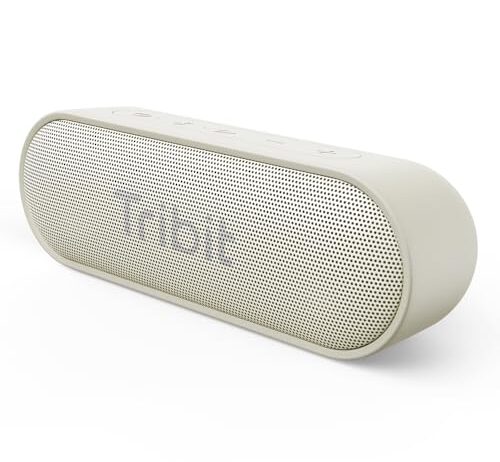
The Tribit XSound Go runs 16 watts through a driver that’s large enough to fill a backyard. That driver magnet is substantial, but the handheld form factor gives the enclosure enough depth to position the antenna away from the worst of the magnetic shadow. Bluetooth 5.3 helps too — the newer protocol manages connection handoffs more efficiently, which means the signal recovers faster when you rotate the speaker through a dead zone rather than dropping outright.

IPX7 means the enclosure is sealed against submersion to a meter for 30 minutes. That sealing forces tighter component stacking than an unsealed design, but the trade-off buys you a speaker that handles rain, splashes, and pool edges without worry. The 24-hour battery life means the lithium cell inside is large — and large batteries cast large RF shadows — but in a body this size, there’s room to work around it. At $33.99, the price sits in the middle of this set, and the combination of power, range protocol, and water resistance makes it the one to carry when you’re moving between rooms, tables, or towels and need the connection to follow.

Sealed Enclosures: Waterproofing vs. Signal

IP67 and IPX7 both promise protection from water. They also both require gaskets, adhesive seals, and tight tolerances that leave less air inside the case. Less air means components sit closer together, and closer components mean the antenna’s shadow zones overlap more.

That’s a real engineering tension. The same seal that keeps pool water out also keeps radio energy in — or at least redirects it. A speaker with generous internal volume can absorb the penalty. A tiny sealed speaker stacks everything into a space where the battery pouch, the driver magnet, and the PCB ground plane all sit within a centimeter of the antenna.

Water itself is the bigger problem if the speaker actually goes underwater. At 2.4 GHz, water attenuates signal at roughly 200 dB per meter. Even a thin film of water across the speaker grille — a wet towel draped over it, a speaker face-down in a puddle — can cut range dramatically. The waterproof rating means the speaker survives the water. It does not mean the Bluetooth signal does.

If you’re buying a speaker for the shower, expect the connection to hold only if your phone is in the same room, ideally within a few feet and with a clear line of sight to whichever side of the speaker faces away from the showerhead.

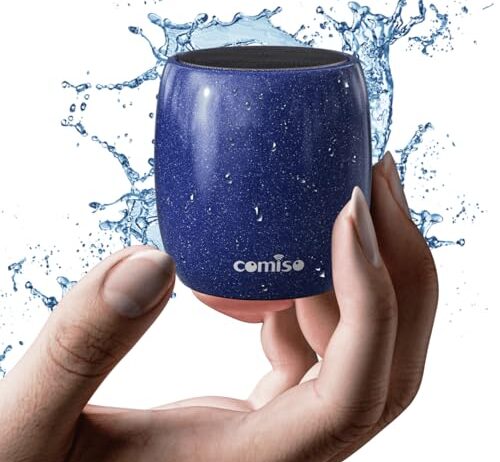
The Comiso portable speaker earns its IP67 rating with full dust and water sealing — the “6” means dust-tight, the “7” means submersion-safe to a meter. That’s a step beyond splash resistance, and it means the enclosure is genuinely closed. Gaskets and tight assembly keep liquid out, but they also keep the antenna hemmed in by the battery, driver, and PCB with no ventilation gaps to act as RF windows.

In practice, the compact body and sealed construction mean range will be shorter than an unsealed speaker of the same power. But the lanyard mount changes how you use it — hanging from a shower hook or a tent pole rather than buried in a pocket, which keeps the antenna clear of body-contact shadows. The speaker supports stereo pairing, which means two units can cover a larger space, though pairing two speakers means each is managing its own connection to your phone and the effective range for the pair drops to whatever the weaker link allows. At $13.57, the price is low enough that buying two for stereo still costs less than most single mid-range speakers. Ten hours of battery life covers a full day at the beach without a charge.

When the Clip Is the Problem

Wearable speakers solve the distance problem by eliminating it — the speaker rides on your body, a foot or less from your phone. But they introduce a different one. The clip itself, the strap hardware, the zipper pull it’s hanging from — all of it is metal, and all of it sits against the speaker’s case right where the antenna needs to radiate.

A speaker clipped to a cotton t-shirt collar behaves differently than the same speaker clipped to a nylon backpack strap with a metal adjuster. The fabric barely registers at 2.4 GHz. The metal buckle creates a new reflector that the antenna designer never accounted for.

Body contact matters too. Skin and muscle tissue attenuate 2.4 GHz less than metal does, but they still absorb some energy. A speaker pressed flat against your chest loses signal strength in one hemisphere — the half facing your body — and radiates only from the outward face. If your phone is in a back pocket while the speaker is clipped to your front, the signal has to travel through you.

None of this makes wearable speakers bad. It makes them positional. Point the outward face of the speaker toward your phone, avoid clipping to metal hardware when you can, and keep the phone on the same side of your body as the speaker.

The Charging Question

Can you use the speaker while it charges? Usually, yes. Should you expect the same range? Not necessarily.

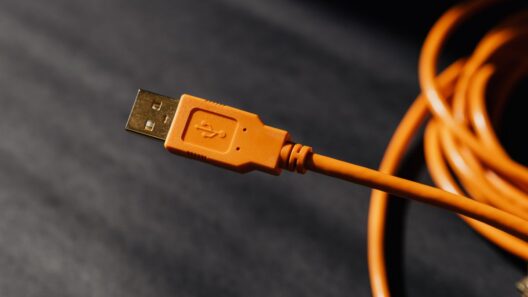
When a speaker charges via USB-C, the charging circuit activates — a voltage regulator, a current controller, and the cable itself, which acts as a small antenna of its own. The charging circuit generates electromagnetic noise in the 2.4 GHz neighborhood, and the cable provides a conduction path that can couple interference into the Bluetooth antenna’s near field.

Desktop speakers designed for continuous power handle this better because the charging path is engineered as a permanent feature, not an afterthought. A portable speaker’s charging circuit is optimized to be small and cheap, not quiet. The result is often a subtle increase in connection drops while the cable is plugged in, especially if the cable runs near the antenna — which, in a small speaker, it almost has to.

If your speaker drops connection while charging, try a shorter cable. A six-inch cable radiates less interference than a six-foot one. And if you can, orient the speaker so the USB port faces away from your phone — that puts the cable and its noise on the far side of the enclosure from the signal path.

Stereo Pairing and the Range Trade-Off

TWS — True Wireless Stereo — lets you pair two speakers for left and right channels. The appeal is obvious: wider soundstage, more volume, better coverage at a party. The cost is less obvious.

In TWS mode, your phone connects to one speaker, and that speaker relays the second channel to the other. The relay link uses the same 2.4 GHz radio, the same antenna, and the same shadow zones as the primary connection. The second speaker isn’t connecting to your phone at all — it’s connecting to the first speaker, which means the effective range of the pair is limited by the weaker of two links: phone-to-primary and primary-to-secondary.

Separate the two speakers by more than a few meters and the relay link struggles before the primary connection does. The failure mode is distinctive — one channel drops while the other keeps playing, or the stereo image collapses to mono as the relay falls back.

For a backyard setup, keep both speakers within a couple of meters of each other and your phone within clear line of sight to the primary. For a larger space, a single speaker with more wattage will give you more reliable coverage than two small speakers at the edges of their range.

FAQ

Does Bluetooth range get worse when the speaker is in my pocket?

Yes. Your body absorbs and reflects 2.4 GHz energy, and the pocket presses fabric and flesh against the enclosure, adding attenuation the antenna wasn’t designed to overcome. Range can drop by half or more compared to open-air placement on a table.

Will a waterproof speaker lose range compared to a non-waterproof one?

The sealing itself has a modest effect — tighter component stacking means more internal shadow zones. But water on the speaker is the real killer. Even a wet towel draped over the grille can attenuate the signal significantly. Waterproof means the speaker survives water, not that the Bluetooth does.

Does a metal clip or carabiner interfere with Bluetooth signal?

It can. Metal near the antenna acts as a reflector, creating a new shadow zone the speaker wasn’t designed around. Clip to fabric when possible, and keep metal hardware away from the side of the speaker facing your phone.

Can I use my speaker while it’s charging without losing connection?

You can use it, but the charging circuit and cable generate electromagnetic noise near the 2.4 GHz band. Try a short cable and orient the USB port away from your phone to minimize interference.

Does pairing two speakers in stereo cut the wireless range?

Not exactly in half, but it does add a second, weaker link. Your phone connects to one speaker, and that speaker relays to the other. Range for the pair is limited by whichever link is weaker — usually the speaker-to-speaker relay.

Why does my speaker work in one direction but drop out in another?

Internal components — driver magnet, battery, circuit board — block the signal in certain directions. These shadow zones are fixed relative to the speaker body. Rotating the speaker so its strongest signal face points toward your phone can restore the connection.

Does speaker size affect Bluetooth range?

Larger speakers have more internal volume to separate the antenna from metallic obstructions, which generally means fewer shadow zones. But larger speakers also tend to have bigger drivers and batteries, which are bigger obstructions. The net effect depends on internal layout more than overall size.