
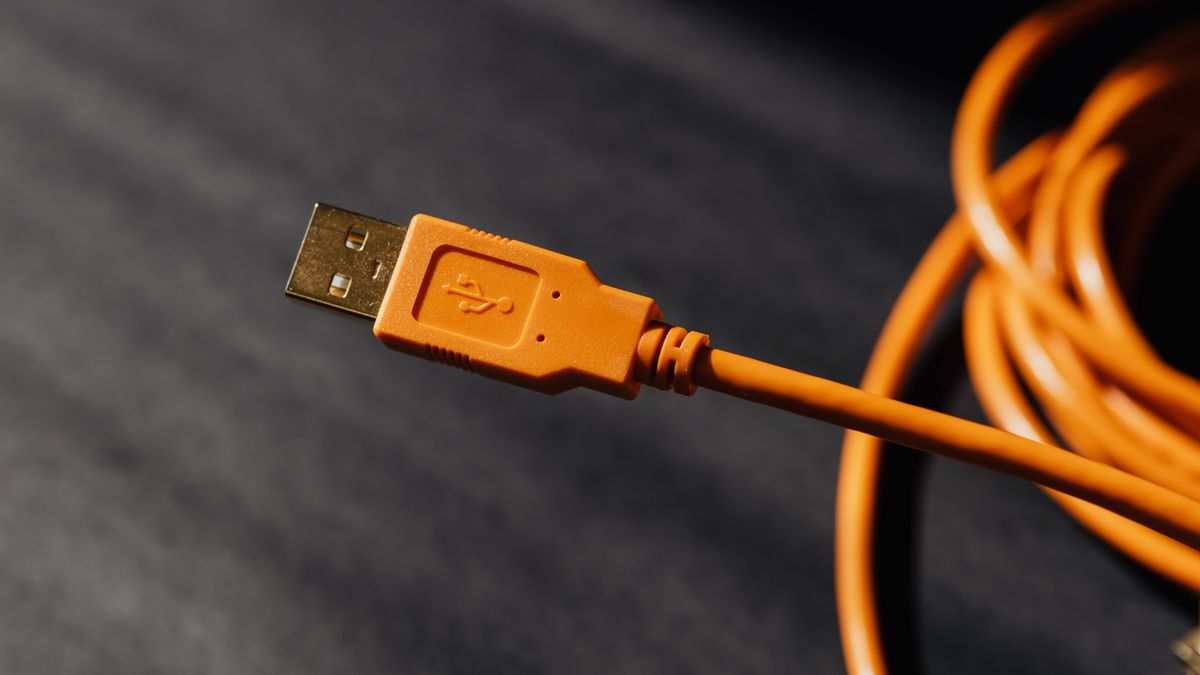
A 6-foot USB-C cable carrying 5 amps loses measurable voltage before it reaches your device. The power doesn’t vanish — it turns into heat inside the wire. How much heat depends on two things you can’t see from the outside: the thickness of the copper conductors and how far the current has to travel. Here’s how that physics plays out across cables rated from 60W to 240W, and what it means for the charger sitting on your desk right now.
Affiliate disclosure: This article contains affiliate links. We may earn a commission if you buy through them, at no extra cost to you.
Everything we compared
Negligible loss
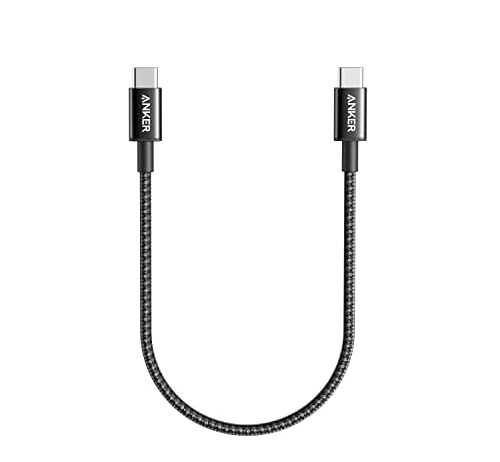
Anker USB C to USB C Cable, Type-C 60W Fast Charging Cable (1FT, 1Pack) for iPhone 17 Series, iPad mini 6 and More (Black)One foot at 60W. At this length, wire gauge barely matters — resistance is too low to waste meaningful power. Ideal for desk setups where the charger sits inches from the device.
Thick wire, long reach
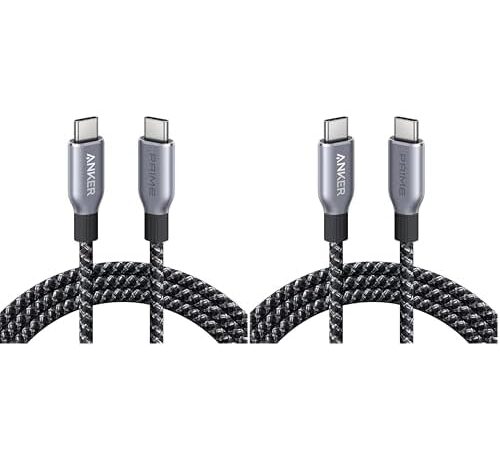
Anker Prime USB C to USB C Cable, 240W Fast Charging Cord, Upcycled-Braided Nylon with 100-Year Bend Durability for iPhone 17 Series, MacBook, Galaxy S24(6 FT) (Pack of 2)Six feet at 240W with upcycled-braided nylon. The high wattage rating implies thick conductors that keep voltage drop contained even at 5 amps over the full length. Two-pack at $34.99 per cable.
Length without a power spec
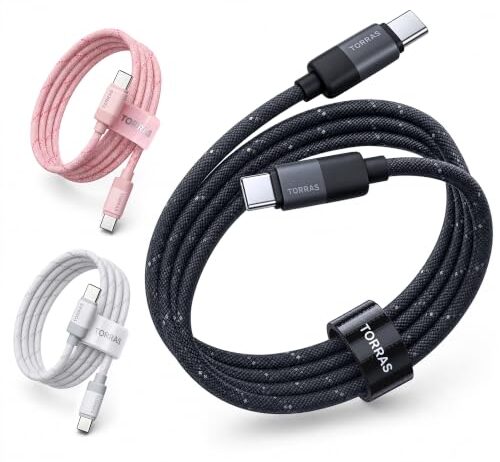
TORRAS Gradient USB C to USB C Cable 2 Pack 6.6FT, Braided Fast Charging Cord, Durable Type C Cable for iPhone 15-17 Series, Samsung Galaxy S26 Series, iPad & More,Black6.6 feet of braided cable at $6.50 each in a two-pack. No wattage rating means no guaranteed wire gauge — fine for phones at lower current, an unknown at 5 amps.
Built-in power meter
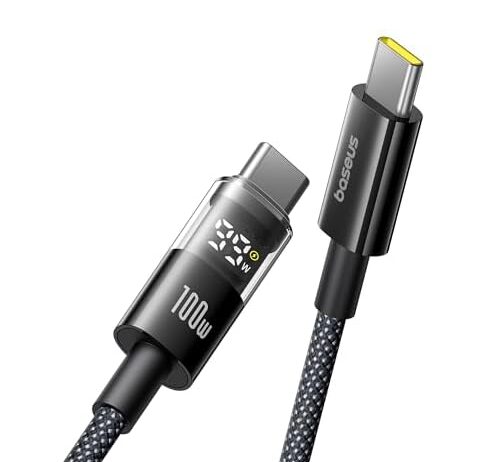
Baseus USB C Cable, 100W 5A Fast Charging USB C Charger Cable with LED Display, Zinc Alloy Nylon Braided USB C to USB C Cable for iPhone 16/Pro/Plus/Pro Max, MacBook, iPad Pro, Galaxy S24/S2100W and 5A with an LED display showing real-time voltage, current, and wattage. The display lets you verify delivered power instead of guessing whether the cable is bottlenecking.
How we picked
We do not measure cable resistance or voltage drop. Judgments rest on published power ratings, wire-gauge specifications, and marketplace performance patterns.
Conductor thickness determines how much voltage drops over distance. A low-gauge number means thicker wire and lower resistance at any given length.
Short cables tolerate thin wire. Long cables carrying high current need thick conductors to prevent measurable voltage loss and heat buildup.
A stated wattage implies minimum wire thickness. Cables without power specs give no guarantee about conductor size or safe current capacity.
Marketplace data reveals which cables overheat, which chargers negotiate poorly, and which combinations deliver rated power without throttling or damage.