We research every product we recommend. We may earn a commission from the links on this page.

UV Protection Fabric Degrades Faster Than You Think

We compare published specifications and marketplace data. We do not test these products.

When Sun Protection Fabric Stops Blocking UV
Photo by Tara Winstead on Pexels

A UPF 50+ label means the fabric blocks at least 98% of ultraviolet radiation the day you buy it. Six months of weekly washing and daily sun later, that number has moved — and nothing on the garment tells you where it went. UV-protective fabrics lose their blocking ability through two separate paths: chemical absorbers deplete as they do their job, and mechanical wear opens gaps in the weave that let photons through directly. The timeline depends on whether you’re wearing the fabric or stretching it over a patio.

Affiliate disclosure: This article contains affiliate links. We may earn a commission if you buy through them, at no extra cost to you.

Everything we recommend
4 picks

How we picked

We did not wear these shirts or install these shade sails. Picks are based on published specifications, material properties, and owner reports.

UV blocking method, not just rating

Whether protection comes from inherent fiber structure or topical chemical treatment determines how fast it fades.

Degradation path, not durability claims

Garments face laundering and abrasion. Shade sails face continuous photon bombardment and tensile stress. Different failure modes entirely.

Material disclosure, not marketing

Products that name their polymer let you predict degradation. Those that list only functional properties leave you guessing.

Coverage cost, not sticker price

A shade sail at $0.08 per square foot and a shirt at $3.40 per square foot protect UV through completely different economics.


Two Clocks Running on Every UV Fabric

Every UV-protective fabric has two systems doing the blocking. The first is physical: the weave itself. Tighter weaves leave smaller gaps between fibers, and smaller gaps mean fewer UV photons pass straight through. This protection is structural — it doesn’t deplete, but it does degrade when fibers stretch apart or thin from abrasion.

The second is chemical. UV absorbers — molecules embedded in or coated onto the fiber — intercept photons and convert their energy to heat. Each interception can destroy one absorber molecule. That’s the mechanism working correctly, not a defect. But it means the chemical layer is consumable. It has a photon budget, and every hour of sun exposure spends some of it.

Polyester and nylon have an advantage here because their molecular structure inherently absorbs some UV even without added treatment. Cotton does not. So a polyester sun shirt that loses its chemical treatment still retains partial protection from the fiber itself. A treated cotton shirt that loses its treatment loses nearly everything.

This is why fabric composition matters more than the UPF number on the tag. Two shirts both rated UPF 50+ can have completely different degradation curves depending on whether the blocking comes mostly from the fiber or mostly from the coating.

Washing Is Rougher Than Sunlight

Counterintuitive, but for garments, laundering degrades UV protection faster than wearing the shirt in the sun does. Here’s why.

Topical UV treatments sit on the fiber surface. Detergent is designed to strip surface coatings — that’s its job. Agitation in the drum physically abrades fibers, opening the weave. Hot water accelerates both processes. A sun shirt worn outdoors every day but never washed would retain its UPF rating longer than one washed weekly and hung in a closet.

Built-in UV absorbers — ones spun into the fiber during manufacturing rather than applied after — resist laundering much better. But most garment labels don’t distinguish between the two methods. “UPF 50+” tells you the result on new fabric, not how it was achieved or how durable it is.

The practical consequence: if you’re buying a sun shirt for daily outdoor use with frequent washing, the fabric composition matters more than the printed rating. A shirt that names its fiber and specifies moisture-wicking or quick-dry properties is at least telling you something about how the fabric is constructed. One that lists only “UPF 50+” as a feature is giving you a number with no context for how long it holds.

Shade Sails Play a Different Game

A shade sail doesn’t get washed. It doesn’t get stretched over joints. It doesn’t encounter body oils or deodorant residue. Its enemy is simpler: continuous UV bombardment, rain, and wind tension.

HDPE — high-density polyethylene — is the standard material for knitted shade cloth. The polymer itself absorbs some UV, but the real work is done by UV stabilizers mixed into the plastic during manufacturing. These stabilizers intercept photons the same way garment treatments do, converting UV energy to heat. And they deplete the same way: molecule by molecule, season by season.

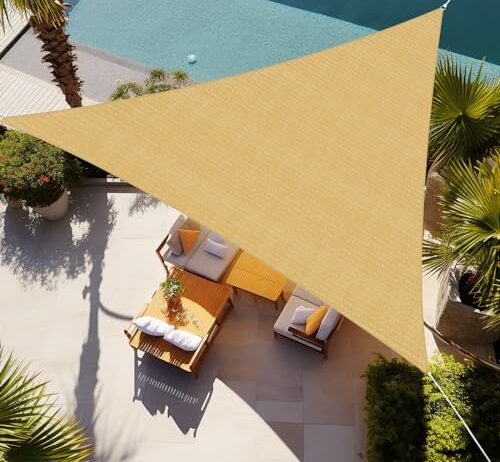
The difference is scale. A 28-by-28-foot triangular shade sail presents roughly 340 square feet of fabric to the sky. Compare that to the 4 to 6 square feet a shirt covers on your torso. The total UV photon load on the sail is staggering — but because the stabilizers are distributed throughout the polymer rather than sitting on a surface, they don’t wash away. They just slowly exhaust.

Wind matters more than most buyers expect. A sail under constant tension has its fibers pulled slightly apart at every gust. Over months, this mechanical fatigue compounds with UV embrittlement. The polymer chains, already shortened by photodegradation, snap more easily under stress. You see this as edge fraying long before the center of the sail shows wear — the edges carry the most tension.

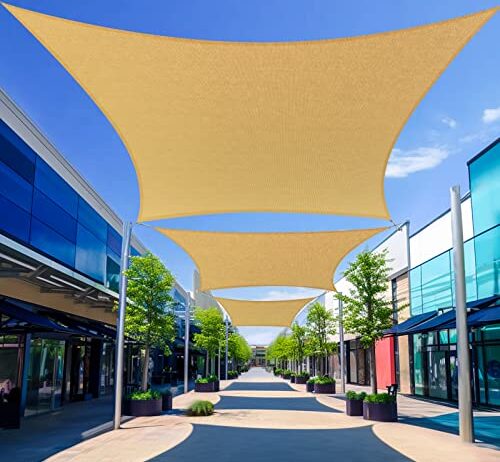
The Shade&Beyond 4-by-6 sail does something the garments in this set cannot: it names its material. HDPE tells you exactly what polymer is doing the UV blocking and how the stabilizers are integrated. That matters because it lets you predict the degradation path. HDPE stabilizers deplete from the inside out over years of continuous exposure, not from the surface in after a dozen wash cycles.

The size works in its favor for longevity. A 24-square-foot sail carries far less wind load than a sail ten times its area. Less tension means less mechanical fatigue at the grommets and edges — which is where shade sails actually fail first. The fabric center often outlasts the hardware by a full season or more.

Why You Can’t Tell When Protection Fades

This is the core frustration with UV-protective fabrics: there’s no visible indicator of remaining protection. The fabric doesn’t change colour. It doesn’t feel different. A shirt at UPF 15 — now letting through three times the UV it once blocked — looks and feels identical to one at UPF 50+.

Some buyers notice reduced water beading or a change in how the fabric drapes and assume UV protection has dropped. Sometimes they’re right — surface treatment loss can affect both water resistance and UV absorption. But the correlation isn’t reliable. A fabric can lose its water-repellent finish entirely while retaining most of its UV protection if the blocking comes from the weave structure or built-in absorbers rather than surface coating.

Portable UV meters exist. They cost roughly what two sun shirts cost and they give you a direct transmission reading. Hold the meter behind the fabric in sunlight and you get a percentage. It’s the only way to actually know, short of sending the garment to a testing lab. For a shade sail you’ve had up for three summers, it might be worth the thirty-dollar investment before you spend two hundred replacing something that still works.

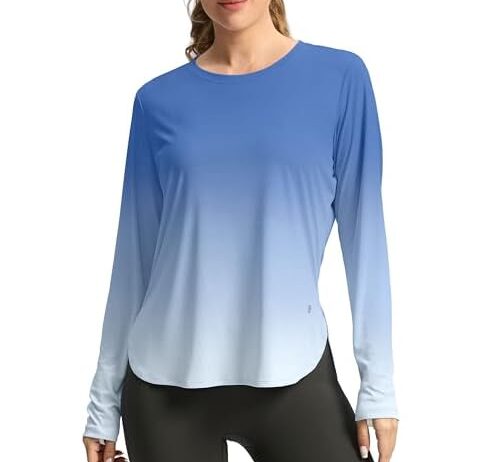
The MAGCOMSEN shirt takes a different approach to the UV degradation problem than trying to build a garment that lasts forever: it costs little enough that replacing it every season isn’t painful. At its price, you could buy a new one each spring and still spend less over three years than a single premium sun shirt that might or might not retain its rating.

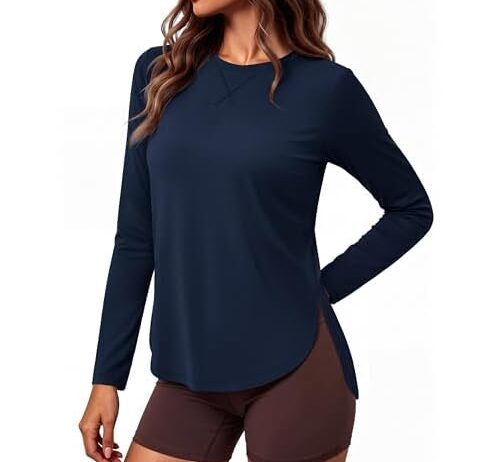
The moisture-wicking construction suggests a synthetic blend, which means at least some of the UV protection comes from inherent fiber properties rather than topical treatment alone. That’s good for durability per wash cycle. One thing to know: owners report the fit runs tight and short in the torso and sleeves. If you’re over 5’8″, the fabric is being stretched more across your frame — and stretched fabric lets more UV through those widened fiber gaps.

Garment vs. Structure: Different Problems Entirely

Putting sun shirts and shade sails in the same article feels odd until you realise they’re solving the same physics problem — blocking a 300-nanometre photon — with completely different engineering constraints.

A garment moves with you. It stretches over elbows, bunches at the waist, absorbs sweat, goes through a washing machine. Its UV protection faces chemical assault (detergent, body oils), mechanical assault (abrasion, stretching), and only moderate UV assault — you wear it for hours, not months continuously.

A shade structure is static. It faces enormous UV assault — every daylight hour, every day, for years — plus wind tension and rain. But it never sees detergent, never gets wrung out, never gets abraded against skin. Its failure mode is embrittlement and edge stress, not surface stripping.

The coverage economics reflect this. A shade sail protects a fixed area for years at cents per square foot. A shirt protects a moving body for a season at dollars per square foot. Neither is overpriced for what it does. They’re just answers to different versions of the same question.

What Actually Determines How Long Protection Lasts

Four variables, in rough order of impact for garments:

Wash frequency. Every cycle strips some surface treatment and loosens the weave. Cold water and gentle cycles slow this, but don’t stop it. Air drying instead of machine drying helps — heat accelerates polymer degradation even in a tumble dryer.

Fiber type. Polyester holds UV absorbers longer than cotton. Nylon falls in between. If the garment doesn’t name its fiber — and many UPF garments don’t — you’re buying a rating without context.

Sun exposure intensity. A shirt worn at altitude in summer receives roughly twice the UV load per hour as the same shirt at sea level in spring. Geographic and seasonal variation matters more than most people realise.

Mechanical stress. A shirt that fits snugly stretches the weave with every arm raise, every bend. A loose-fitting shirt maintains its weave density better. This is one reason oversized sun shirts outperform fitted ones for UV protection over time — not better fabric, just less stress on it.

For shade sails, swap wash frequency for wind exposure and mechanical stress for installation tension, and the other two factors — material and UV intensity — work the same way.

FAQ

Does washing sun protection clothing reduce its UPF rating?

Yes. Detergent strips surface-applied UV treatments, and agitation loosens the weave. Cold water and gentle cycles slow the loss but don’t prevent it. Shirts with UV absorbers built into the fiber during manufacturing hold up better than those with topical coatings, but most labels don’t tell you which method was used.

How many seasons should an outdoor shade sail last?

That depends on your UV intensity, wind exposure, and installation tension more than the sail itself. HDPE sails with built-in UV stabilizers typically show edge fraying before the center fabric degrades — the edges carry the most wind stress. In high-UV climates with regular wind, expect visible degradation in two to three years at the attachment points.

Is there a way to test if my old sun shirt still blocks UV?

A portable UV meter is the only reliable method. Hold it behind the fabric in direct sunlight and it reads the transmission percentage. They cost about the same as two sun shirts. Visual inspection tells you nothing — a shirt at UPF 15 looks identical to one at UPF 50+.

Do darker colours maintain UV blocking longer than light colours?

Darker dyes absorb more UV wavelengths, which means a dark fabric starts with higher inherent UV blocking independent of any chemical treatment. As treatments fade, a dark fabric retains more residual protection than a light one in the same weave. The trade-off is heat — darker fabrics absorb more infrared too, so they run warmer against skin.

What makes some UV fabrics degrade faster than others?

Three things in order: how the UV protection was applied (surface coating depletes faster than built-in absorbers), how often the fabric is washed (detergent strips surface treatments), and how tightly it’s woven (loose weaves open further under stretch, letting photons through gaps). Fiber type matters too — polyester holds UV absorbers longer than cotton because of its molecular structure.