

A 1000W inverter should start a 600W circular saw. The math is obvious. But the saw’s motor pulls three to five times its running wattage for the first few seconds while the rotor spins up, and the inverter’s surge rating — that big number printed on the box — describes how much current the transistors can survive for a fraction of a second, not how long they can hold it. The gap between those two things is where shutdowns happen, and no number on the packaging addresses it directly.
Affiliate disclosure: This article contains affiliate links. We may earn a commission if you buy through them, at no extra cost to you.
Everything we recommend
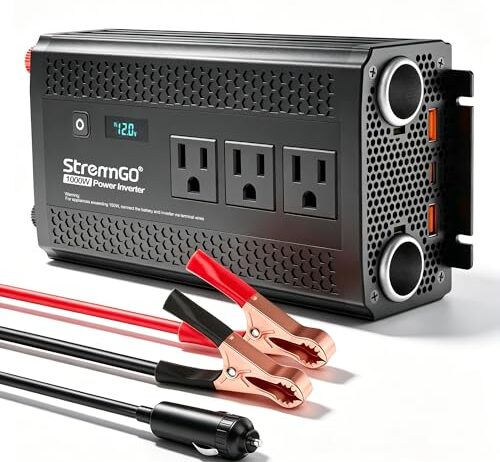
The middle ground that actually starts things
1000W Power Inverter for Vehicles, 12V DC to 110/120V AC Car Inverter with 3 AC Outlets, USB 24W/ PD 30W Fast Charger. (1000w-black)1000W continuous from a 12V system with three AC outlets — enough thermal and capacitor margin to ride through moderate motor inrush without paying for capacity you won't use.
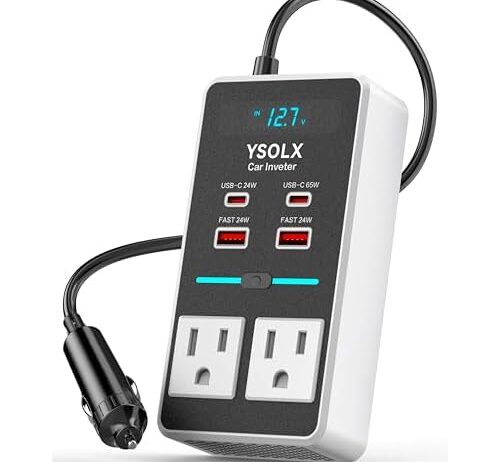
The one built for USB, not motors
300W 12V to 110V Car Power Inverter | 65W USB-C,4 USB Post,Dual AC Car Plug Adapter Outlet,LED display.Suitable for Car Trips, Camping,Laptop65W USB-C charges a laptop at full speed directly, bypassing the AC conversion stage entirely. Keep it away from motor loads.
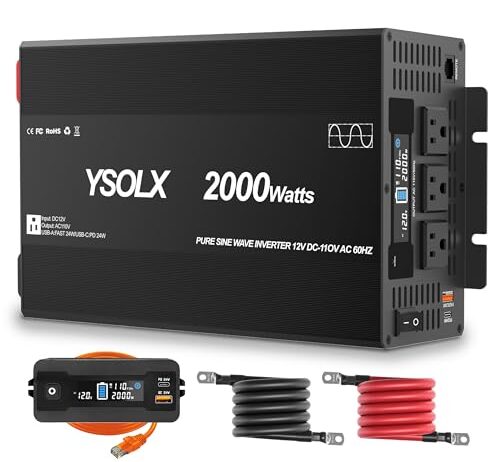
Raw wattage for real equipment
2000W Pure Sine Wave Power Inverter 12V to 110V/120V2000W continuous is the only rating in this set that puts a realistic compressor's inrush comfortably below the continuous ceiling, where sizing margins actually protect the transistors.
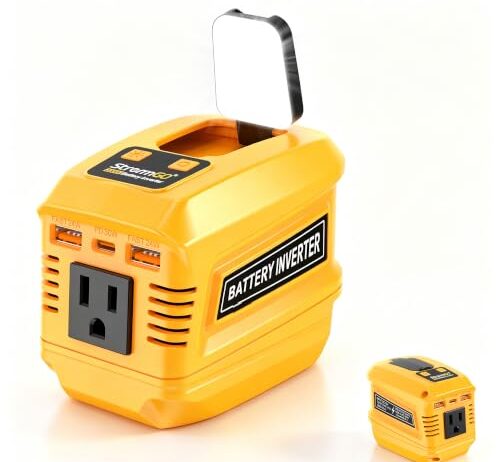
No vehicle required
200W AC 110V Power Inverter Compatible with DEWALT 20V Battery | Portable 200W AC outlet, 30W USB-C, USB-A 24W. Powers phones and laptops for camping, outages, and job sites. Tool Only. yellRuns on DEWALT 20V batteries you already own. Limited to 200W — phones, lights, small chargers — but goes where a car battery doesn't.
How we picked
We did not wire these inverters to a battery. Judgements come from published specifications, component principles, and owner reports.
Surge ratings lack duration data. Continuous wattage is the only number you can plan around.
A 12V car battery and a 20V tool battery deliver different instantaneous current. That shapes real surge capacity.
30W charges a phone fast. 65W charges a laptop. Below the floor, the port is decoration.
What broke and when tells you more than an aggregate rating that blends packaging complaints with electrical failures.