A tonneau cover seal doesn’t fail everywhere at once. It fails at one spot — the single worst point of contact between gasket and rail — and water follows that path into your bed. The difference between a dry load and a soaked one often comes down to less than a millimeter of height variation along a six-foot rail that was never perfectly straight to begin with. Cover type matters, but understanding where and why seals break tells you more about which design will actually keep water out on your truck.
Affiliate disclosure: This article contains affiliate links. We may earn a commission if you buy through them, at no extra cost to you.
Everything we recommend
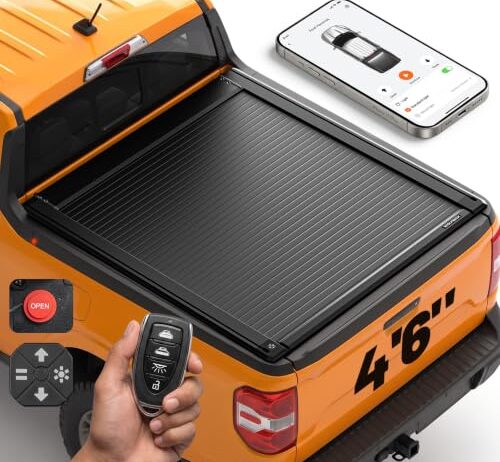
Seals along the full rail
WOLFBOX Power Retractable Tonneau Cover for 2022-2026 Ford Maverick 4.6 Bed | App & Remote Control, Locks Anywhere, 800lb Capacity, T-Slot Rails, Weather Seals, Led Lights, No-Drill AluminumT-slot engagement and aluminum construction give this retractable a continuous mounting interface that clamp-style covers can't match. The canister costs bed length on the Maverick's short 4.6-foot bed.
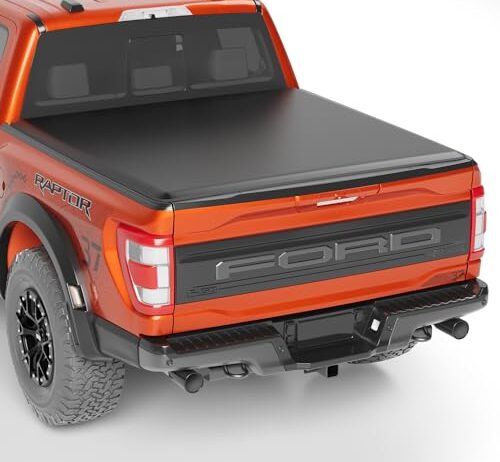
Drapes where rigid covers bridge
Soft Quad Fold Truck Bed Tonneau Cover Compatible with 2015-2024 Ford F-150, 6.5 ft Four Folding Bed Cover for 2015 2016 2017 2018 2019-2024 Ford F-150(Excl. Raptor series), 6.5′ Bed, BlackSoft four-fold fabric follows minor rail contours instead of fighting them. No load capacity and fold-joint water paths are the trade-offs at a seventh of the price.
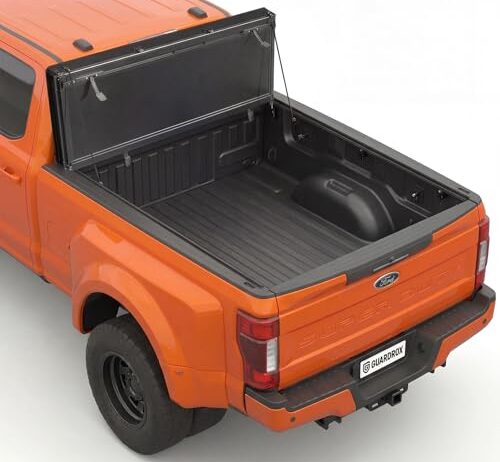
FRP holds its shape in heat
Low Profile Flip Up FRP Truck Bed Tonneau Cover Compatible with 2017-2026 Ford F-250 F-350 Super Duty 6.75' (82") BedFiber-reinforced plastic expands less than aluminum across temperature swings, keeping seal geometry more consistent through summer heat cycles on the Super Duty's 6.75-foot bed.
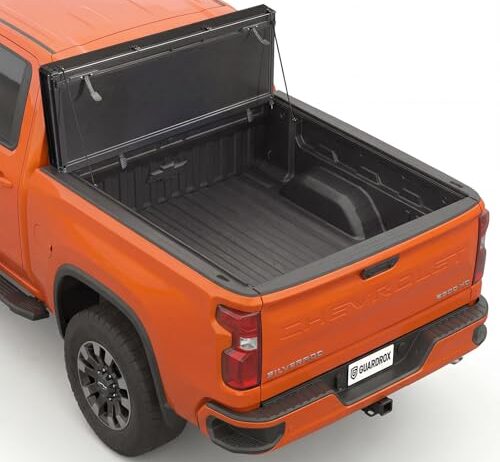
Sized for the HD frame
LX5 Low Profile Flip Up Truck Bed Tonneau Cover Compatible with 2020–2026 Chevy Silverado/GMC Sierra 2500HD 3500HD 6.10FT Bed (82.2 inch) (Not for Multi-Flex Tailgate & CarbonPro Bed)Built specifically for the 2500HD and 3500HD Silverado and Sierra chassis. Not compatible with Multi-Flex Tailgate or CarbonPro Bed — check your truck's build sheet before ordering.
Truck bed rails have a published tolerance of roughly one to three millimeters over a six-foot span. That sounds tight until you consider what sits on top of them. A tonneau cover’s perimeter gasket — usually EPDM rubber or closed-cell foam — needs to compress uniformly across that entire span to form a seal. Where the rail sits high, the gasket compresses more. Where it dips, the gasket can’t reach. A gap of half a millimeter at one point defeats the seal everywhere, because water follows the path of least resistance to that single opening.
This isn’t a defect. It’s geometry.
Body-on-frame trucks make it worse. The bed and cab are separate structures bolted to a shared frame, and they flex independently when you load cargo, tow a trailer, or drive over uneven ground. That flex changes the rail height dynamically — a seal that’s tight in the driveway opens up at highway speed with a thousand pounds in the bed. The gasket has to absorb both the static manufacturing variation and the dynamic movement, and those are two different engineering problems with different solutions.
How we picked
We did not mount these covers on trucks. Selections are based on published specifications, material properties, and owner-reported installation outcomes.
Whether the design addresses rail irregularity through gasket compression, material conformability, or rigid clamping force.
Body-on-frame trucks twist. We looked for mounting systems that maintain seal contact when the bed moves independently of the cab.
A weight capacity means something only if the cover transfers force to the rails, not just to the gasket sitting on them.
Owner reports of blown-off covers and snapped hardware reveal installation tolerances that no spec sheet carries.