We research every product we recommend. We may earn a commission from the links on this page.
Automotive › Full Car Covers

Car Covers Trap Moisture — Here’s How to Pick One That Doesn’t Ruin Your Paint

We compare published specifications and marketplace data. We do not test these products.

How a Car Cover Damages the Paint It's Protecting
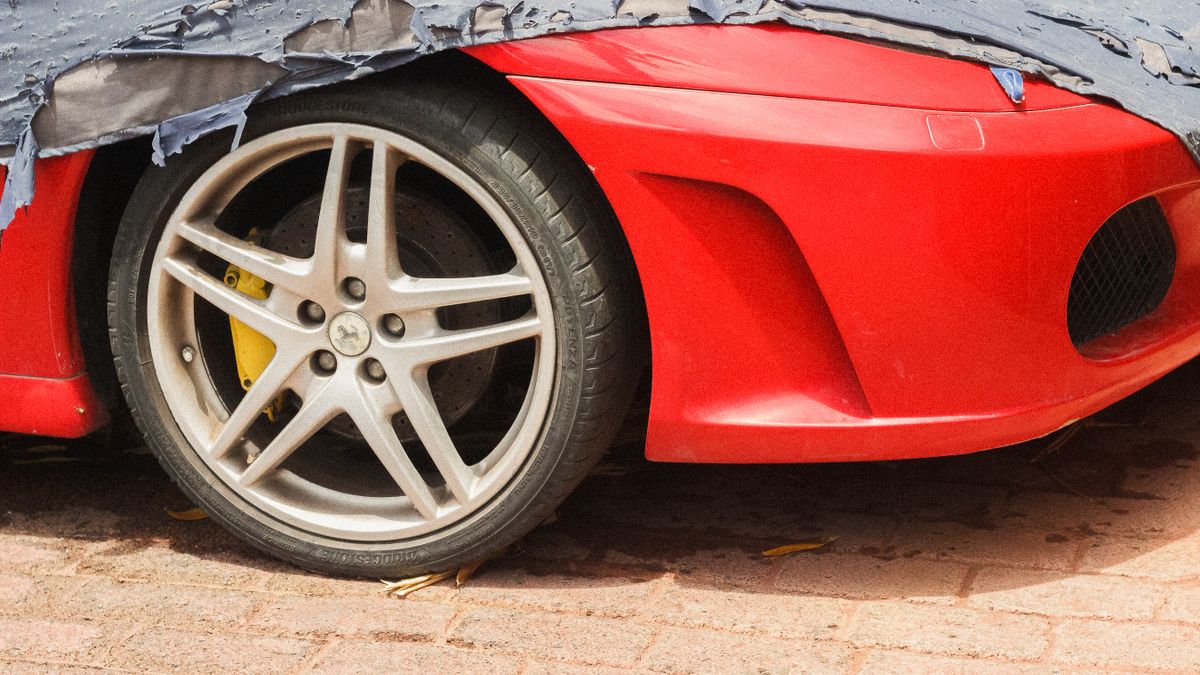
Photo by Hassan Bouamoud on Pexels

A car cover sits against your paint for weeks at a time. If moisture gets trapped underneath — from rain seeping through seams, condensation forming on a cold hood, or humidity that never escapes — that water stays pressed against your clear coat around the clock. The damage is slow: oxidation, mold, and eventually delamination that no wax fixes. Layer count, fit tolerance, and lining material determine whether a cover blocks water or holds it hostage.

Affiliate disclosure: This article contains affiliate links. We may earn a commission if you buy through them, at no extra cost to you.

Everything we recommend
4 picks

How we picked

We do not install car covers on vehicles. Our recommendations are based on material specifications, construction details, and user-reported moisture performance.

Lining material, not outer shell

Cotton and fleece interiors absorb condensation; polyester and vinyl trap it against paint where oxidation starts.

Fit precision, not coverage area

Custom-fit covers eliminate gaps where water pools; universal covers leave slack that holds moisture against panels.

Layer count matched to ventilation

Six-layer covers block rain but require airflow — useful outdoors, problematic in sealed garages where humidity accumulates.

Documented vent placement, not claims

Covers with specified grommets or mesh panels allow moisture escape; those without listed ventilation rely on fabric porosity alone.


Why a Waterproof Cover Can Be Worse Than No Cover at All

Metal cools faster than air on a clear night. Your car’s hood and roof drop below the dew point of the surrounding atmosphere, and water vapor condenses directly on the paint — the same process that puts dew on grass. Without a cover, that moisture evaporates by mid-morning. Sun hits the panels, temperature rises, the water is gone.

Put a cover over it and you change the equation. The cover blocks airflow across the surface, slows evaporation, and if the outer shell is truly waterproof — no vapor transmission at all — that condensation has nowhere to go. It sits on your paint. For days. Weeks.

Clear coat is not glass. It’s permeable to water vapor over extended contact. Prolonged humidity beneath a cover causes subsurface oxidation — the clear coat looks milky or hazed, and the damage is below the surface where polishing can’t always reach. In warm, humid climates, you also get mold colonizing the thin moisture film between fabric and paint.

The counterintuitive reality: a cover that lets some rain through but breathes can leave your paint in better shape than one that blocks every drop but seals moisture against the surface. Water resistance matters. Total impermeability can be the problem.

What Layers Actually Do — and When More Layers Make Things Worse

A single-layer polyester cover is basically a fitted sheet. It blocks UV and keeps bird droppings off the paint, but rain goes through. Add layers and you get structure: an outer shell for water repellency, middle layers for UV blocking and impact cushion, an inner lining to prevent scratching.

Six layers sounds better than five. Five sounds better than three. But layer count alone tells you almost nothing about moisture management. What matters is how those layers are bonded.

If layers are laminated with non-porous adhesive — glued together into a single stiff sheet — vapor transmission drops to near zero. The cover becomes a plastic bag with fabric texture. Unbonded layers, stacked loosely, allow interstitial air movement between them. Water vapor migrates through the gaps, moves laterally, and escapes at the edges. Same layer count, completely different moisture behavior.

No car cover listing tells you which construction it uses. You’re left with indirect clues: a cover that feels stiff and crinkly when you fold it is probably bonded. One that drapes softly and the layers shift independently is probably not. The difference matters more than the number on the label.

Fit Tolerance: The Gap That Lets Water In but Won’t Let It Out

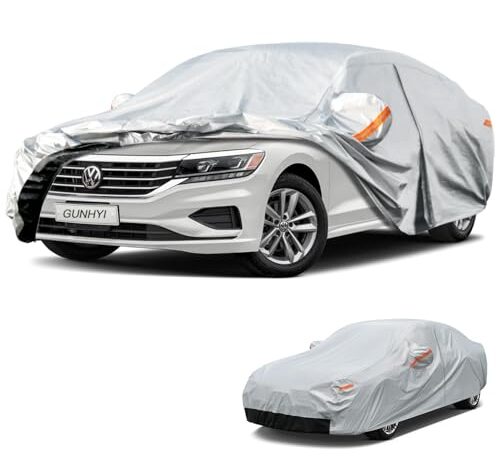
A universal-fit cover sized by maximum length creates a particular problem. If your car is shorter than the stated maximum, you get excess fabric — bunched at the bumpers, loose along the sides, sagging over the trunk. Those folds and pockets collect rainwater. The water soaks through the outer layer at the fold point where fabric touches fabric, then sits in the gap between cover and paint with no airflow to dry it.

A custom-fit cover contours to the body panels. Less pooling, fewer pockets, and the fabric sits closer to the surface — which can be good or bad. Closer fit means less air circulation underneath, so if the cover doesn’t breathe well, you’ve just made the condensation problem worse with a tighter seal.

The ideal is a cover that follows the body closely enough to avoid water-collecting sags but loosely enough to allow air to move beneath it. That’s a narrow window, and it’s why custom-fit covers from manufacturers who specify the exact vehicle model tend to perform differently from universal covers cinched down with elastic hems. The elastic gets the cover tight at the bottom edge but does nothing about the drape over the roof and hood.

Cotton absorbs up to 25 percent of its dry weight in moisture before it even feels damp. That’s a meaningful buffer. Condensation forms on your paint, the cotton lining wicks it away from the surface, and if the cover gets removed or aired out periodically, the cotton releases that moisture through evaporation. It’s not a permanent solution — leave a cotton-lined cover on for weeks in Gulf Coast humidity and the cotton saturates — but it buys time that a bare synthetic lining doesn’t.

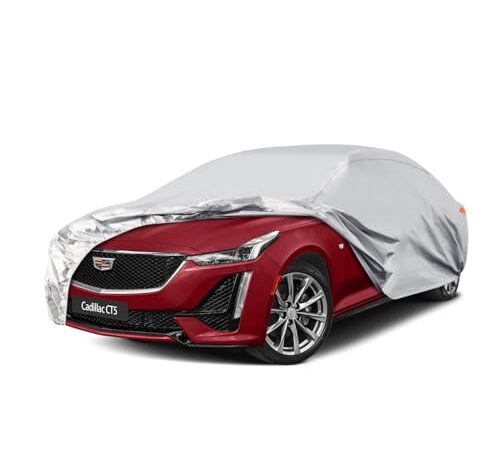
The five-layer construction here is one fewer than the six-layer alternatives in this category. Whether that’s better or worse depends entirely on how those layers are assembled — but fewer layers generally means slightly more vapor can migrate through the stack. Combined with the cotton interior, this cover is at least designed with the moisture-trapping problem in mind, not just the rain-blocking side of the equation. The custom fit for CT5 models means the drape follows the car’s actual body lines rather than bunching around a generic shape.

Universal Fit Covers and the Condensation Gamble

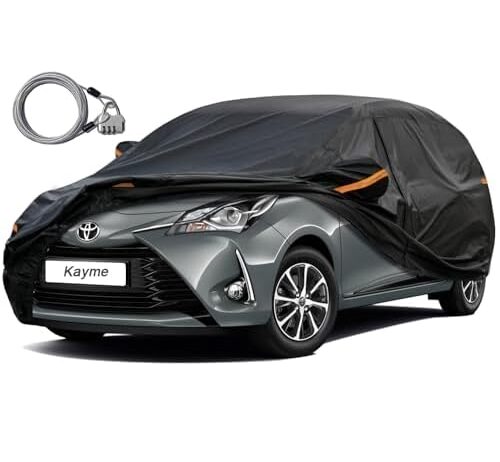
A hatchback cover rated for cars up to 163 inches faces a basic geometry problem. A Volkswagen Golf is about 168 inches. A Honda Fit is 161. A Mazda3 hatchback is 180. The “universal hatchback” category spans vehicles that differ by nearly two feet in length and vary dramatically in roof height, rear slope, and body width.

When the cover is too long, fabric pools behind the car. When it’s too short, it rides up and exposes the lower panels. When the width is wrong, the sides hang loose and flap in wind — which both abrades paint through repeated friction and pumps humid air underneath with every gust.

None of this means universal covers are worthless. They cost less, they’re replaceable, and for short-term use — covering a car for a weekend rainstorm, keeping pollen off during spring — the moisture cycle doesn’t have time to do real damage. The risk compounds with duration. A universal cover left on for months in a humid climate is where paint damage becomes likely.

Six layers is the most you’ll find in consumer car covers before you get into heavy industrial tarps. Each layer adds material between the elements and your paint. The outer layers handle UV and rain, middle layers provide impact cushioning against hail or falling debris, and inner layers reduce abrasion. On paper, maximum protection.

The trade-off is weight and breathability. Six layers of synthetic fabric, even unbonded, resist vapor transmission more than four or five. A custom fit reduces the air gaps that let moisture escape around edges. So you’ve built a very effective water barrier that also very effectively traps whatever moisture forms underneath it. Whether that matters depends on your climate and how often you pull the cover off. In a dry climate with cool nights, this is fine — condensation is minimal and evaporates fast when you remove the cover. In Houston or Miami, where the air holds moisture like a sponge, six sealed layers against tight body contours is a recipe for exactly the paint haze you’re trying to prevent.

The Ventilation Problem Nobody Lists on the Box

Breathable fabrics exist. The outdoor apparel industry solved this decades ago — Gore-Tex and its competitors manage 10,000 to 20,000 grams of water vapor per square meter per day while blocking liquid rain. Car covers could use similar technology. Most don’t, because it would triple the price.

Instead, car covers manage moisture through ventilation — or don’t manage it at all. Vent grommets along the lower hem, mesh panels near the mirrors, or simply loose enough weave to let air move. But ventilation features are almost never specified in product descriptions. You won’t find a vapor transmission rate. You won’t find vent placement diagrams. You get “breathable” as a marketing adjective with no number behind it.

What you can infer: polyester and polypropylene are hydrophobic. They don’t absorb water — moisture management depends entirely on whether vapor can pass through the coating or escape through gaps. If a cover is coated for waterproofing and fits tightly, the only ventilation is whatever leaks through seams. That’s not engineered breathability. That’s incidental failure of the waterproof seal doing double duty as your only moisture exit.

How to Decide What Your Car Actually Needs

Start with where the car sits, not what weather you’re blocking.

Covered parking, occasional outdoor weekends: a lightweight single-layer or two-layer cover handles dust, pollen, and UV. Moisture isn’t a real factor because you’re pulling the cover off regularly. A universal fit is fine — you’re not leaving it on long enough for pooling and condensation to compound.

Outdoor daily driver in a dry climate: a multi-layer cover with tight fit protects against UV degradation and dust storms. Condensation is minimal because ambient humidity is low and temperature swings dry surfaces fast. Layer count matters here — more layers block more UV. A custom fit is worth the cost because the cover stays on for extended stretches.

Outdoor storage in a humid climate: this is where every trade-off bites. You need water resistance for rain, but waterproofing traps humidity. You need close fit to prevent wind damage, but tight fit reduces airflow. The answer is a cover with an absorbent lining, moderate layer count, and a fit close enough to follow body lines but loose enough to allow air circulation underneath — and a commitment to remove it for a few hours after rain to let everything dry. No cover solves humid-climate storage passively. They all need management.

FAQ

Can a waterproof car cover trap moisture and damage paint?

Yes. A fully waterproof cover blocks vapor from escaping. Condensation forms when the car’s metal cools below the dew point, and without airflow, that moisture stays pressed against the clear coat. Over weeks, this causes oxidation, hazing, and can promote mold growth — particularly in humid climates.

How do you prevent condensation under a car cover?

Remove the cover periodically to let trapped moisture evaporate — especially after rain or temperature swings. Choose a cover with some vapor permeability rather than total waterproofing, and avoid leaving any cover on continuously in high-humidity environments without airing it out.

Does a cotton lining inside a car cover help with moisture?

Cotton absorbs up to 25 percent of its weight in water before feeling wet, so it pulls condensation away from the paint surface. This buys time before moisture damage occurs, but the cotton eventually saturates in sustained humidity. It works best when the cover is removed regularly to let the lining dry.

Should you use a car cover in humid weather?

You can, but it requires active management. No car cover handles sustained humidity passively — trapped moisture accumulates regardless of layer count or material. In humid climates, plan to remove the cover for several hours after rain to let the car and cover dry before re-covering.

Is a custom-fit car cover better than a universal one for preventing moisture damage?

Custom-fit covers reduce fabric pooling where water collects, but a tighter fit also reduces air circulation underneath. The advantage is fewer pockets that trap standing water. The trade-off is less natural ventilation. For long-term outdoor storage, custom fit with breathable construction outperforms a tight universal cover cinched with elastic.