We research every product we recommend. We may earn a commission from the links on this page.
Sports & Outdoors › Electric Scooters

Pinch Flats on Electric Scooters: What Actually Causes Them and What Doesn’t Help

We compare published specifications and marketplace data. We do not test these products.

Pneumatic Scooter Tires Pinch-Flat When You Hit a Curb
Photo by Magda Ehlers on Pexels

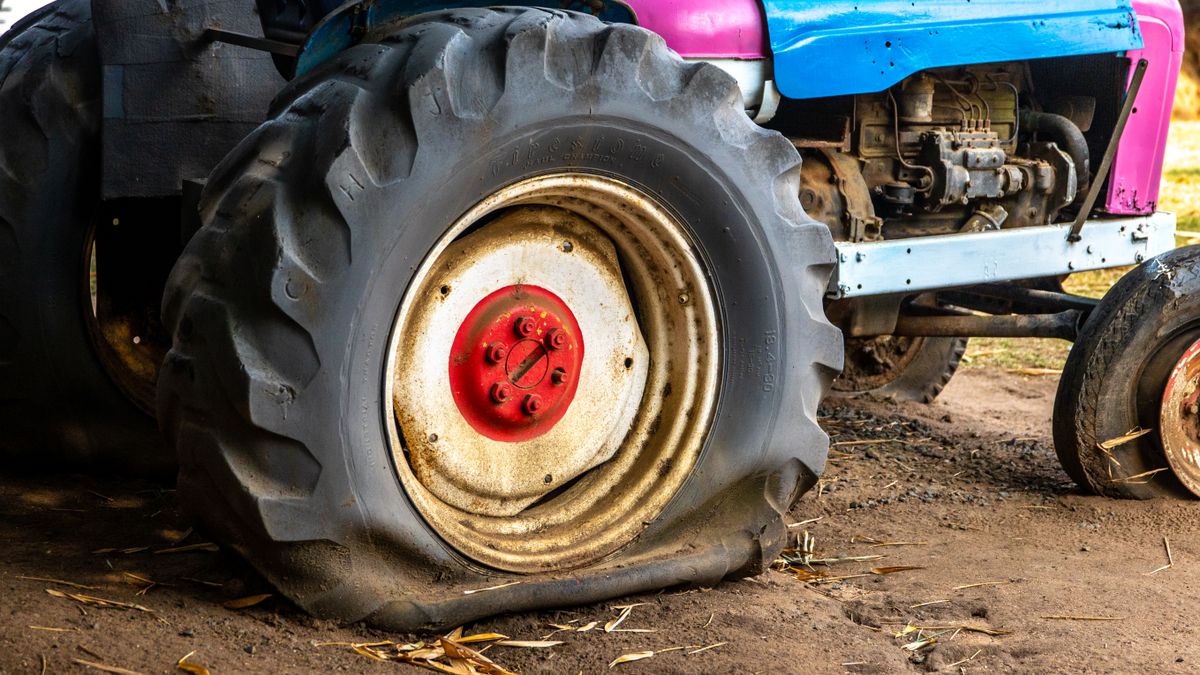
A pinch flat doesn’t come from running over something sharp. It comes from the inside — your rim smashes down through the tire and cuts two holes in the inner tube at once. On an electric scooter with 8- to 12-inch wheels, the physics that cause it are more compressed than on a bicycle, and the fixes aren’t always what riders expect. Here’s what’s actually happening and which design choices change the outcome.

Affiliate disclosure: This article contains affiliate links. We may earn a commission if you buy through them, at no extra cost to you.

Everything we recommend
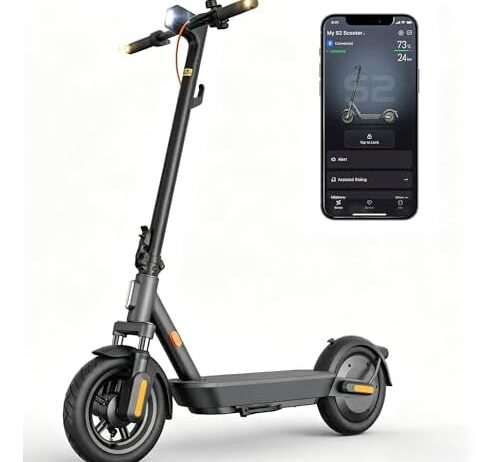
4 picks

How we picked

We did not ride these scooters. Judgements rest on published wheel dimensions, suspension specifications, weight limits, and speed ratings.

Wheel size, not marketing promises

Larger wheels provide more air volume to absorb impact energy before the rim bottoms out on pavement.

Suspension presence, not type

Any suspension intercepts force before it reaches the tire, reducing the peak load that causes pinch flats.

Maximum speed, not average use

Impact energy scales with velocity squared — higher top speeds mean exponentially greater pinch-flat risk on the same bump.

Tire construction, not reviews

Off-road or reinforced tire construction matters more than rider reports, which rarely distinguish pinch flats from punctures.

The Mechanism Is Simpler Than You Think

Every pinch flat follows the same sequence. The tire hits a hard edge — a pothole lip, a curb cut, a raised crack. The tire compresses. If the force is large enough to bottom out the air cushion, the inner tube gets trapped between the metal rim and whatever the wheel just struck. The rim’s edge cuts through the rubber in two places because the tube folds against itself at the pinch point. Two parallel slits, always.

This only happens in pneumatic — air-filled — tires. No air chamber, no pinch flat. That’s why solid and honeycomb tires are immune to this specific failure. They have other problems (harsher ride, less grip on uneven ground), but the pinch-flat mechanism literally cannot occur without a pressurised tube to compress.

On a bicycle with 700c wheels, you have a large air volume working in your favour. On an electric scooter with 8.5- to 12-inch wheels, the air volume is a fraction of that. Less air means less cushion before the rim reaches the ground. Every variable that affects pinch flats — pressure, diameter, width, speed, rider weight — matters more on small wheels because the margins are thinner to begin with.

Bigger Tires Help, but Not for the Reason You’d Guess

The intuition is that a bigger tire is tougher. That’s not quite it. A bigger tire holds more air, and air volume is what absorbs impact before the rim bottoms out. Tire volume scales with the square of diameter — a 12-inch tire doesn’t hold 50% more air than an 8-inch tire of the same width. It holds substantially more, because you’re scaling in two dimensions at once.

That extra air volume gives you a deeper cushion. The rim has farther to travel before it contacts the obstacle through the rubber. On the same pothole, at the same speed and pressure, the larger tire simply has more room to deform before the pinch point.

Width matters too. A wider tire spreads the impact across a larger contact patch, and it lets you run lower pressure for the same load without bottoming out. Lower pressure means a softer ride. On small-wheeled scooters, where every millimetre of air gap counts, moving from an 8.5-inch tire to a 12-inch tire changes the math meaningfully.

Suspension Isn’t a Comfort Feature — It’s a Flat-Prevention Feature

This is the myth most riders get backwards. Suspension on an electric scooter isn’t primarily about making the ride smoother for you. It’s about absorbing vertical impact energy through spring compression before that force reaches the tire-rim interface.

Think of it as a sequence. You hit a pothole. Without suspension, 100% of that impact energy goes straight into the tire. The tire has to absorb all of it with air pressure alone. With dual suspension, the springs and dampers intercept a large portion of that energy first. By the time the remaining force reaches the tire, it may not be enough to bottom out the air cushion against the rim.

This is why suspension and tire size compound. A scooter with dual suspension and 12-inch tires has two layers of defence: the springs eat the initial hit, and the large air volume handles whatever’s left. A scooter with no suspension and small tires has one thin layer — the air in a small tube — doing all the work.

Speed Makes It Worse, Exponentially

The same crack in the pavement at 10 MPH is a different obstacle at 30 MPH. Impact force scales with speed — roughly four times the energy at double the speed. That’s not a gradual increase. It means a pothole that a 10-inch tire absorbs comfortably at 15 MPH might bottom out the same tire at 30 MPH.

This creates a design tension. High-performance scooters capable of 30+ MPH need either larger tires, better suspension, or both to handle the impact forces their own speed generates. A scooter that tops out at 10 MPH simply never generates the impact energy that overwhelms a small tire’s air cushion under normal riding.

Rider weight works the same way. A heavier rider compresses the tire more at rest, leaving less travel before the rim contacts the ground. The combination of high speed and heavy rider on small tires with no suspension is the scenario most likely to produce a pinch flat.

The 12-inch tire configuration is the one that matters here. That extra diameter isn’t about rolling speed or ground clearance — it’s about air volume. More air between the rim and the road means more room for the tire to deform on a hard impact before the rim can pinch the tube. Pair that with dual suspension absorbing the initial hit, and the rim has to punch through two separate energy-absorption systems to cause a flat.

The 8.5-inch option on the same scooter illustrates the difference by contrast. Same suspension, same rider, same road — but less air in the tire. On a sharp edge that the 12-inch tire absorbs without incident, the 8.5-inch tire is working harder, compressing deeper, with less margin before the rim makes contact. If you’re choosing between configurations and pinch flats are a concern, the larger tire earns its keep on every pothole you don’t see coming.

Tire Pressure: The Variable You Actually Control

You can’t change your tire diameter after purchase. You can’t add suspension to a scooter that doesn’t have it. But you can check your tire pressure before every ride, and on small-wheeled scooters, this is the single most effective thing you can do.

Too low, and the tire compresses too easily — every bump brings the rim closer to the ground. Too high, and the tire can’t deform at all, which means every impact transmits directly to the rim as a sharp spike instead of a gradual compression. There’s a window where the air cushion is stiff enough to prevent bottoming out but soft enough to absorb the hit smoothly.

Most electric scooter tires run between 40 and 50 PSI. The right number depends on the tire’s volume and your weight. Heavier riders need higher pressure to maintain the same ground clearance under the rim. The problem is that most scooters don’t ship with pressure gauges or even recommended PSI ranges, so riders are guessing — and underinflation is far more common than overinflation because a slightly soft tire feels more comfortable right up until it pinch-flats.

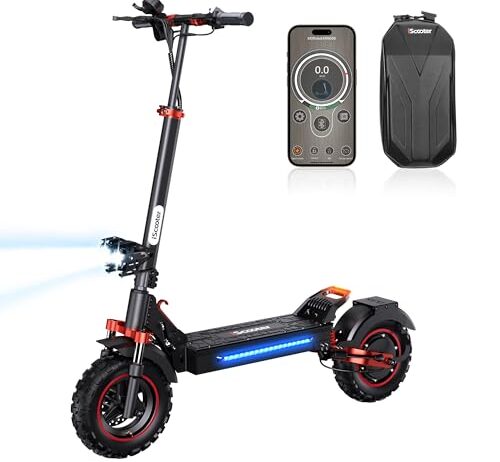
Off-road tire construction typically means reinforced sidewalls and thicker rubber. That doesn’t eliminate the pinch-flat mechanism — a pneumatic off-road tire can still pinch-flat if the impact is hard enough to bottom out the air cushion. What it does is raise the threshold. Thicker sidewalls resist deformation, so the rim has to punch through more material to reach the tube. Combined with dual suspension absorbing the initial impact, the system handles sharp edges and drops that would overwhelm a standard commuter tire.

The speed range matters here too. At 28 to 38 MPH, the impact forces on every pothole and root are dramatically higher than on a 15 MPH commuter scooter. The 10- to 11-inch tire diameter provides real air volume, and the off-road construction is designed for the terrain that generates the hardest hits. This is a scooter built to ride fast over rough ground — the exact scenario where pinch flats are most likely — with the design elements that specifically address that scenario.

Sealant and Liners: Partial Answers

Tire sealant — the liquid you inject through the valve stem — seals punctures from the outside. A thorn goes through, the sealant flows into the hole, and the latex particles clot across the gap. It works well for small penetration punctures.

Pinch flats are different. The cuts are on the inside of the tube, they’re caused by compression rather than penetration, and they tend to be longer slits rather than small round holes. Sealant can sometimes seal a mild pinch flat, but a serious one — where the rim cuts a clean gash — opens wider than sealant can bridge. It’s a backup, not a prevention.

Tire liners sit between the tire and tube as a physical barrier against sharp objects coming through the tread. They do nothing for pinch flats because the threat comes from the rim side, not the road side. The liner is in the wrong place for this particular failure.

The honest answer is that nothing prevents pinch flats after the fact. Prevention is structural: tire volume, air pressure, suspension. Once you’ve chosen your hardware, pressure maintenance is your only remaining lever.

The Solid-Tire Trade-Off

Solid tires and honeycomb airless tires eliminate pinch flats entirely. No air chamber means the mechanism cannot occur. If you never want to think about pinch flats again, solid tires are the definitive answer.

But they solve one problem by creating others. Without an air cushion, every bump transmits directly into the deck and your ankles. Traction on wet or uneven surfaces drops because the tire can’t deform around obstacles the way a pneumatic tire does. And ride comfort at any speed above walking pace is noticeably harsher.

For short, low-speed commutes on smooth pavement, solid tires make sense — the comfort penalty is small, and the maintenance benefit is real. For longer rides, higher speeds, or any terrain with texture, the air cushion that makes pinch flats possible is the same air cushion that makes the ride tolerable. You’re trading one kind of reliability for another.

FAQ

What causes pinch flats on electric scooters?

The tire hits a hard edge and compresses until the rim traps the inner tube against the obstacle, cutting two parallel slits. It’s a compression injury from the inside, not a puncture from the outside. Small scooter wheels are more vulnerable because they hold less air volume than bicycle wheels, so the cushion between rim and road is thinner.

Do bigger scooter tires prevent pinch flats?

They reduce the risk significantly. A larger diameter tire holds more air, giving the rim farther to travel before it can contact the ground through the rubber. The improvement isn’t linear — tire volume scales with the square of diameter, so even a few extra inches of wheel size makes a meaningful difference in how much impact the tire can absorb.

What tire pressure prevents pinch flats on an electric scooter?

Most electric scooter tires run between 40 and 50 PSI. The right pressure depends on your weight and the tire’s volume — heavier riders need higher pressure to maintain enough clearance between the rim and the ground. Underinflation is the most common preventable cause of pinch flats. Check before every ride.

Does suspension reduce pinch-flat risk?

Yes, directly. Suspension absorbs vertical impact energy through spring compression before it reaches the tire. Less force at the tire means less compression, which means the rim is less likely to bottom out against the obstacle. It’s a mechanical buffer, not just a comfort feature.

Will tire sealant stop a pinch flat?

Sometimes a mild one, rarely a serious one. Sealant is designed to fill small round punctures from thorns or glass. Pinch flats create longer slits on the inside of the tube from rim compression, which often open wider than sealant can bridge. It’s a partial backup, not a prevention strategy.

Are solid tires better than air-filled tires for avoiding flats?

Solid tires make pinch flats impossible — no air, no pinch. The trade-off is a harsher ride, less traction on uneven surfaces, and more vibration transmitted to your body. For short commutes on smooth pavement, solid tires eliminate flat anxiety entirely. For longer rides or rough terrain, the air cushion you’d be giving up is doing real work.