We research every product we recommend. We may earn a commission from the links on this page.
Industrial & Scientific › Borescopes

More Lenses, Less Detail: How Multi-Lens Borescopes Split Your Pixels

We compare published specifications and marketplace data. We do not test these products.

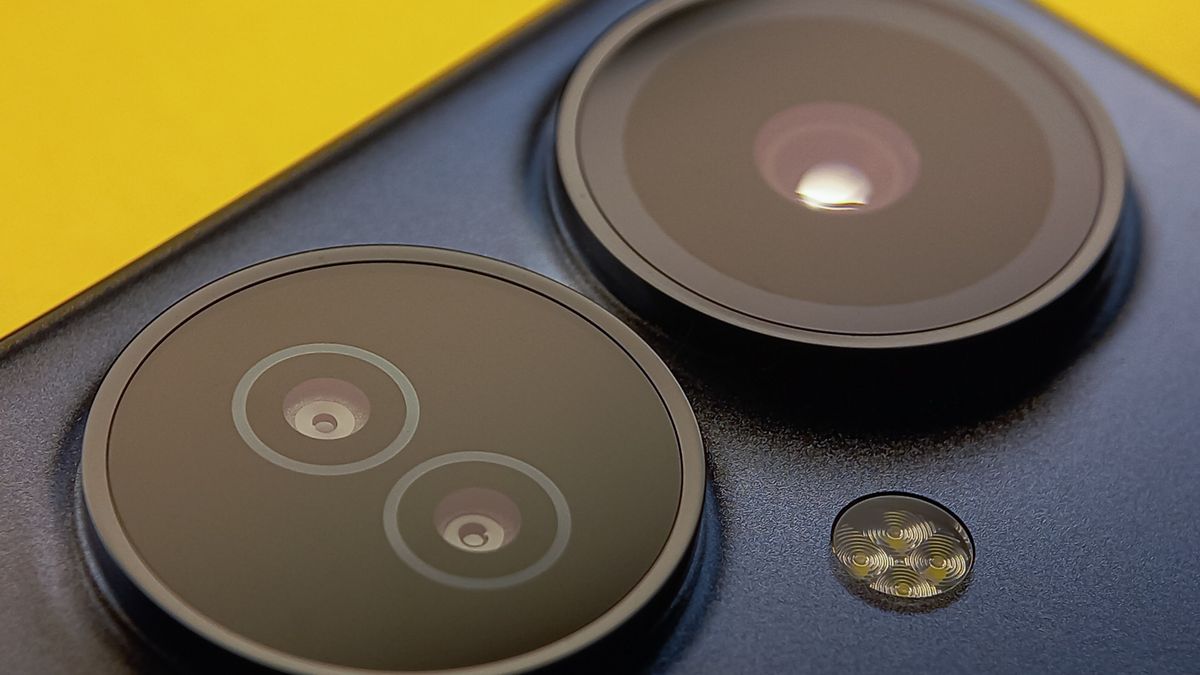
Dual-Lens Borescopes Waste Half Their Sensor Because the Image Circle Is Round
Photo by Monojit Dutta on Pexels

A triple-lens borescope advertising 1280×720 resolution does not deliver 1280×720 per camera. It delivers that resolution total, split across three simultaneous views — each one working with roughly a third of the screen and a fraction of the pixel count. The trade-off is real: you gain the ability to see forward, sideways, and behind without repositioning, but every individual view carries less detail than a single lens using the full sensor. Understanding where that detail goes — and where it doesn’t — is the difference between buying the right inspection camera and buying a spec sheet.

Affiliate disclosure: This article contains affiliate links. We may earn a commission if you buy through them, at no extra cost to you.

Everything we recommend
4 picks

Every borescope camera starts with the same physical constraint: one image sensor behind one lens projects a circular image, and the display carves the largest rectangle it can fit inside that circle. The pixels in the corners of a rectangular sensor sit outside the image circle entirely — unused. What matters for sharpness is the diameter of that circle, because the usable pixel count scales with the square of the diameter. Double the circle, quadruple the pixels. Halve it, quarter them.

That relationship is invisible when a single lens uses the full sensor. It becomes the dominant factor the moment you split the display.

How we picked

We did not put these scopes down a pipe. Judgement is based on published specifications, the physics of image sensors, and owner-reported experience.

Lens count as a variable, not a feature

One single-lens, one dual, two triple — enough spread to show how dividing a sensor changes what each view resolves.

Stated resolution, not assumed

Only models with a published pixel count let us do the per-view math honestly.

Cable and access differences, not duplicates

Rigid, gooseneck, articulating, and short fixed — each answers a different reach problem.

Price span wide enough to show the trade

A 5.4× range from $55 to $297 makes the cost of each added feature visible.

What happens when you add a second lens

A dual-lens borescope runs two cameras simultaneously — typically one facing forward and one facing sideways — and tiles them on a single screen. In a split-screen layout each feed occupies roughly half the display width. Half the width means half the image circle diameter. Half the diameter means one quarter the area. One quarter the area means roughly one quarter the pixel count per view.

So a dual-lens camera on a 720p screen doesn’t give you two 720p feeds. It gives you two feeds each working with approximately 230,400 pixels instead of 921,600. That’s closer to standard-definition territory per individual view — adequate for spotting a blockage, marginal for reading a serial number or gauging the depth of a scratch.

The gain is that you see two directions without rotating the probe. For a drain inspection where you need to catch a branch connection you’d otherwise pass, that simultaneous coverage can matter more than per-view sharpness. For engine cylinder work where you’re reading wear marks on a valve seat, it usually doesn’t.

Triple lens: three views, even less per view

Add a third camera and the math gets worse. A triple-lens layout on a 1280×720 display divides that screen three ways. The exact geometry depends on how the manufacturer tiles the feeds — some use three equal columns, others give the forward view a larger pane — but no arrangement escapes the underlying constraint. Three image circles on one sensor means each circle is smaller, and each view resolves less.

This is not a defect. It’s a trade-off with a legitimate purpose: forward, side, and rear visibility at the same time. If you’re threading a probe through a plumbing run with branches in multiple directions, seeing behind the tip catches things you’d miss entirely with a forward-only camera. One owner of a triple-lens model notes the side views specifically: good visibility of valves, though the side-camera LEDs can wash out wall detail by throwing too much light at close range.

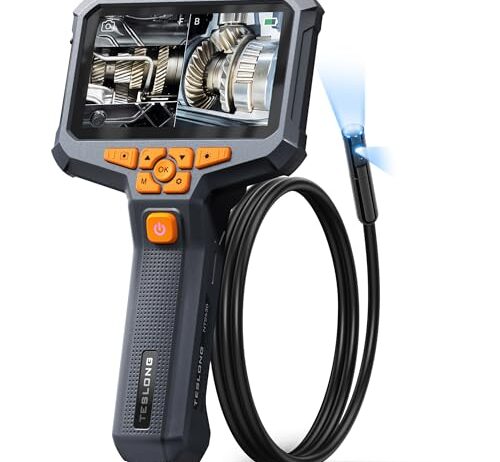
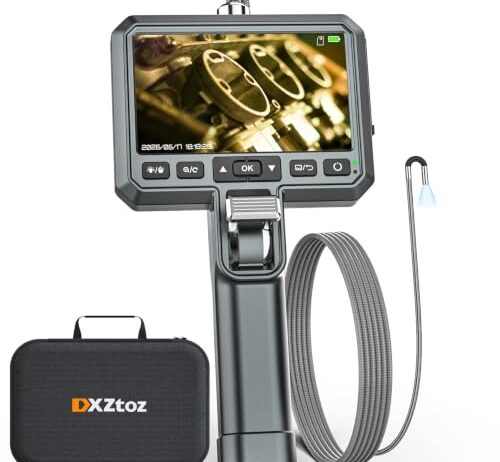
This is the approach that trades simultaneous coverage for image quality per view. The entire sensor works for one direction at a time. On a 5-inch IPS screen, that means every pixel the display can render is showing you what’s directly ahead of the probe tip — no division, no quarter-resolution feeds in side panels.

The 3.9mm probe diameter is the narrowest in this group by a margin that matters physically. At 0.15 inches across, it fits through inspection ports on aircraft and into automotive passages where a wider probe simply won’t go. Fiber optic construction — light transmitted through bundled glass fibers rather than electronics at the tip — is what makes that diameter possible, because there’s no image sensor and circuit board that need to fit inside the tip housing.

The 2-way articulation with 220° of range solves the problem that multi-lens cameras solve differently. Instead of seeing sideways by adding a second camera, you steer the single camera where you need it. The image stays full-resolution in every position. The cost is that you see one direction at a time and must actively control where that direction points — there’s nothing passive about it, and navigating a complex bend requires both hands and some practice.

Cable rigidity decides where the camera can go

The probe tip is half the tool. The cable is the other half, and its mechanical properties determine which inspections are even possible.

A rigid cable holds its shape. You point it, it stays pointed. That works when the path from entry to target is straight — looking down a cylinder bore, inspecting a gun barrel, checking a straight run of pipe. The moment the path bends, a rigid cable stops. You can’t push it around a 90-degree fitting.

A semi-rigid or gooseneck cable can be manually bent to hold a curve. You shape it before insertion, and it maintains that shape inside the passage. This handles gentle bends and lets you pre-aim the tip, but it can’t navigate a route you can’t predict in advance.

An articulating cable uses internal pull-wires or a jointed mechanism to steer the tip in real time — typically via a thumbwheel or joystick on the display unit. This is what gets around multiple bends, but articulation mechanisms add diameter to the probe tip and cost to the unit.

One owner of a short-cable dual-lens model reports the cable was too stiff for drain work — water in the pipe compounded the problem by obscuring the view entirely. A different owner using the same model for cylinder inspection found the rigid side camera useful but discovered a different problem: because the side lens is fixed in one position on the cable, inspecting the full circumference of a cylinder wall meant physically rotating the entire unit around the access hole.

LEDs: more light isn’t always better light

The probe tip carries LED lights because it’s going into places with no ambient light at all. The number of LEDs matters less than their placement and how their output interacts with the viewing distance.

Forward-facing LEDs illuminate along the probe’s axis — useful when you’re looking down a passage at something ahead. Side-facing LEDs throw light perpendicular to the probe, lighting up the walls of a pipe or the inner surface of a cylinder. A triple-lens model with 8+2 or 8+1+1 LED arrangements splits its lighting across directions to match where each camera is pointed.

But more LEDs at close range can work against you. When the probe tip is millimeters from a reflective surface — the wall of a copper pipe, the polished bore of an engine cylinder — side-facing LEDs bounce light directly back into the side camera lens. One owner reports exactly this: good valve images from the forward camera, but the side cameras produce so much reflected glare on the walls that it looks like surface damage. Adjustable LED brightness helps, but the geometry of the problem is inherent to how close the lights sit to the surface they’re illuminating.

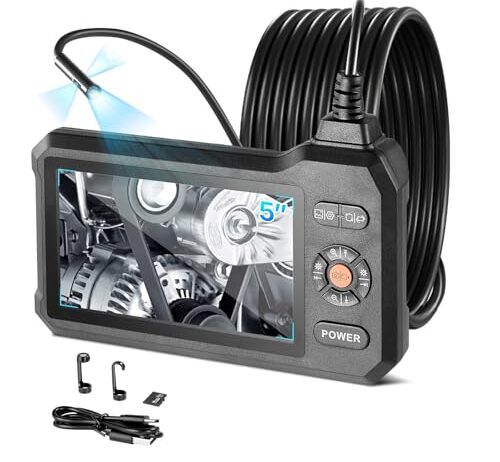
At $55 this is the entry point for triple-lens coverage, and it demonstrates both sides of the pixel-splitting trade-off clearly. You get forward, side, and rear views simultaneously on a 5-inch screen at 1280×720 total — which means each of the three views is working with a fraction of that resolution. For spotting a blockage or confirming a pipe route, that’s usually enough. For reading fine detail on a valve face or measuring crack depth by eye, it’s not.

The 16.4-foot rigid cable gives this model reach that the shorter options can’t match. That length covers deep plumbing runs, full-length HVAC ducts, and long stretches under a vehicle. The trade-off is rigidity: this cable goes straight. An owner notes exactly that limitation — good picture quality, but the tip lacks flexibility, and suggests an articulating tip would be the meaningful upgrade. The 10 LEDs (eight forward-area, two side) provide coverage in both directions, though at the close ranges typical of pipe inspection, those side LEDs can produce the glare artifact that comes with lighting a surface millimeters from the lens.

Screen size partially rescues multi-lens setups

A larger screen displaying the same split-screen layout doesn’t change the pixel count per view — the sensor resolution is fixed regardless of display size. But it does change how much detail your eye can extract from those pixels.

On a 4.3-inch screen split between two camera feeds, each feed occupies a rectangle roughly 2 inches wide. On a 7-inch screen split three ways, each panel is about 2.3 inches wide — actually larger per view despite dividing among more cameras. Your ability to see fine detail in an image depends partly on pixel count and partly on how large those pixels are rendered. A larger screen spreads the same information over more physical area, which makes each pixel easier to distinguish, even though no new information is added.

This is why a 7-inch triple-lens model and a 4.3-inch dual-lens model can feel surprisingly similar in per-view usability, despite the triple having more cameras. The screen size compensates for the additional division — not fully, but enough that the difference between two feeds and three feeds is less dramatic than the math alone would predict.

The job picks the lens count

The question isn’t which lens count is best. It’s which inspection you’re doing.

A single-lens articulating probe is for detail work in tight spaces. Aircraft inspection ports, narrow automotive passages where a 3.9mm diameter matters, situations where you need to steer to a specific spot and read what you see clearly. You sacrifice passive side coverage for active control and full-sensor resolution.

A dual-lens camera suits shallow inspections where you need to see two directions but the access is straightforward — a short drain run, an engine cylinder check through the spark plug hole. One owner bought a dual-lens specifically for motorcycle cylinder inspection and found it worked for that — with the caveat that seeing the full bore wall meant physically rotating the entire scope around the access point, because the side camera doesn’t swivel independently.

Triple-lens models are for long, branching passages where you need to know what’s behind the probe as well as ahead of it. Plumbing with multiple junctions. HVAC ductwork. Anywhere you’re threading through a route and can’t afford to miss a branch. The per-view resolution is lowest, but the coverage is complete.

None of these is the wrong choice in the abstract. Each is the wrong choice for the wrong task.

What wears out

Borescopes live in toolboxes, backpacks, and van compartments. They get pulled through abrasive passages. The cable bends, the screen gets pressed against other tools, the buttons catch on everything.

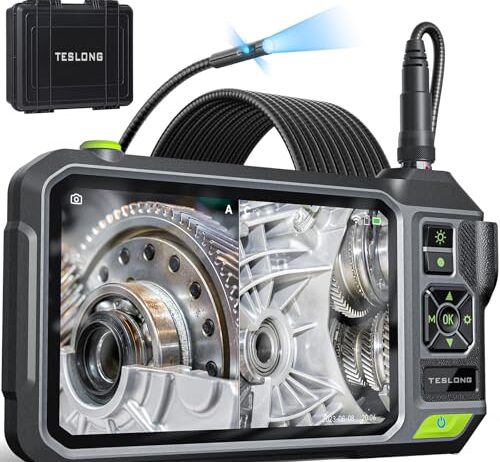
One owner of a triple-lens model with a replaceable gooseneck cable reports that after ten months of regular use, the soft rubber housing is already showing heavy wear on the buttons from nothing more than sitting in a backpack. The light-green button fell off within three months. A replacement was sent, but the underlying material is the issue — rubber soft enough to grip comfortably wears down from incidental contact, and there’s no hard-shell protection for the controls.

The same owner notes the cable situation: the included 16.5-foot cable was too long for the work, so a shorter replacement was purchased — but the shorter cable turned out to be thicker and less flexible. Cable length and cable diameter don’t always move in the direction you’d expect, and the only way to know is to hold the thing, which you can’t do before buying.

A hard carrying case helps — it keeps the screen away from the wrenches — but it doesn’t protect the buttons during actual use. IP67 waterproofing means the probe survives submersion, not that the control unit survives daily life.

FAQ

Does a dual-lens borescope show both views at the same time?

Yes — the screen splits into two panels, each showing one camera’s feed simultaneously. You don’t toggle between them. The trade-off is that each panel uses roughly half the display width, which means each individual view gets about one quarter of the total pixel count due to the square-law relationship between image circle diameter and pixel area.

How much resolution do you actually lose with a triple-lens camera versus a single lens?

Each view in a triple-lens split gets a smaller slice of the sensor and display. On a 1280×720 screen, a single lens uses all 921,600 pixels. Split three ways, each view works with a fraction of that — the exact amount depends on how the manufacturer tiles the feeds, but no layout avoids the fundamental loss. You’re trading per-view detail for the ability to see three directions without moving the probe.

Can a triple-lens borescope fit in the same tight spaces as a single-lens model?

It depends on probe diameter, not lens count — but multi-lens probes tend to be wider because the tip housing must contain additional lens assemblies, image sensors, and LED arrays. The narrowest probe in this group is a single-lens model at 3.9mm. Most multi-lens models don’t publish their probe diameter, which makes fitment impossible to confirm without measuring the physical tool.

Do multi-lens inspection cameras drain the battery faster than single-lens ones?

They run more sensors and more LEDs simultaneously, which draws more power than a single-lens setup doing the same job. Battery capacity and runtime vary by model, and most don’t publish runtime figures. The one model here that states a battery capacity — 6,000mAh — is a triple-lens unit, but without a runtime number, that figure alone doesn’t tell you how long it lasts under multi-camera load.

Is a rigid cable or an articulating cable better for pipe inspection?

Rigid cables work for straight runs — you push them in, they stay on axis, and the image is stable. The moment the pipe bends, a rigid cable stops. Articulating cables use pull-wires to steer the tip around bends in real time, but they cost more and add diameter to the probe. Semi-rigid gooseneck cables split the difference: you pre-bend them to a shape and they hold it, which handles gentle curves but not complex routes.