We research every product we recommend. We may earn a commission from the links on this page.
Electronics › Motion Detectors

PIR Motion Sensors Detect Temperature Changes, Not Movement

We compare published specifications and marketplace data. We do not test these products.

Motion Detectors See Sunlight Moving Across Surfaces as Intruders
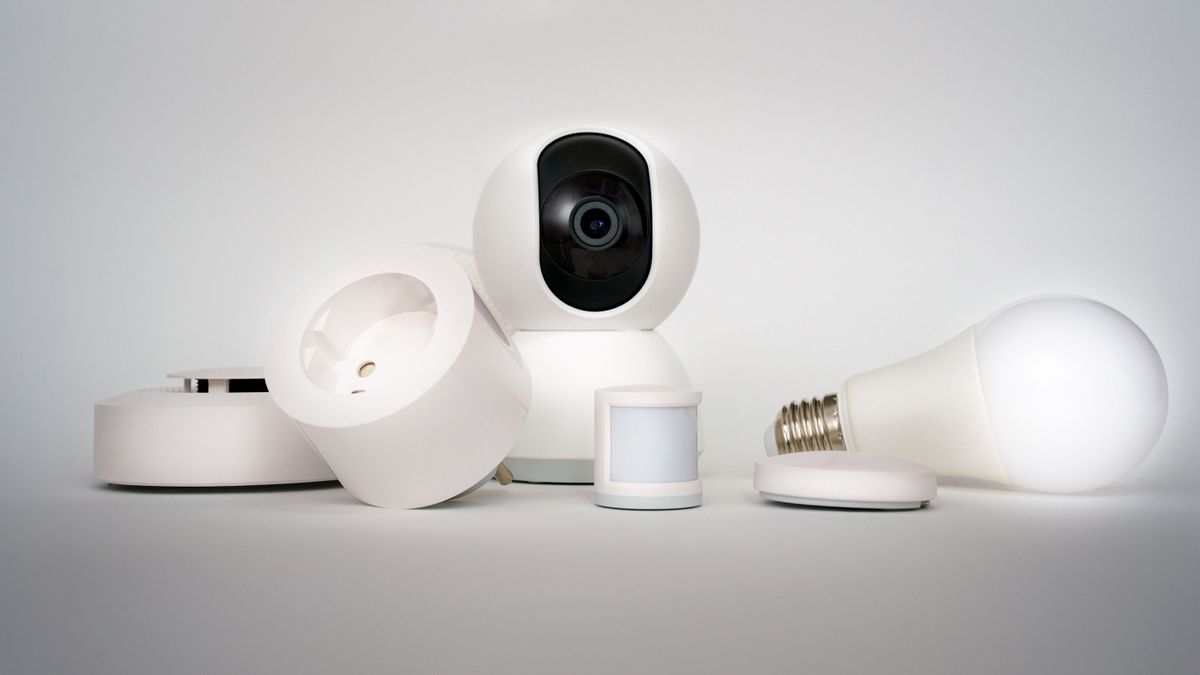
Photo by Jakub Zerdzicki on Pexels

A passive infrared motion sensor doesn’t see you move. It sees the temperature where you were and the temperature where you are now, and if the difference is large enough, fast enough, it fires. That distinction — temperature change, not motion — explains every false trigger you’ve ever cursed at and every slow approach the sensor missed entirely. The Fresnel lens in front of the detector slices the coverage zone into alternating hot and blind sectors, so a person crossing the beam trips multiple zones in quick succession. A cloud shadow drifting across warm pavement can do the same thing. Understanding what your sensor actually measures changes how you mount it, aim it, and set its sensitivity.

Affiliate disclosure: This article contains affiliate links. We may earn a commission if you buy through them, at no extra cost to you.

Everything we recommend
4 picks

How we picked

We did not install these sensors outdoors. Judgements come from published specifications, PIR operating principles, and owner-reported field behavior.

Detection physics, not distance claims

Advertised range assumes ideal thermal contrast. We weighed the sensor type and amplification design against real-world conditions.

Coverage geometry, not just degrees

A 360° sensor and a 240° sensor solve different mounting problems. We matched angle to installation scenario.

System dependency, not standalone price

A $33 sensor requiring a $60 base costs $93. We counted total cost to a working system.

False-trigger exposure, not sensitivity rating

Wide angles and high gain both increase vulnerability to sunlight interference. We assessed each design’s exposure profile.

What a PIR Sensor Actually Measures

The word “motion” in motion sensor is a convenient lie. Inside the housing, a small pyroelectric crystal generates voltage only when the infrared radiation falling on it changes. A person standing still three feet away produces no signal at all — the crystal has already settled to that temperature. Walk across the sensor’s field and you cross the boundaries between Fresnel lens zones, alternately lighting up and going dark on the detector elements. That alternation is the signal.

This is why a person walking across your driveway at 30 feet trips the sensor reliably, but someone walking straight toward it from the same distance might not. Cross-traffic produces sharp zone transitions. Radial approach barely changes which detector element is illuminated.

The threshold is calibrated for a human-sized heat source — roughly 10°C above ambient air — at the sensor’s rated maximum range. Drop the temperature differential and you drop the effective range. On a 95°F afternoon, when air temperature is only about 4°C below skin temperature, a sensor rated for 60 feet may not trigger until someone is 20 feet away. The physics hasn’t changed. The contrast has.

Why Your Sensor Fires at Nothing

Sunlight carries enormous infrared energy. When it hits a dark surface — asphalt, a car roof, a stone wall — that surface re-radiates heat in the wavelengths the sensor watches. A cloud passing overhead doesn’t just dim the light. It creates a moving thermal edge across every sunlit surface in the sensor’s field. That edge crosses Fresnel zones exactly the way a walking person does.

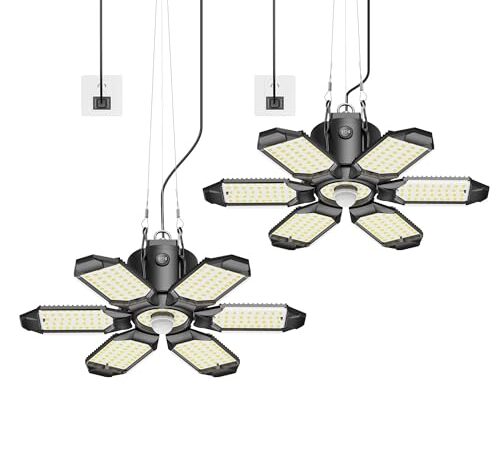
Wide-angle sensors catch more of this. A 360° unit like the Kryoza garage light monitors every horizontal direction at once, which means sunlight reflecting off any surface within its full circle can contribute to a false trigger. A 240° sensor like the EDISHINE replacement detector eliminates a 120° wedge behind it — typically the wall it’s mounted on — which cuts the sun-exposure window substantially.

Long-range sensors have a different vulnerability. To detect a person-sized heat signature at half a mile, the electronics amplify the pyroelectric signal aggressively. That gain doesn’t distinguish between a person at 2,000 feet and a sunlit car windshield at the same distance. The sensor’s reach becomes its weakness in open terrain with reflective surfaces.

The fix isn’t lower sensitivity alone. Lowering sensitivity raises the temperature-change threshold, which shortens your effective detection distance for real targets. You lose range to suppress noise. The better approach is usually repositioning: aim the sensor so its field of view doesn’t include large sun-heated surfaces, or mount it under an eave where the housing stays shaded and the baseline temperature remains stable.

Detection Range Versus Detection Angle — They Solve Different Problems

These two numbers describe perpendicular dimensions of the same invisible cone, and confusing them leads to buying the wrong sensor.

Detection angle is the horizontal arc the sensor monitors — how wide the cone opens. The EDISHINE unit covers 240°, which means it watches roughly two-thirds of the space around it, leaving a blind wedge directly behind. The Kryoza garage light covers 360°, watching everything at the same elevation. Neither number tells you how far.

Detection range is depth — how far into that cone the sensor can reliably pick up a heat signature. The EDISHINE reaches 60 feet. The two eMACROS sensors claim half a mile. Those are different tools for different problems.

A 60-foot, 240° sensor is meant for a porch or a garage entry. It watches a wide area close in. A half-mile sensor with what is likely a much narrower beam is meant for a driveway entrance or a property line — it watches a long, thin corridor. Mount the porch sensor on a fence post 200 feet from anything, and it detects nothing useful. Mount the driveway sensor above a busy patio, and it fires constantly.

The critical question isn’t which spec is bigger. It’s where the sensor sits and what it needs to watch.

What “Adjustable Sensitivity” Actually Adjusts

Sensitivity controls the minimum temperature differential that triggers the sensor. Turn it up and the sensor fires on smaller temperature changes — a warm breeze, a bird, a squirrel. Turn it down and it demands a larger thermal contrast, which means a person needs to be closer (or the ambient temperature needs to be lower) to register.

This is not a precision dial. It’s a trade-off between range and noise, and there’s no setting that gives you both.

The time-delay setting is often confused with sensitivity, but it controls something completely unrelated: how long the output stays active after the last detected motion. Shortening the delay means the light turns off faster after you walk away. It does nothing to prevent the initial false trigger. If your sensor fires on sunlight, reducing the time delay from five minutes to ten seconds means the light blinks on and off every ten seconds instead of staying on for five minutes. The trigger rate is unchanged.

Three-mode sensors like the EDISHINE offer test, auto, and manual override. Test mode shortens the time delay to a few seconds so you can walk the perimeter and see exactly where the sensor picks you up — useful for aiming, useless for daily operation. The mode switch doesn’t affect sensitivity. The sensitivity dial doesn’t affect duration. They’re independent axes.

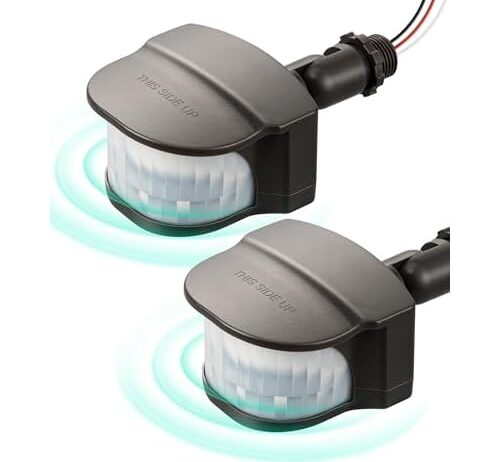
Most outdoor floodlights already have a PIR sensor — it’s the small dome between the lamp heads. When that sensor starts false-triggering or stops detecting, you replace the sensor, not the entire fixture. The EDISHINE is built for exactly that job: a standard-fit replacement motion detector that wires into the existing socket.

The 240° coverage angle leaves a 120° blind zone behind the sensor, which is typically the wall or eave it mounts against. That’s intentional — you don’t need to detect the wall, and eliminating it from the field of view removes one large thermal surface that would otherwise contribute to false triggers on hot days.

At 60 feet, the detection range is calibrated for a front porch, a garage apron, or a short walkway. One owner reports that with sensitivity turned fully up, the effective range dropped to 5–10 feet with constant on-off cycling — a pattern consistent with the sensor triggering on its own thermal noise or nearby surface re-radiation rather than distant targets. Dialing sensitivity back from maximum typically restores stable detection at moderate distances. The price — under $10 per sensor in the two-pack — means a failed unit is a minor loss, though one owner did receive a non-functional sensor.

Solar Sensors and the Heating Problem

A solar-powered outdoor sensor sits in direct sunlight by design — that’s how it charges. But direct sunlight also heats the sensor housing, which raises the baseline temperature of the pyroelectric element inside. When the detector itself is warm, the temperature differential between it and an approaching person shrinks. The sensor becomes simultaneously more charged and less sensitive.

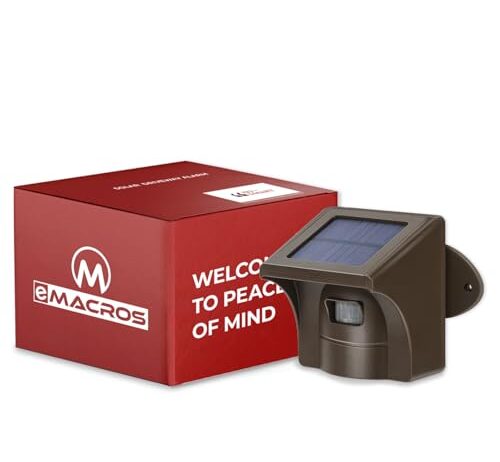
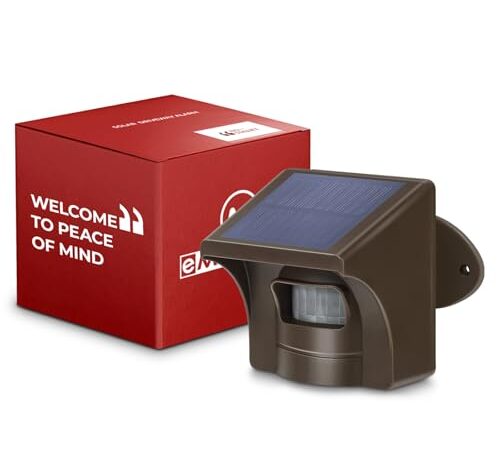
Both eMACROS sensors in this set are solar-powered with battery backup. The solar panel keeps the battery topped off, but it also means the sensor body absorbs solar heat all day. In summer, when the sun is strongest and ambient temperatures are highest, the sensor’s effective range contracts at exactly the moment you have the most daylight hours to cover.

Winter and cloudy weather raise a different concern. A rechargeable battery behind a small solar panel needs a minimum number of sun-hours to maintain charge. Extended overcast periods — common in the Pacific Northwest, the upper Midwest, or the UK — can drain the battery below operating threshold. The sensor doesn’t fail dramatically. It just stops transmitting, and because it’s wireless, you don’t notice until you realize no alerts have come through in three days.

Hardwired sensors don’t have either problem. They draw constant power from the fixture’s circuit and their housing temperature is determined by mounting location, not by how they charge.

Sensor-Only Products Need a System Behind Them

Three of the four sensors here are components, not complete products. The EDISHINE replacement detector wires into an existing floodlight housing — no housing, no function. The two eMACROS solar sensors transmit wirelessly to a base station or app receiver that must be purchased separately. The sensor alone is a transmitter with no listener.

The eMACROS Pro4 sensor requires the Pro4 app receiver specifically. The older eMACROS solar sensor requires a base station from the same product line, and one owner reports that switching to a mesh WiFi system broke the connection between base and sensor — the base re-paired with the new network but the sensors did not automatically reconnect. Setup instructions, according to that same owner, were poor enough to require days of trial and error.

Only the Kryoza garage light is self-contained: plug it into an outlet, and the sensor, the light, and the remote control all work without any external system. That’s the trade-off for its indoor-only, close-range design — it doesn’t need infrastructure because it doesn’t communicate with anything beyond its own RF remote.

A half-mile detection range makes sense in one specific scenario: you need to know when something crosses a boundary far from your house. A long rural driveway, a gate at the property line, a detached barn. The sensor sits out there, and the base station sits inside where you can hear the chime.

One owner measured functional range at about 350 feet through a six-inch exterior wall with cedar siding and interior drywall, with line-of-sight trees in the path. Through multiple interior walls, range dropped to roughly 200 feet. Those are real-world numbers — the half-mile figure assumes open air with no obstructions, which describes almost no actual installation. Expect a fraction of the advertised distance once walls, vegetation, and terrain enter the picture.

The solar panel and rechargeable battery eliminate wiring runs to remote locations, which is the practical reason this sensor exists. Running 14-gauge wire 500 feet to a fence post is a project. Strapping a solar sensor to it is an afternoon. The cost is the winter-charging uncertainty and the system dependency — without the separately purchased base station, the sensor transmits to nothing.

Matching the Sensor to the Job

The question isn’t which sensor is best. It’s where the sensor goes and what you need it to do.

Replacing a failed sensor on an existing porch light: the EDISHINE is the right shape, the right price, and the right range. It wires in, it covers the entry zone, and at under $10 a sensor you can buy spares. Don’t expect it to watch your driveway from 60 feet in August heat — that’s 60 feet under ideal thermal contrast, which summer afternoons are not.

Monitoring a driveway entrance 200 to 400 feet from the house: the eMACROS solar sensors are built for this. Budget for the base station or app receiver on top of the sensor price, mount the sensor where it gets sun but faces away from large reflective surfaces, and test the actual range through your specific walls before committing to a mounting location. The half-mile number is a ceiling, not a floor.

Lighting a garage or workshop when you walk in: the Kryoza is the only self-contained option here. Plug it in, set the sensitivity, and accept that 360° coverage in a space with windows means occasional false triggers from direct sunlight hitting the lens. Mount it on the ceiling where the Fresnel lens looks down rather than across toward windows, and the problem largely solves itself — thermal gradients at floor level are weaker than those at window height.

FAQ

Why does my motion sensor light turn on when nothing is moving?

PIR sensors trigger on temperature changes, not visible movement. Sunlight shifting across pavement, a warm air current hitting the lens, or a cloud shadow sliding over a heated surface all produce the same kind of thermal transition the sensor reads as a person. Repositioning the sensor so its field of view avoids large sun-heated surfaces — driveways, parked cars, south-facing walls — reduces false triggers more effectively than lowering sensitivity.

Do solar motion sensors work in winter or cloudy weather?

They work as long as the battery holds charge. A small solar panel behind a sensor needs regular direct sunlight to keep the battery above operating threshold. Extended overcast periods can drain it, and the sensor stops transmitting without any obvious failure signal. In regions with long cloudy winters, check that your solar sensor is still sending test alerts periodically, or consider a hardwired alternative for critical locations.

What’s the difference between detection range and detection angle?

Detection angle is how wide the sensor watches — the horizontal arc of its coverage cone, measured in degrees. Detection range is how far into that cone the sensor can pick up a heat signature, measured in feet or miles. A 240° sensor at 60 feet monitors a wide, shallow area. A narrow-beam sensor at half a mile monitors a long, thin corridor. They solve different problems at different scales.

Can I use any motion sensor with my existing outdoor light?

Replacement sensors like the EDISHINE are designed to wire into standard outdoor floodlight housings — they replace the sensor module, not the whole fixture. But wireless sensors like the eMACROS units don’t connect to lights at all; they transmit alerts to a separate receiver. Check whether you need a sensor that switches your existing light’s power circuit or one that sends a notification to a remote device. They’re different products solving different problems.

Why do motion sensors miss slow-moving objects but trigger on fast ones?

The sensor fires when the temperature change across its detector elements exceeds a threshold within a short time window — typically a shift equivalent to several degrees Celsius within one to two seconds. A person walking briskly crosses multiple Fresnel lens zones in that window, generating a strong differential signal. Someone moving very slowly may not cross a zone boundary fast enough to exceed the threshold, so the signal looks like gradual ambient drift and gets filtered out.