
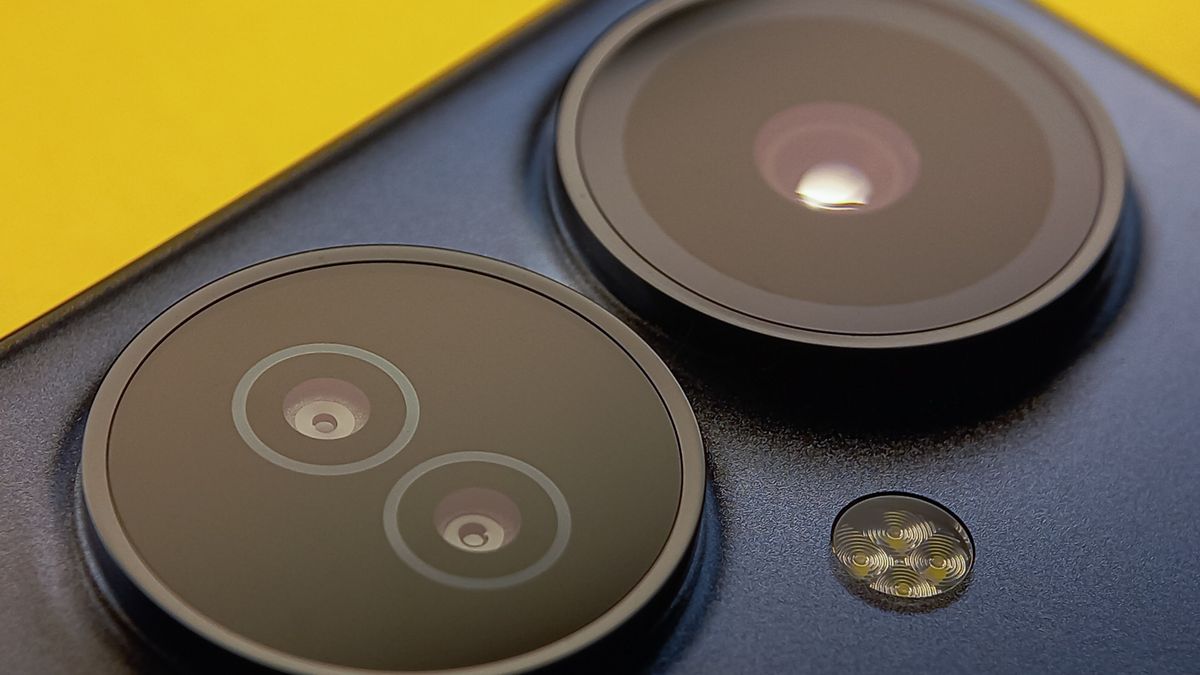
A triple-lens borescope advertising 1280×720 resolution does not deliver 1280×720 per camera. It delivers that resolution total, split across three simultaneous views — each one working with roughly a third of the screen and a fraction of the pixel count. The trade-off is real: you gain the ability to see forward, sideways, and behind without repositioning, but every individual view carries less detail than a single lens using the full sensor. Understanding where that detail goes — and where it doesn’t — is the difference between buying the right inspection camera and buying a spec sheet.
Affiliate disclosure: This article contains affiliate links. We may earn a commission if you buy through them, at no extra cost to you.
Everything we recommend
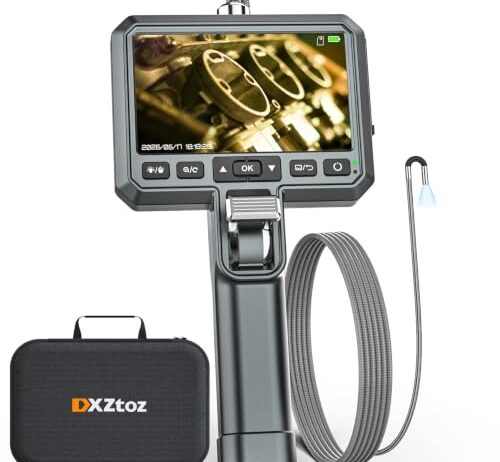
One lens, full sensor, steerable tip
3.9mm Articulating Borescope for Aircraft Automotive Engine Mechanic Inspection, 0.15in Ultra-Slim Fiber Optic Scope with Light, 2-Way 220°, 5.0" IPS HD Screen, 32GB, IP67 WaterproofThe 3.9mm articulating probe fits where wider multi-lens models cannot, and delivers the full display resolution to a single view instead of splitting it.
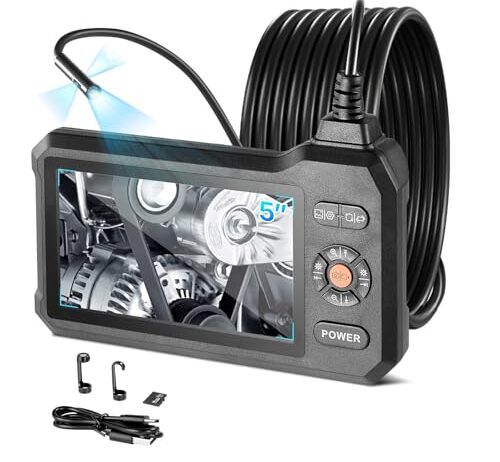
Three lenses and 16 feet for under sixty dollars
VEVOR Triple Lens Endoscope with Light, 5" HD IPS Screen Industrial Borescope, 1280 x 720 Lens, 8 + 2 LEDs, 8X Zoom, IP67 Waterproof Inspection Snake Camera for Auto, Plumbing (16.4FT RigidTriple-lens coverage and the longest cable in the group at a price low enough to own alongside a dedicated single-lens tool.
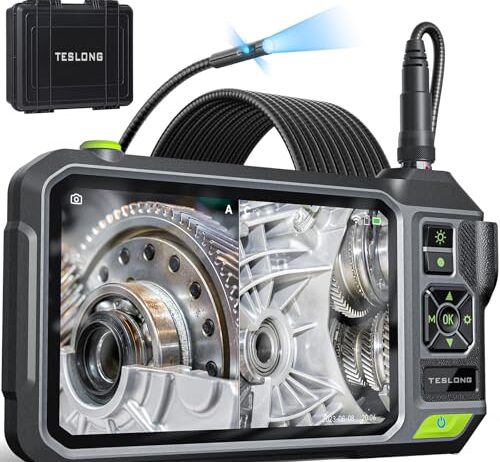
Largest screen softens the triple-lens trade-off
Teslong NTS700 Triple Lens Borescope with 7" 720P IPS Screen | 16.5FT Replaceable Gooseneck for Automotive HVAC, 1280x720 HD Display, 8+1+1 LEDs, IP67, 6000mAh, 32GB, 5FT, Hard CaseThe 7-inch display gives each of three views more physical area than smaller split-screen models, and the replaceable gooseneck adapts cable length to the job.
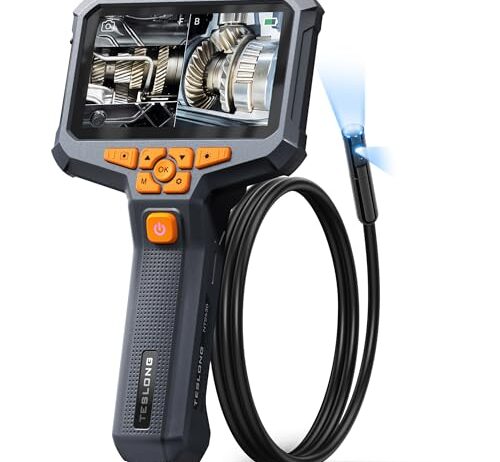
Two cameras, short cable, tight quarters
Teslong Dual Lens 3.3FT Endoscope Camera for Drain & Plumbing Inspection | 4.3" HD Borescope with Split Screen & 7 LED Lights - Waterproof Snake Scope for Home Pipe, HVAC & WallDual-lens split-screen on a compact 3.3-foot cable sized for cylinder checks and short drain runs where a 16-foot probe is unwieldy.
Every borescope camera starts with the same physical constraint: one image sensor behind one lens projects a circular image, and the display carves the largest rectangle it can fit inside that circle. The pixels in the corners of a rectangular sensor sit outside the image circle entirely — unused. What matters for sharpness is the diameter of that circle, because the usable pixel count scales with the square of the diameter. Double the circle, quadruple the pixels. Halve it, quarter them.
That relationship is invisible when a single lens uses the full sensor. It becomes the dominant factor the moment you split the display.
How we picked
We did not put these scopes down a pipe. Judgement is based on published specifications, the physics of image sensors, and owner-reported experience.
One single-lens, one dual, two triple — enough spread to show how dividing a sensor changes what each view resolves.
Only models with a published pixel count let us do the per-view math honestly.
Rigid, gooseneck, articulating, and short fixed — each answers a different reach problem.
A 5.4× range from $55 to $297 makes the cost of each added feature visible.