Your door sensor fired. The reed switch opened, the transmitter sent its packet, and nothing happened — no push notification, no siren, no log entry. The sensor worked. The signal just never arrived. Wireless security sensors share the same 2.4 GHz radio band as your router, your Bluetooth earbuds, and your microwave, and when two devices transmit at the same instant, both packets corrupt. Here’s where that breaks down and which designs handle it better.
Affiliate disclosure: This article contains affiliate links. We may earn a commission if you buy through them, at no extra cost to you.
Everything we recommend
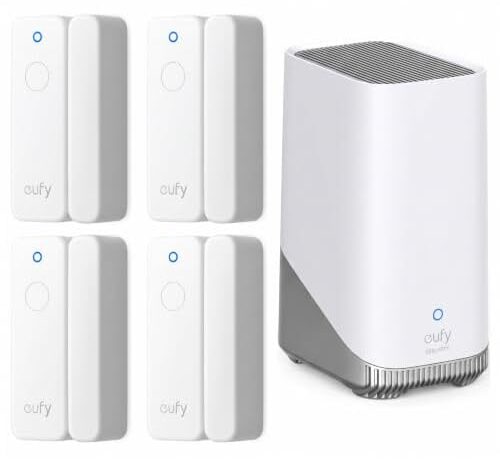
Four doors, one hub, nothing else to buy
eufy Security Entry Sensor Kit, HomeBase3 S380 Hub+4-Pack Entry Sensors E20The eufy Entry Sensor Kit includes the HomeBase3 S380 hub and four E20 sensors — a complete perimeter for a small home's main entry points without requiring additional hardware.
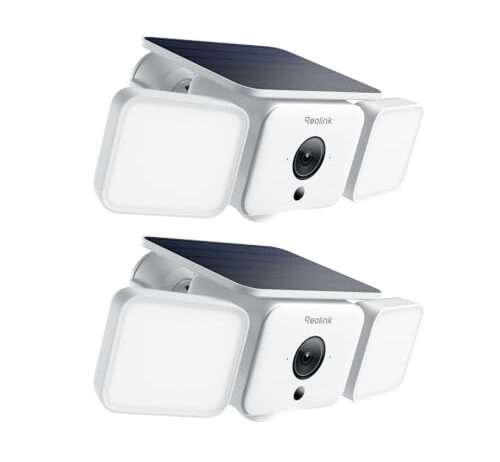
WiFi 6 cameras that handle busy airwaves
REOLINK Solar Floodlight Security Cameras Wireless Outdoor, Up to 1000lm | 2 Pack, AI/PIR Motion-Activated Floodlight, 2K 150° Color Night Vision, Light & Siren Alarm, Two-Way Talk, WiFi 6 2Reolink's solar floodlight cameras use WiFi 6 to hold a 2K video stream steady in crowded RF environments, with PIR motion detection and AI filtering to cut false triggers.

HomeKit, Google, and Alexa from one kit
Aqara Camera Protect Kit Y100-4 Piece Wireless Home Security System | with 2K Camera Hub G3, 3 Smart Sensors, HomeGuardian, Local Automation & 24/7 Alerts, Supports HomeKit, Google Home, AleAqara's Camera Hub G3 bundles a 2K camera with three sensors and works across all three major ecosystems — no rewiring your smart home to add security.
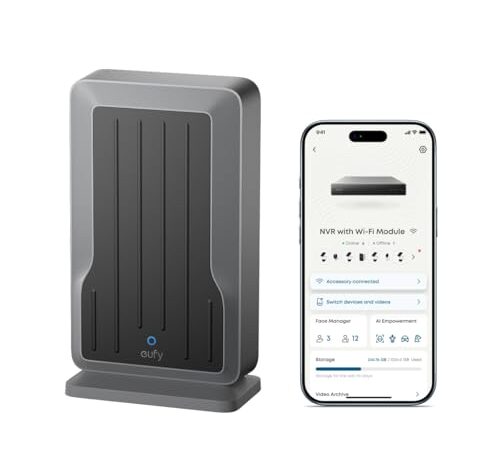
A radio bridge for wired infrastructure
eufy NVR Wi-Fi Module, Only for eufy PoE NVR System | Supports Up to 16 eufy Wi-Fi Cameras, Video Doorbells & 32 Sensors, Unified Security Integration, See Compatibility ListThe eufy Wi-Fi Module connects up to 16 cameras, 32 sensors, and video doorbells to an existing PoE NVR — scaling wireless coverage without replacing the wired backbone.
How we picked
We do not install these sensors in homes. Judgement rests on published radio specifications, hub protocol support, and collision-handling behavior reported in marketplace reviews.
Whether the hub supports WiFi 6, multi-protocol routing, or only single-band 2.4 GHz — the mechanism that determines collision probability under load.
Maximum sensor capacity and whether the hub aggregates devices from multiple protocols, which concentrates collision risk at a single choke point.
Whether adding sensors requires a new hub or scales on existing infrastructure — total cost and collision exposure at ten or twenty devices.
Whether dropped packets generate false alarms or missed events — reviewers report which way the system breaks when radio traffic spikes.