We research every product we recommend. We may earn a commission from the links on this page.
Tools & Home Improvement › Path Lights

Low Voltage Landscape Lights Lose Brightness Every Fall — Here’s the Wiring Math

We compare published specifications and marketplace data. We do not test these products.

Solar Path Lights Dim Under Tree Canopy Even in Summer
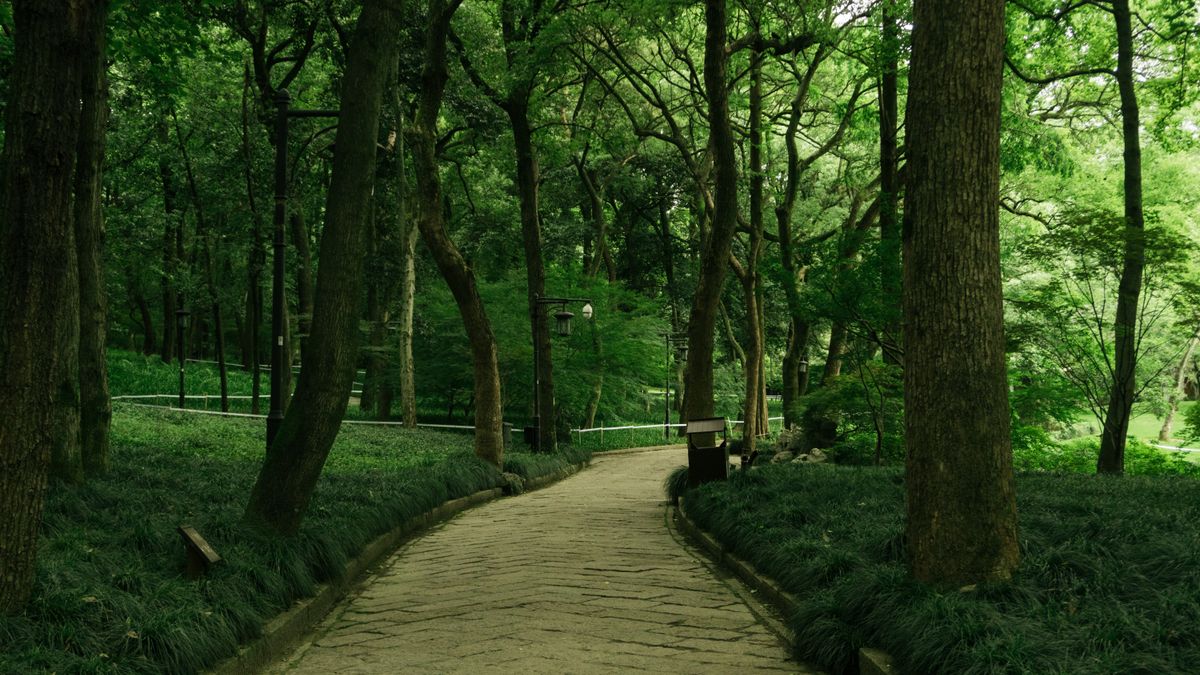
Photo by Byron Ho Jiapeng on Pexels

A 12-volt landscape light that looked fine in June puts out the same lumens in October — but the path looks darker. Shorter days mean you notice the fixtures earlier, when your eyes haven’t fully shifted from daylight vision, and a thickening canopy absorbs the light that used to bounce off open ground. The fixtures didn’t fail. The season changed around them, and the wiring that barely kept up in summer now shows every volt it’s losing.

Affiliate disclosure: This article contains affiliate links. We may earn a commission if you buy through them, at no extra cost to you.

Everything we recommend
4 picks

How we picked

We did not install these lights in a yard. Selections are based on published specifications, transformer math, and marketplace review patterns.

Transformer headroom, not peak wattage

Continuous-duty loads need twenty percent margin. We checked rated capacity against realistic fixture counts.

Stated lumens, not wattage alone

LED efficiency varies by manufacturer. A lumen figure tells you what reaches the ground; wattage alone does not.

Zoning capability, not single-run simplicity

Shaded and open areas need different fixture density. Independent outputs let you wire them separately.

Ingress protection, not just waterproof claims

A rated IP number means a tested seal. An unrated claim means a marketing department made a decision.

Why the Same Lights Look Dimmer After September

Your eyes operate in three modes: photopic in bright daylight, scotopic in near-darkness, and mesopic in between. A landscape light on a summer evening catches you in photopic mode — your cone cells are still running, color looks right, and 150 lumens on a flagstone path reads as plenty. By October, you’re walking that path an hour earlier relative to sunset, your rod cells are doing more of the work, and rod cells peak at a different wavelength than the warm white LEDs are producing. The light hasn’t changed. Your retina’s sensitivity to it has.

Add the canopy. A deciduous tree in full leaf absorbs and scatters light from below as well as above. The photons that used to bounce off bare branches and open sky in April now hit a ceiling of leaves. Ground-level illumination drops not because the fixture lost output but because the reflective geometry above it changed. Warm-white LEDs around 3000K put out proportionally more red and amber wavelengths, and green foliage reflects those less efficiently than it reflects the blue-rich light from a cooler source. The canopy isn’t just blocking — it’s selectively eating the wavelengths your fixtures are heaviest in.

This is the season when marginal wiring stops being invisible.

Voltage Drop Is the Tax You Forgot to Calculate

A twelve-volt system loses voltage in the wire itself. Copper has resistance, resistance increases with length, and the voltage arriving at the last fixture on a long run is always less than what left the transformer. A fifty-foot run of 16-gauge wire carrying 48 watts drops roughly 1.2 volts. That’s ten percent of your supply — and an LED that’s getting 10.8 volts instead of 12 dims noticeably.

Upgrade to 12-gauge wire on the same run and the drop falls to around half a volt. That’s the difference between a path light that holds its brightness at the far end and one that fades like a candle.

In summer you don’t notice. The ambient light is high, your pupils are contracted, and a ten-percent dimming at the end of the run disappears into the general brightness. Come fall, that same drop is the difference between seeing the path edge and guessing at it. Every fixture you add to the run makes it worse — total current climbs, voltage drop climbs with it, and the last light on the daisy chain pays the full price.

The fix isn’t brighter fixtures. It’s shorter runs, heavier wire, or splitting the load across separate transformer outputs so no single circuit carries too many watts.

How Many Fixtures One Transformer Actually Supports

Multiply the number of fixtures by the wattage per fixture. Compare that to eighty percent of the transformer’s rated capacity — not one hundred percent. Continuous-duty loads need thermal headroom, and a transformer running at full rated wattage will eventually shut itself down to avoid overheating.

A 120-watt transformer at eighty percent gives you 96 usable watts. At 5.6 watts per fixture, that’s seventeen fixtures — not the twenty-one you’d calculate from the full rating. A 200-watt unit at the same margin supports 160 watts, which is twenty-six fixtures at six watts each. That sixty-seven percent spread in transformer capacity translates directly into how many zones you can light before you need a second power supply.

Most buyers discover this limit the hard way: they add fixtures until the entire run dims, because every light on the circuit shares the same voltage and the transformer is quietly sagging under load. The fix after the fact is removing fixtures, which nobody wants to do, or adding a second transformer, which means running new wire. Doing the math first costs nothing.

Shaded Zones and Open Zones Don’t Belong on the Same Wire

A path under a mature oak and a path across an open lawn need different fixture spacing. Under canopy, you space tighter — six to eight feet — because the ambient light is lower and each fixture’s pool of light has to overlap with the next or the eye sees dark gaps. In open ground, ten to twelve feet works because reflected skylight fills the space between pools.

If both zones share a single transformer output, the tight spacing under the tree means more fixtures on that run, which means more current, which means more voltage drop — and the open-ground fixtures at the end of the same wire dim along with them. The shaded path dragged the sunny path down.

Separate transformer outputs solve this cleanly. Run one circuit to the canopy zone with heavier gauge wire and tighter spacing, and a second circuit to the open lawn with lighter spacing and fewer fixtures. Each run’s voltage drop depends only on its own load. A transformer with three independent outputs lets you treat the front walk, the side garden, and the backyard as electrically separate systems fed from one box.

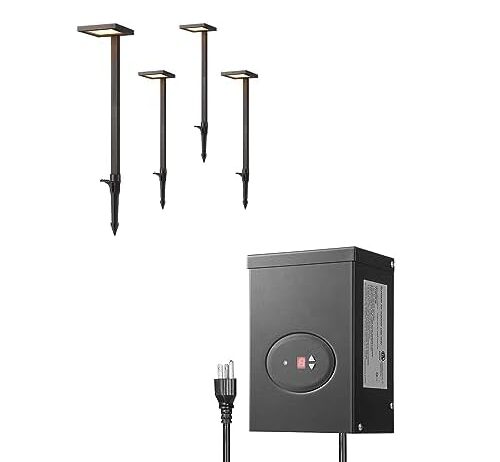
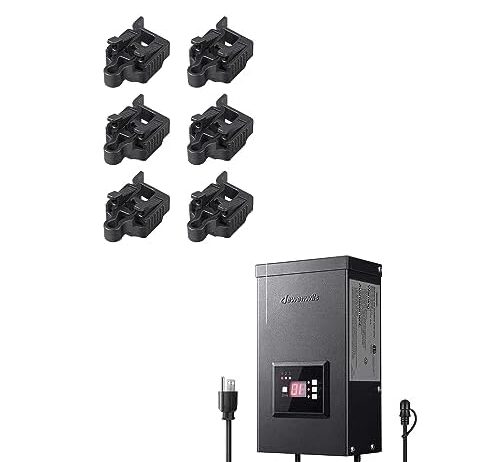
This is infrastructure, not lighting — there are no fixtures in the box. What you get is a 200-watt transformer with three independent control outputs and six wire connectors to start your runs. The value is in the topology it allows: three separate circuits, each carrying only its own load, each with its own voltage-drop math.

At eighty percent continuous duty, 200 watts gives you 160 usable watts. Split across three outputs, that’s enough to run a canopy zone at tight spacing, an open-lawn zone at wider spacing, and still have a third output for accent lights on a porch or retaining wall — all without any circuit affecting the others. You’ll need to buy fixtures separately and verify they’re rated for the same voltage, but you’re choosing them by zone instead of compromising on one fixture type for the whole yard.

Color Temperature Matters More Under Trees

A 3000K warm-white LED puts out most of its energy in the red-amber part of the spectrum. In open air, that reads as warm and inviting — the gold-toned light people associate with a good restaurant or a well-lit porch. Under a green canopy, the physics shifts. Leaves reflect green wavelengths and absorb red ones, so the warm light you paid for loses a disproportionate share of its output to the ceiling of foliage above. A 4000K or 5000K source, with more energy in the blue-green range, would lose less to the same canopy.

The trade-off is real. Cooler light under trees preserves more lumens on the ground but looks harsh and institutional against foliage — the blue cast fights the organic setting. Warmer light loses photons to the leaves but looks right. There is no free answer. What you can do is choose deliberately rather than discover the problem in October when the canopy is thick and the path is dim.

A fixture with selectable color temperature lets you try both and adjust. A fixed-temperature fixture commits you on installation day.

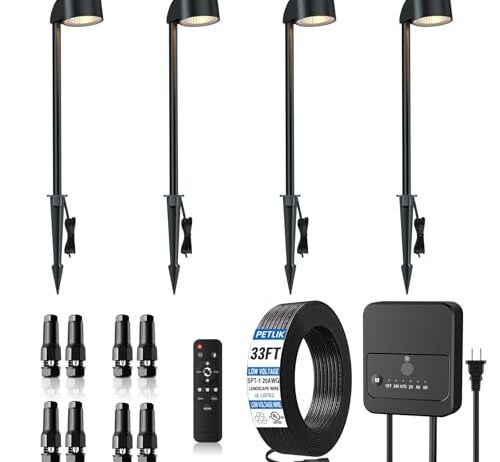
Five selectable color temperatures mean you’re not locked into a guess at installation. Under a dense maple, dial warmer and accept the lumen loss for a natural look, or push cooler and recover some of the photons the foliage would otherwise eat. In an open bed by the driveway, shift to whatever complements the house facade. The same hardware serves both zones differently.

The IP66 rating is the other detail that matters seasonally. The first digit — six — means dust-tight: no particles entering the housing at all. The second digit — also six — means resistance to powerful water jets from any direction, which covers driving rain, sprinkler overspray, and the kind of saturated mulch contact that happens every fall. Four fixtures in the kit limits total coverage, but for a defined shaded zone where you need to experiment with color, four is a starting point that doesn’t overcommit the budget.

Wattage Is a Power Bill, Not a Brightness Guarantee

LED efficiency varies. A six-watt fixture from one manufacturer might produce 480 lumens; from another, 600. The wattage tells you what leaves your transformer. The lumen figure tells you what reaches the ground. Without lumens, you’re buying electricity consumption and hoping the engineering behind it is competitive.

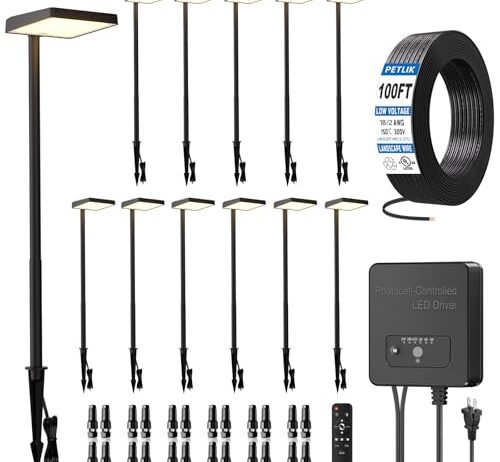
One fixture in this set publishes an actual lumen number: 151 lumens at 5.6 watts. That’s about 27 lumens per watt — low by general LED standards, where 80 to 130 lumens per watt is typical, but landscape fixtures trade raw efficiency for beam control, housing losses, and lens diffusion. The number is still useful because it’s a number. You can calculate how many you need per linear foot of path and whether the transformer can support that count.

For the fixtures that omit lumens, wattage is all you have. Six watts could mean 150 lumens or 500 lumens depending on the LED chip and driver design. In an open yard, the ambiguity doesn’t hurt — any reasonable LED path light is bright enough. Under canopy in October, the ambiguity is the whole problem. You don’t know what you’re getting until the leaves are down and you can compare the pools of light on the ground.

Wire Gauge Is the Fall Fix That Doesn’t Require New Fixtures

If your path lights dimmed this October and the transformer has headroom, the wire is the next suspect. Sixteen-gauge landscape wire is standard in most kits because it’s cheap and flexible. It’s also the first bottleneck on any run longer than forty feet carrying more than a few fixtures.

Twelve-gauge wire has roughly half the resistance per foot. Replacing a fifty-foot run of 16-gauge with 12-gauge on the same load cuts your voltage drop from around 1.2 volts to about 0.5 volts — and that half-volt difference is visible at the far fixture. The wire is buried in a shallow trench alongside the path, so the swap means digging, but it’s a one-afternoon job that solves the problem without replacing a single light head.

The alternative is shorter runs. Instead of one long daisy chain from the transformer to the last fixture, run a home-run wire to the middle of the path and split into two shorter chains in each direction. Each chain carries half the current, and the voltage drop on each is a fraction of what the single long run produced. A transformer with multiple outputs makes this easier — each output gets its own run, and the math stays simple.

FAQ

How many low voltage landscape lights can I run on one transformer?

Multiply the number of fixtures by the wattage per fixture, then check that the total stays below eighty percent of the transformer’s rated capacity. A 200-watt transformer supports 160 usable watts at continuous duty — twenty-six fixtures at six watts each, or twenty-eight at 5.6 watts. A 120-watt transformer supports 96 usable watts, which means seventeen fixtures at 5.6 watts. Go over that margin and the transformer will eventually overheat and shut down.

What wire gauge do I need for low voltage landscape lighting?

For runs under thirty feet with light loads, 16-gauge works. Beyond forty feet, or with more than six to eight fixtures on a single run, 12-gauge wire cuts voltage drop roughly in half. A fifty-foot run of 16-gauge carrying 48 watts loses about 1.2 volts; the same run in 12-gauge loses about 0.5 volts. That difference is visible at the last fixture.

What color temperature works best for landscape lighting under trees?

Warmer light around 3000K looks natural against foliage but loses more output to green leaves, which absorb red wavelengths. Cooler light around 4000-5000K preserves more lumens under canopy but can look harsh and institutional. A fixture with selectable color temperature lets you experiment; a fixed-temperature fixture commits you on installation day.

Why do my path lights look dimmer in fall than they did in summer?

Three things change at once. The canopy fills in and absorbs light from below, especially the red-amber wavelengths in warm-white LEDs. You notice the lights earlier in the evening, when your eyes are still in a transitional state between daylight and night vision. And any voltage drop in the wire that was invisible in bright ambient conditions becomes obvious when the surrounding light level drops. The fixtures themselves haven’t changed.

Can I mix different wattage fixtures on the same low voltage circuit?

Yes, as long as the total wattage of all fixtures on that circuit stays below eighty percent of the transformer output’s capacity. The concern isn’t compatibility — twelve-volt fixtures share the same voltage regardless of wattage. The concern is that different wattages draw different current, and the higher-draw fixtures at the far end of a long run will dim more than low-draw fixtures near the transformer. Separate runs for different fixture types avoids this.

What does IP66 mean for outdoor landscape lights?

The first six means completely dust-tight — no particles enter the housing. The second six means the fixture resists powerful water jets from any direction. That exceeds what most landscape installations demand, but it covers driving rain, direct sprinkler hits, and prolonged contact with saturated soil or mulch. A fixture that says only ‘waterproof’ without a number hasn’t been through the same standardized test.