We research every product we recommend. We may earn a commission from the links on this page.
Automotive › Tonneau Covers

Tonneau Cover Seals Don’t Fail Evenly — They Fail at One Spot

We compare published specifications and marketplace data. We do not test these products.

Tonneau Covers Leak Because Truck Beds Aren't Flat
Photo by Cara Denison on Pexels

A tonneau cover seal doesn’t fail everywhere at once. It fails at one spot — the single worst point of contact between gasket and rail — and water follows that path into your bed. The difference between a dry load and a soaked one often comes down to less than a millimeter of height variation along a six-foot rail that was never perfectly straight to begin with. Cover type matters, but understanding where and why seals break tells you more about which design will actually keep water out on your truck.

Affiliate disclosure: This article contains affiliate links. We may earn a commission if you buy through them, at no extra cost to you.

Everything we recommend
4 picks

Truck bed rails have a published tolerance of roughly one to three millimeters over a six-foot span. That sounds tight until you consider what sits on top of them. A tonneau cover’s perimeter gasket — usually EPDM rubber or closed-cell foam — needs to compress uniformly across that entire span to form a seal. Where the rail sits high, the gasket compresses more. Where it dips, the gasket can’t reach. A gap of half a millimeter at one point defeats the seal everywhere, because water follows the path of least resistance to that single opening.

This isn’t a defect. It’s geometry.

Body-on-frame trucks make it worse. The bed and cab are separate structures bolted to a shared frame, and they flex independently when you load cargo, tow a trailer, or drive over uneven ground. That flex changes the rail height dynamically — a seal that’s tight in the driveway opens up at highway speed with a thousand pounds in the bed. The gasket has to absorb both the static manufacturing variation and the dynamic movement, and those are two different engineering problems with different solutions.

How we picked

We did not mount these covers on trucks. Selections are based on published specifications, material properties, and owner-reported installation outcomes.

Seal mechanism, not seal marketing

Whether the design addresses rail irregularity through gasket compression, material conformability, or rigid clamping force.

Mounting that holds under flex

Body-on-frame trucks twist. We looked for mounting systems that maintain seal contact when the bed moves independently of the cab.

Load path, not just load rating

A weight capacity means something only if the cover transfers force to the rails, not just to the gasket sitting on them.

Real owner friction, not spec completeness

Owner reports of blown-off covers and snapped hardware reveal installation tolerances that no spec sheet carries.


Rigid Covers Hold Shape. That’s the Problem.

An aluminum panel or an FRP (fiber-reinforced plastic) shell won’t sag, won’t stretch, and won’t deform under snow load. Those are real advantages. But that same rigidity means the cover frame is a fixed plane sitting on top of a surface that isn’t flat. Every millimeter of rail deviation becomes a millimeter of gasket work.

The cover’s thermal behavior adds another variable. Aluminum expands roughly thirteen micrometers per meter per degree Celsius. FRP composites expand five to ten, depending on the resin. Your truck’s steel bed rails expand at about twelve. On a ninety-degree afternoon, a six-foot aluminum cover grows differently than the steel rails it’s clamped to — not by much, but enough to shift where the gasket compresses hardest and where it barely touches.

FRP has a smaller expansion mismatch with steel, which means its seal geometry changes less across temperature swings. That’s a genuine material advantage for sealing consistency, though it won’t fix a rail that’s three millimeters low at the tailgate.

Soft Covers Conform — Until Tension Pulls Them Away

A fabric tonneau can drape to follow minor rail contours. That conformability is real and it helps with the static sealing problem — where the rail dips slightly, the material can follow it down instead of bridging the gap the way a rigid panel does.

But soft covers are tensioned. When you latch a four-fold cover, you’re pulling twenty to forty pounds of linear force along the rails. That tension is what keeps the cover from flapping at speed, but it also pulls the fabric taut across any low spot instead of letting it settle into it. The deeper the dip, the more the tension works against the drape. On a rail that’s genuinely warped — not unusual on older trucks or ones that have taken a hit — the fabric bridges right over the worst gaps.

There’s a second tension problem. That twenty-to-forty-pound pull can bow flexible rails inward or lift lightweight clamps. If the clamp lifts even slightly, you’ve lost seal contact at the clamp point and created a new gap that wasn’t there during installation.

The Bedliner Transition Is Where It Actually Leaks

Spray-in bedliners cure to a thickness between three and six millimeters, depending on how the installer applied them. That’s fine on the bed floor. The problem is the rail interface — the line where textured liner meets bare metal at the top of the rail, right where your tonneau cover gasket is supposed to make contact.

If the liner was sprayed up and over the rail cap, you’re sealing against a rough, slightly raised surface instead of smooth metal. The gasket may not compress evenly against that texture. If the liner stops short of the rail top, you’ve got a hard transition lip — a step change in height that creates a channel for water to follow under the gasket.

Neither situation is the liner installer’s fault or the tonneau manufacturer’s fault. It’s a sequencing problem: the liner was designed for corrosion protection, not as a sealing surface, and the tonneau was designed to seal against factory metal, not cured polyurea. When you stack them, the interface is whatever it happens to be.

Clamp Mounting and the Whack-a-Mole Problem

Most aftermarket tonneau covers mount with clamps that grip the inside lip of the bed rail. You tighten them sequentially — front to back, usually — and each one you torque changes the pressure distribution on the ones you already set. Tighten the cab-end clamp hard and the tailgate-end clamp lifts slightly. Go back and re-tighten the tail, and the middle clamp shifts.

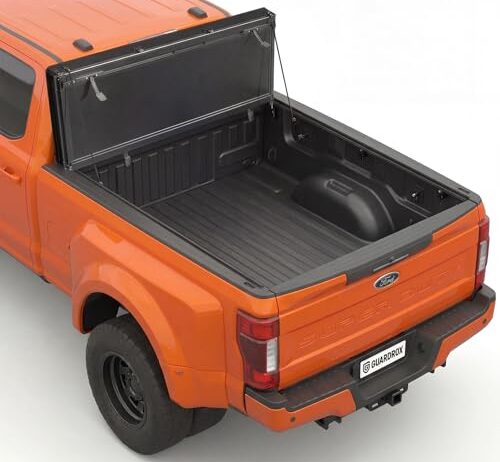
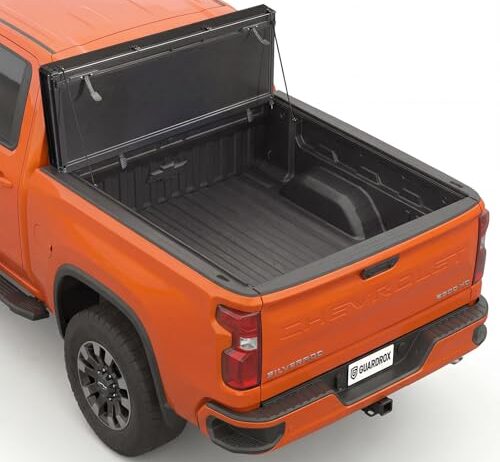
This is a real installation headache, and owners describe it consistently. One owner of a Guardrox flip-up cover reported that what seemed secure during installation — “everything snapped on, nothing moved, nothing was loose” — resulted in the entire cover blowing off the truck at highway speed. Another found that the cord mechanism snapped on first use with minimal pressure applied.

The underlying issue is that clamp-style mounting distributes force through discrete points rather than continuously. A T-slot rail system, by contrast, engages along the full length of the rail channel, so tightening one section doesn’t unload another. That’s a fundamental mechanical difference, not a quality difference — though the quality of individual clamps certainly varies.

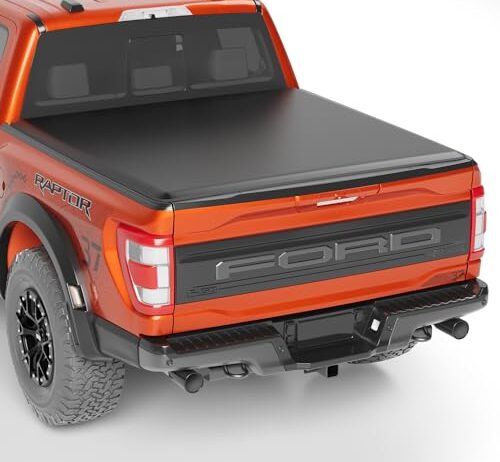
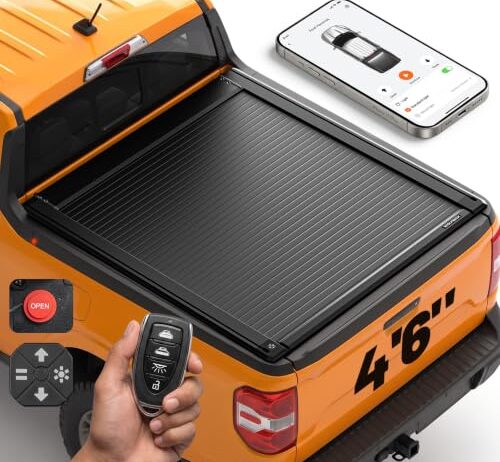
The WOLFBOX addresses the two biggest seal failure points differently than every other cover here. Its T-slot rail mounting engages the full length of the bed rail channel rather than clamping at discrete points, which eliminates the sequential-tightening problem that plagues clamp-mounted covers. When you torque one section, you’re not unloading another.

The aluminum construction means this cover won’t conform to rail irregularities — it’s a rigid plane sitting on top of whatever your bed rail geometry happens to be. But its integrated weather seals and continuous mounting rail give the gasket a stable, consistent platform to compress against, which matters more for long-term seal integrity than whether the cover itself can flex.

Eight hundred pounds of load capacity means the cover transfers weight to the rails through its structure, not through the gasket. That’s worth understanding: on covers without a rated capacity, any weight you set on top presses the cover down onto the gasket, accelerating compression set and degrading the seal over time. A structural load path keeps weight off the sealing surface.

The retractable canister occupies ten to fourteen inches of bed length at the cab end. On a Maverick’s already-short 4.6-foot bed, that’s a meaningful loss of cargo space — roughly a fifth of the usable length. That’s the trade for motorized operation and full-length sealing.

Load on Top Means Load on the Gasket

When you set a kayak, a sheet of plywood, or a rooftop tent on a tonneau cover, that weight has to go somewhere. If the cover has a structural load path — meaning it transfers force through its frame to the bed rails — the gasket isn’t bearing the weight. If it doesn’t, the weight presses the cover down directly onto the gasket, accelerating compression set.

Compression set is the percentage of thickness a gasket fails to recover after prolonged compression. A seal compressed to fifty percent of its original thickness on day one may only spring back to sixty percent after a few months. The more weight the gasket carries, the faster that degradation accumulates. Eventually the gasket sits permanently compressed at the high points and can’t reach the low points at all, and you’ve got a cover that sealed fine for three months and now leaks in every rainstorm.

EPDM rubber resists compression set better than foam across a wide temperature range — it stays flexible from roughly negative forty degrees Fahrenheit to two hundred fifty — but no gasket material is immune to sustained overloading. If you’re putting weight on your cover regularly, the cover needs a rated capacity, and that capacity needs to reflect a structural frame, not just a number.

What Gasket Failure Actually Looks Like Over Time

A new tonneau cover seals well because the gasket has full recovery — it springs back to its original height every time you open and close the cover. Over months, that recovery diminishes. The high spots on your rails, where the gasket compresses the most, develop permanent dents first. The low spots, where the gasket was barely touching, lose contact entirely as the gasket shrinks.

Temperature accelerates this. Cheap foam seals stiffen below freezing and lose compression resistance above a hundred fifty degrees. A truck parked in sun with a dark cover can easily exceed that on the cover’s underside. EPDM rubber handles the thermal range better, but even EPDM accumulates compression set — it just does it slower.

The fix is straightforward: gasket replacement. But most tonneau cover owners don’t think about gaskets the way they think about wiper blades or tires. They notice the leak, assume the cover failed, and start shopping for a replacement when the real failure is a three-dollar strip of rubber they could have swapped in twenty minutes.

At $216, the GarveeTech costs less than a seventh of the motorized option and less than a third of either rigid flip-up. That price gap reflects a genuine material difference: soft fabric over a folding frame, not aluminum panels or FRP shells. You give up structural rigidity and any ability to load weight on top. You gain something the rigid covers can’t offer — a surface that drapes.

On a truck with minor rail unevenness — the typical one-to-two-millimeter variations from factory tolerance — that drape lets the cover follow the contour instead of bridging it. It’s not a perfect seal; tension still pulls the fabric taut across deeper dips, and the latching force that keeps it from flapping at speed works against the conformability that makes it seal. But for a truck that sees rain rather than submersion, the soft fold’s ability to sit down into shallow low spots is a real advantage over a rigid panel that can only press harder on the high spots.

The four-fold design means no canister eating into your bed length. You keep all 6.5 feet of the F-150’s bed, folding the cover forward in sections when you need full access. The trade-off is that each fold joint is a potential water path — fabric-to-fabric hinges don’t seal the way a continuous panel does.

Matching the Cover to the Truck’s Real Job

A half-ton commuter truck and a three-quarter-ton work truck put different stresses on a tonneau seal. The 2500HD and 3500HD trucks that the Guardrox flip-up covers fit are built for towing and hauling — jobs that load the frame, flex the bed, and create the dynamic rail movement that pulls gaskets away from their contact points.

One owner installing a Guardrox FRP cover on an F-150 described a four-hour installation with unclear instructions and hardware that “don’t seem like they’re really designed for this application.” Another found the cover sat on top of the bed rails rather than flush with them — a fit problem that directly affects seal contact. These aren’t unusual complaints for aftermarket covers, but they’re especially consequential on trucks that flex under load, because any installation imperfection that’s tolerable when the bed is empty gets amplified when you’re towing ten thousand pounds.

For heavy-duty trucks, the mounting system matters more than the cover material. A cover that installs flush and clamps securely on a static truck may lift at the clamps, shift on the rails, or lose gasket contact entirely once the bed starts flexing under a loaded trailer. That’s not a failure of the cover — it’s physics acting on a joint that was designed for a different set of forces.

FAQ

Will a tonneau cover seal properly if my truck bed rails aren’t perfectly level?

No truck bed rails are perfectly level — manufacturing tolerance allows one to three millimeters of variation over a six-foot span. The seal depends on whether the cover’s gasket can absorb that variation through compression. Soft covers can drape to follow minor dips. Rigid covers rely entirely on gasket compression range, so a rail that’s low by more than the gasket’s travel will leak at that point regardless of cover quality.

Do soft tonneau covers seal better than hard covers on uneven bed rails?

For minor unevenness — the typical one-to-two-millimeter factory variations — soft covers have an advantage because the material can follow the contour instead of bridging it. But the tension that keeps a soft cover from flapping at speed also pulls it away from deeper low spots. On a significantly warped rail, neither type seals well without shimming or gasket modification.

Can I put weight on top of a tonneau cover?

Only if the cover has a structural load path that transfers weight to the bed rails through its frame. Without that, weight presses directly on the gasket, accelerating compression set and degrading the seal over months. Look for a rated load capacity — it indicates the manufacturer designed a load path. Covers without a rating are telling you they weren’t designed to carry weight, even if they feel solid.

Will a tonneau cover work with a spray-in bedliner already installed?

It depends on where the liner stops relative to the rail top. Spray-in liners add three to six millimeters of cured material, and the transition from textured liner to bare metal at the rail creates an uneven sealing surface. If the liner covers the entire rail cap, you’re sealing against rough polyurea instead of smooth metal. If it stops short, there’s a step that can channel water under the gasket. Neither is a dealbreaker, but both affect how well the gasket makes contact.

Do I need to drill holes in my truck to install a tonneau cover?

Most aftermarket covers use clamp-style mounting that grips the inside lip of the bed rail without drilling. T-slot systems engage a channel in the rail, also without drilling. The real question is whether the mounting method maintains consistent pressure along the full rail length — clamps create discrete pressure points that can shift when you tighten them sequentially, while T-slot systems distribute force more evenly.

What type of tonneau cover seals best on trucks used for towing or heavy hauling?

Towing and hauling load the frame, which flexes the bed independently of the cab. That flex changes rail height dynamically, so a seal that’s tight in the driveway may open up under load. Continuous rail-engagement mounting systems handle this better than discrete clamps, because they maintain contact even as the rail geometry shifts. The cover material matters less than how it’s attached.