
A 1-micron sediment filter catches particles the width of a bacterium. A reverse osmosis membrane rejects dissolved salt molecules ten thousand times smaller. A scale inhibitor cartridge has no micron rating at all — it doesn’t filter anything. All three sit in standard housings, thread onto standard plumbing, and look roughly identical on a shelf. The number on each one — or the absence of a number — tells you which problem it was built for, and installing the wrong one means paying for a solution to a problem you don’t have.
Affiliate disclosure: This article contains affiliate links. We may earn a commission if you buy through them, at no extra cost to you.
Everything we recommend
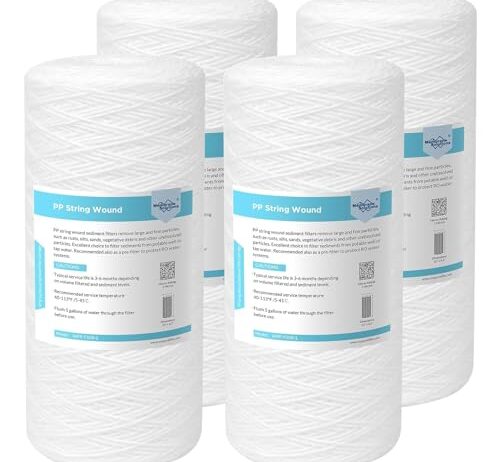
Catches what hard water used to settle
Membrane Solutions 1 Micron 10"x4.5" String Wound Whole House Water Filter Replacement Cartridge Universal Sediment Filters for Well Water - 4 PackA 1-micron string-wound cartridge in a 4-pack for whole-house sediment duty. Universal 10x4.5-inch fit. The fine rating means higher capture and faster loading — plan on quarterly changes in high-sediment water.
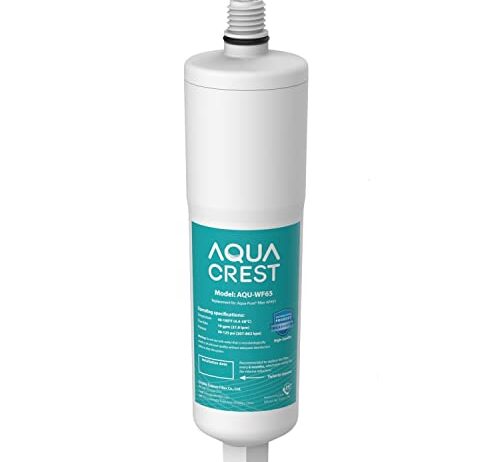
Chemical intervention, not filtration
AQUA CREST AP431 Whole House Scale Inhibitor Water Filter, 1 Pack | Replacement Cartridge for Aqua-Pure® AP430SS, Helps Prevent Scale Build Up On Hot Water Heaters and BoilersPolyphosphate scale inhibitor for the Aqua-Pure AP430SS housing. Prevents hardness minerals from crystallizing on water heaters and boilers. One cartridge for initial compatibility testing.
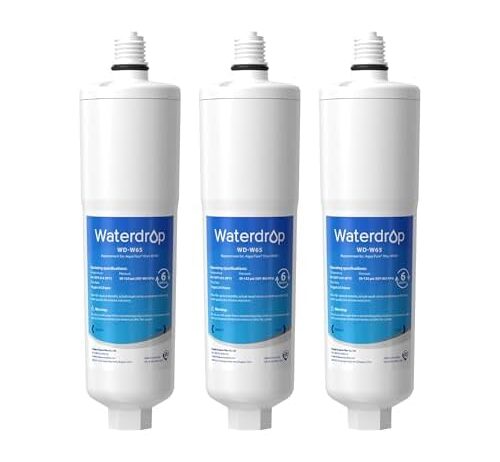
Same chemistry, lower per-cartridge cost
Waterdrop AP431 Replacement Cartridge for Aqua-Pure® AP431, 3 Pack | Water Filter, Replacement Cartridge for Aqua-Pure® AP430SS, Helps Prevent Scale Build Up On Hot Water Heaters and BoilersA 3-pack of the same AP431-compatible polyphosphate cartridge. Identical sequestration chemistry at a lower cost per replacement cycle. One owner reported soft threading on installation R11 — hand-tighten carefully.
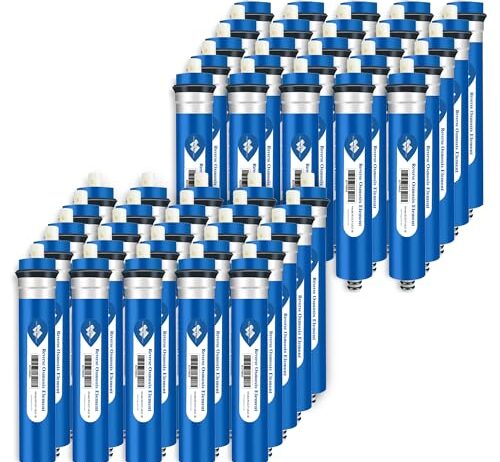
Molecular-scale rejection for drinking water
Membrane Solutions NSF/ANSI 58 Certified 36 GPD Reverse Osmosis MembraneNSF/ANSI 58 certified RO membrane rated at 36 GPD. Addresses dissolved contaminants no sediment filter or scale inhibitor can reach. Multiple owners report actual rejection below rated specs — measure TDS after install.
A micron is a millionth of a meter. A grain of beach sand is about 500 microns across. A human hair, roughly 70. The particles that make tap water visibly cloudy — silt, rust flakes, fine clay — run from about 1 to 50 microns, and a filter rated at 1 micron will physically block anything larger than that threshold from passing through.
That is one kind of water problem. It is the visible kind, the one that turns a white sink orange or leaves sediment in the bottom of a pot. A 1-micron string-wound filter handles it by trapping particles inside layers of wound fiber — depth filtration, where material lodges throughout the media rather than collecting only on the surface.
But dissolved minerals are not particles. Calcium and magnesium ions in hard water are individual molecules in solution, thousands of times smaller than the smallest particle a sediment filter catches. They pass through a 1-micron filter as easily as water itself does. To stop them, you need either a membrane tight enough to reject molecules by size — reverse osmosis, at roughly 0.0001 microns — or a chemical that prevents them from crystallizing onto surfaces without removing them at all.
That is the core confusion in water filtration: three entirely different mechanisms, sold in the same aisle, threaded into the same housings, solving problems that have almost nothing in common.
How we picked
We did not install these filters. Selection is based on published specifications, filtration mechanism, and owner-reported performance.
Each product represents a distinct separation method — mechanical interception, membrane rejection, or chemical sequestration.
A micron rating defines what passes through. We compared rated thresholds against the particle sizes each mechanism actually encounters.
Whole-house sediment removal and point-of-use dissolved-solid rejection are different jobs. We grouped by where the cartridge sits in a system.
What went wrong — bypass defects, thread failures, premature clogging — matters more than aggregate satisfaction scores.