We research every product we recommend. We may earn a commission from the links on this page.
Tools & Home Improvement › Under-Sink & Countertop Filtration

Your Water Filter’s Gallon Rating Expires Faster Than You Think

We compare published specifications and marketplace data. We do not test these products.

Hard Water Eats Filter Life Faster Than Gallons Do
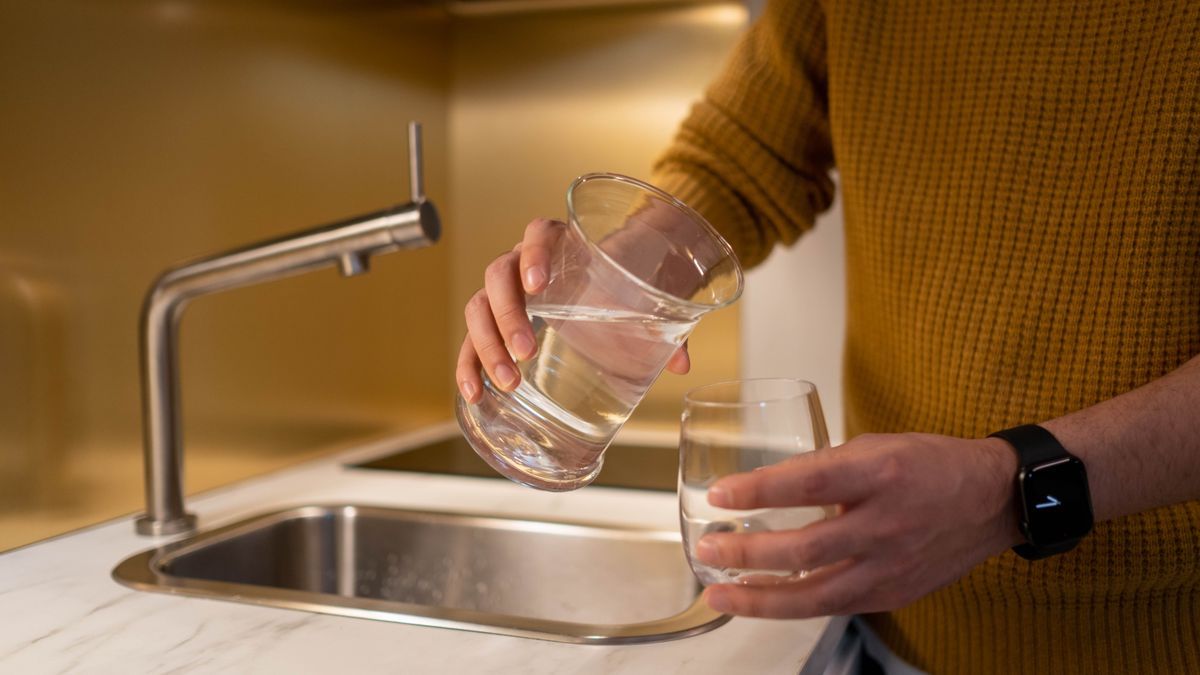
Photo by cottonbro studio on Pexels

A water filter rated for 1,000 gallons doesn’t last 1,000 gallons in your house. That number comes from a lab running challenge water with known hardness and contaminant levels through the media under controlled pressure. Your tap water carries a different load — more calcium if you’re in Phoenix, more sediment if you’re on a well, more chlorine if the municipal plant just bumped dosing for summer. Every milligram of material the filter captures or adsorbs is capacity spent, and heavier water spends it faster. The gallon count on the box is a starting point, not a guarantee, and most people discover this only when taste changes or flow drops to a trickle weeks ahead of schedule.

Affiliate disclosure: This article contains affiliate links. We may earn a commission if you buy through them, at no extra cost to you.

Everything we recommend
4 picks

A carbon block filter and a reverse osmosis membrane both remove things from water. They do it in completely different ways, and that difference determines how your water quality affects their lifespan.

Carbon works by adsorption. Contaminant molecules bind to the internal surface area of the carbon through van der Waals forces — weak attractions that hold molecules in place on the pore walls. A carbon block compresses granular carbon into a solid matrix with uniform pore size, which forces water into longer contact with the media and improves capture efficiency. But the total number of binding sites is fixed. Every chlorine molecule, every organic compound, every trace of lead that sticks to a pore wall is one fewer site available for the next gallon. When the sites fill, the filter passes contaminants through as if it weren’t there.

RO works by rejection. Water is forced under pressure through a semi-permeable membrane with pores small enough to block dissolved ions. The membrane doesn’t capture contaminants the way carbon does — it deflects them. But dissolved minerals, especially calcium and magnesium, concentrate at the membrane surface as water passes through. When that concentration exceeds the solubility limit, the minerals precipitate as scale directly on the membrane. Scale is a physical barrier. It reduces water flux — the volume that can pass through per unit time — and eventually chokes the membrane until replacement.

Both mechanisms exhaust. But carbon exhausts by filling up, and RO exhausts by crusting over. The distinction matters because they respond to different things in your water.

How we picked

We did not install or run these filters. Selections are based on published specifications, filtration technology, and owner-reported experience.

Filtration method, not brand

RO membrane rejection, carbon adsorption, and gravity feed each exhaust differently under hard water. We picked across all three.

Replacement signals, not just intervals

A stated lifespan matters less than whether the system gives you a way to detect exhaustion — flow rate drop, TDS creep, or taste change.

Installation permanence, not preference

Under-sink and countertop systems face different replacement friction. We included both so the tradeoff is visible.

Certified claims, not marketing copy

NSF/ANSI 42 certifies chlorine taste reduction under tested conditions. Where certification status is absent, we say so and weigh accordingly.
Hard Water Hits RO Membranes and Carbon Differently

Hard water — water with high concentrations of dissolved calcium and magnesium — is the single biggest variable between the rated lifespan on a filter box and what you actually get.

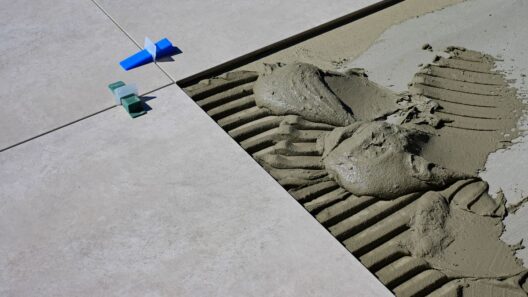
For an RO system, hardness is the enemy of the membrane itself. Calcium carbonate scale forms a mineral crust on the membrane surface, reducing the area available for water to pass through. A membrane rated at a certain flow rate in 50 ppm TDS water will produce measurably less flow in 300 ppm water within weeks, not months. The membrane isn’t broken — it’s buried.

For a carbon filter, hardness has a subtler effect. Calcium and magnesium ions don’t bind to carbon adsorption sites the same way chlorine does, but they contribute to sediment buildup that mechanically blocks pore pathways. The filter clogs before its chemical adsorption capacity runs out. You get reduced flow — the first signal most people notice — while the carbon still has binding sites available for contaminants it never gets to see because water can’t reach them.

Gravity-fed systems compound this. With no pump maintaining constant pressure, flow rate depends entirely on the water column height in the upper reservoir. As the filter media clogs, the already-modest hydrostatic pressure can’t push water through at a useful rate. A gravity filter in hard water doesn’t just exhaust sooner — it slows down visibly sooner, which is actually useful information if you’re paying attention.

The Gallon Number Is a Lab Result, Not a Promise

Filter capacity testing uses challenge water — water formulated to a specific recipe of contaminants, hardness, and sediment at known concentrations. The lab runs that water through the filter at a controlled flow rate and measures when contaminant reduction drops below the certified threshold. The gallon count at that failure point becomes the rated capacity.

Your water isn’t challenge water. Municipal supplies vary by season — chlorine dosing increases in summer when warmer temperatures promote bacterial growth in distribution pipes. Well water varies by rainfall, which changes the sediment load and mineral concentration reaching your tap. A filter rated for a specific number of gallons under one set of conditions will reach exhaustion at a different number under yours.

This is why a time-based replacement schedule and a gallon-based one rarely agree. A three-year cartridge in average municipal water might last three years. The same cartridge on a well with high iron and sediment might clog in eight months. Neither timeline is wrong — they’re measuring different water.

The practical signal is always the same: flow rate drops, or taste changes. A carbon filter that’s losing adsorption capacity lets chlorine through, and you taste it. An RO membrane scaling over produces less water per hour. Both are telling you the filter is done, regardless of what the calendar says.

What a TDS Meter Actually Tells You

A TDS meter costs about ten dollars and measures total dissolved solids in parts per million. For an RO system, it’s the closest thing to a real-time replacement indicator you can get without lab testing. RO membranes reject 90–99% of dissolved solids when new. As the membrane scales or degrades, rejection drops and TDS in the output water climbs. If your input water reads 250 ppm and your filtered water reads 15 ppm today, and next month it reads 40 ppm, the membrane is losing rejection capacity. You don’t need a calendar to tell you that.

For carbon filters, a TDS meter is nearly useless. Carbon doesn’t significantly reduce dissolved solids — it targets organic compounds, chlorine, and specific contaminants by adsorption. Your TDS reading will look roughly the same with a fresh carbon filter and an exhausted one. The signals for carbon exhaustion are taste, odor, and flow rate — all things you detect without instruments.

This is a genuine difference between the two technologies when it comes to knowing when to replace. RO gives you a number you can track. Carbon gives you sensory cues you have to notice. Neither is better, but knowing which signal to watch for your system type saves you from either replacing too early or drinking through an exhausted filter.

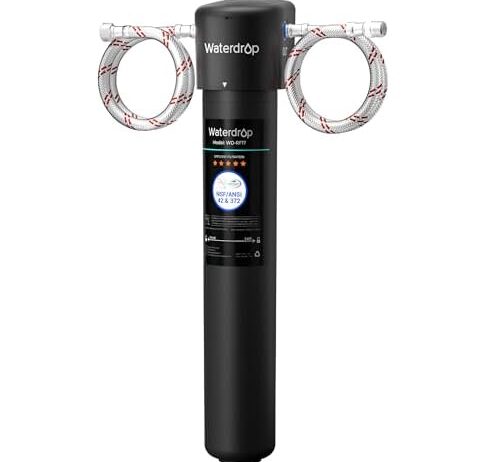
The Waterdrop 17UA is NSF/ANSI 42 certified for chlorine taste and odor reduction and states a three-year cartridge lifespan — the longest single-cartridge interval in this set by a wide margin. It reduces PFAS, PFOA/PFOS, lead, and chlorine through carbon filtration plumbed directly to your cold water line under the sink.

Under-sink installation means no counter space lost and no reservoir to refill, but it also means cutting into a water line and drilling a hole for a dedicated faucet. In a rental, that may not be an option. Once installed, though, the maintenance calendar is as simple as it gets: one cartridge, one replacement every three years under average municipal water conditions. That three-year figure assumes typical contaminant load — the same cartridge in high-sediment well water will clog faster, and flow rate is your replacement signal when it does.

At $69.99, it is the lowest upfront cost in this group, and the long replacement interval keeps the annual cost of ownership below any system that needs new filters every six to twelve months.

Countertop RO vs. Gravity Carbon: Two Ways to Skip the Plumber

If you can’t or won’t cut into a water line, the choice narrows to countertop systems. But countertop is a big category with very different technologies inside it.

A countertop RO system uses a pump to force water through a semi-permeable membrane. It rejects dissolved solids — hardness minerals, salts, metals — that carbon filters pass through untouched. The tradeoff is speed. RO filtration inherently limits flow rate because the membrane’s pore size is tiny and the rejection process takes time. You’re filling a glass, not running a faucet.

A gravity-fed carbon system has no pump, no electricity, and no membrane. Water drips through carbon media under nothing but its own weight. Flow rate is slow by design and gets slower as the filter loads up. What it removes well — chlorine, some lead, organic taste and odor compounds — it removes well. What it doesn’t touch — dissolved minerals, most salts, fluoride — it doesn’t touch at all.

The question isn’t which is better. It’s what’s in your water. If your concern is chlorine taste and lead in an older building with known pipe issues, carbon handles that and costs a fraction of RO. If your concern is dissolved solids, nitrates, or sodium — things only a membrane can reject — carbon isn’t the right tool regardless of price.

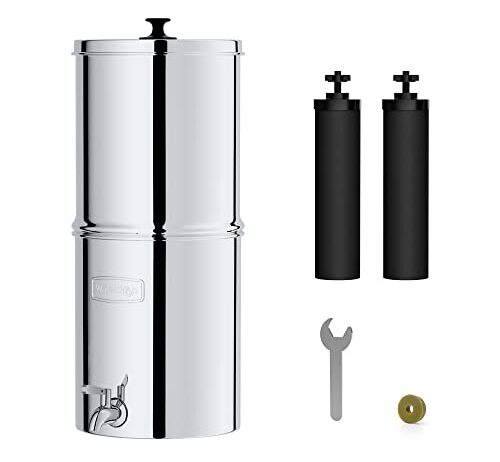
The Waterdrop TK-A is a gravity-fed system with two black carbon filters, a 2.25-gallon stainless steel reservoir, and NSF/ANSI 42 and 372 certification. It reduces chlorine by up to 98% and reduces lead. It requires no electricity, no plumbing connection, and no tools to set up — fill the upper chamber, wait, pour from the spigot.

The gravity feed is both its advantage and its constraint. No pump means no noise, no power draw, and nothing mechanical to fail. But flow rate depends entirely on the height of water in the upper reservoir and the permeability of the carbon filters. As filters load with captured material, flow slows. In hard water, that slowdown arrives sooner. Since there’s no pressure gauge or TDS readout, your replacement signal is how long refilling takes — when it gets noticeably slower, the filters are done.

At $99.99, it costs less than a quarter of either RO system in this set. The tradeoff is scope: carbon adsorption handles chlorine and lead well but does not reduce dissolved solids, fluoride, or most inorganic contaminants. For municipal water where chlorine taste is the primary complaint and lead from aging pipes is the primary concern, that’s a precise match. For well water with high TDS or agricultural contamination, it’s the wrong tool.

When Hot and Cold Output Changes the Replacement Math

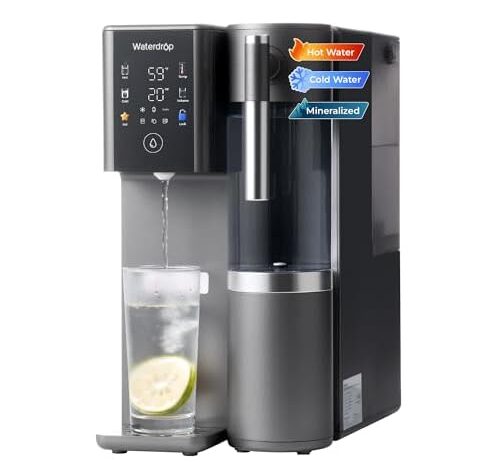
Most water filters output ambient or cold water. One system in this set — the Waterdrop A2G — adds instant hot and cold dispensing. That’s a convenience feature with a maintenance consequence worth understanding.

The hot water function uses a heating element. The cold function uses a compressor or thermoelectric cooler. Neither affects the RO membrane’s filtration performance directly — water is filtered before it’s heated or chilled. But the heating element does mean the system draws continuous power, and the thermal cycling can accelerate wear on internal tubing and seals over time.

More practically, a hot water dispenser replaces a kettle. If you drink tea or make instant oatmeal daily, that’s a real reduction in counter clutter and wait time. If you don’t, it’s a heating element drawing power for a feature you ignore.

The RO membrane in this system still faces the same hardness-driven scaling as any other RO unit. Remineralization after the membrane adds calcium and magnesium back for taste and pH, but those minerals are introduced downstream — they don’t pass through or foul the membrane. The membrane’s lifespan is still governed by what’s in your feed water, not what the system adds after filtration.

UV Adds a Layer, Not a Substitute

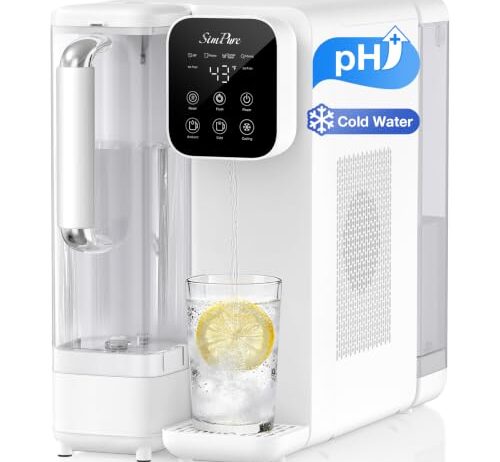
The SimPure Y11C-A pairs its RO membrane with UV sterilization. UV disrupts microbial DNA at 254 nanometers, preventing bacteria and viruses from reproducing. It’s effective against biological contaminants that pass through carbon filters and that even RO membranes don’t catch with certainty.

But UV doesn’t remove anything. No dissolved solids, no sediment, no chemical contaminants. It sterilizes — meaning it kills or deactivates microorganisms — and it requires the water reaching the UV chamber to be clear. Turbid or sediment-heavy water blocks UV transmission, reducing effectiveness. That’s why UV is always paired with pre-filtration, never used alone.

For municipal water that’s already chlorinated, UV is redundant against bacteria — chlorine does that job upstream. UV earns its place in systems fed by well water, rainwater collection, or any source without chemical disinfection. If your water comes from a utility that meets EPA microbial standards, the UV component in this system is insurance you may never collect on. If your water doesn’t, it’s the most important stage in the unit.

The practical question is whether your water source justifies the added component cost and the UV bulb replacement interval. A UV lamp doesn’t last forever — intensity drops over time, and a dim lamp doesn’t sterilize effectively even if it still glows.

Certification Tells You Less Than You Think — and More

NSF/ANSI 42 certifies reduction of aesthetic contaminants: chlorine taste and odor, primarily. It does not certify reduction of health-related contaminants like lead, arsenic, or PFAS. NSF/ANSI 53 covers health claims. NSF/ANSI 372 certifies that the plumbing components themselves are lead-free — a materials standard, not a filtration performance standard.

Two systems here carry NSF/ANSI 42 certification. Two do not have documented certification status in available product data. That’s a gap worth noting, but not one worth over-reading. Certification means the filter was independently tested and met a defined standard under controlled conditions. Absence of certification doesn’t mean a filter doesn’t work — it means no third party has verified the manufacturer’s claims under a recognized protocol.

The practical value of certification is that it gives you a tested baseline. A filter certified to reduce chlorine by a specific percentage under NSF/ANSI 42 testing conditions did, in fact, do that in a lab. Whether it does the same in your water depends on whether your water resembles the test conditions — which brings the entire article back to the same point. Rated performance is conditional. Your conditions are the variable.

FAQ

Does hard water ruin water filters faster?

Hard water shortens filter life, but the mechanism depends on the filter type. In carbon filters, dissolved minerals contribute to sediment that clogs pore pathways mechanically, reducing flow before the carbon’s chemical adsorption capacity is spent. In RO systems, calcium and magnesium precipitate as scale directly on the membrane surface, reducing the area available for water to pass through. Neither is ruined — both are exhausted faster than the rated lifespan assumes because the rating was established using water with a different mineral load.

How do I know when my water filter actually needs replacing?

For carbon filters, the signals are taste change (chlorine flavor returns), odor, and reduced flow rate. For RO systems, a TDS meter is the most direct indicator — when dissolved solids in the filtered water climb noticeably above the baseline you measured when the membrane was new, rejection capacity is declining. Flow rate drop works for both types. Calendar-based replacement is a rough guide, not a measurement of your filter’s actual remaining capacity.

Can I use a TDS meter to check if my carbon filter is working?

Not effectively. Carbon filters remove contaminants by adsorption — chlorine, organic compounds, some metals — but they don’t significantly reduce total dissolved solids. A TDS reading will look similar whether the carbon filter is new or fully exhausted. TDS meters are useful for RO systems, which reject 90–99% of dissolved solids when functioning properly. For carbon, rely on taste, odor, and flow rate.

Is a reverse osmosis filter worth it if I’m on city water?

It depends on what’s in your city water and what bothers you. Municipal water is already treated for bacteria and meets EPA standards, so an RO membrane’s primary value is reducing dissolved solids, sodium, and contaminants that carbon doesn’t catch — nitrates, fluoride, and certain heavy metals. If your main complaint is chlorine taste, a carbon filter handles that at a fraction of the cost. If you want the broadest possible contaminant reduction, RO removes more categories of dissolved material than any carbon system can.

Why does my water filter slow down before the replacement date?

Flow rate drops when the filter media physically clogs — sediment particles block pore pathways in carbon filters, and mineral scale covers membrane surfaces in RO systems. This happens independently of the filter’s chemical capacity to adsorb or reject contaminants. If your water carries more sediment or dissolved minerals than the lab conditions used to set the replacement interval, the physical clogging arrives first. The flow slowdown is actually a useful signal: it tells you the filter is loaded, even if the printed schedule says otherwise.