
A 72-inch steel tool cabinet has side panels roughly four feet tall and six feet wide. Hit the worktop with a dead-blow hammer and those panels flex, ring, and push air — the same physics that makes a drum head loud. The difference between a cabinet that booms for three seconds and one that thuds and stops comes down to panel span, steel thickness, and what sits between the steel and the thing that hit it. Three cabinets at three different sizes show where the noise comes from and what actually interrupts it.
Affiliate disclosure: This article contains affiliate links. We may earn a commission if you buy through them, at no extra cost to you.
Everything we recommend
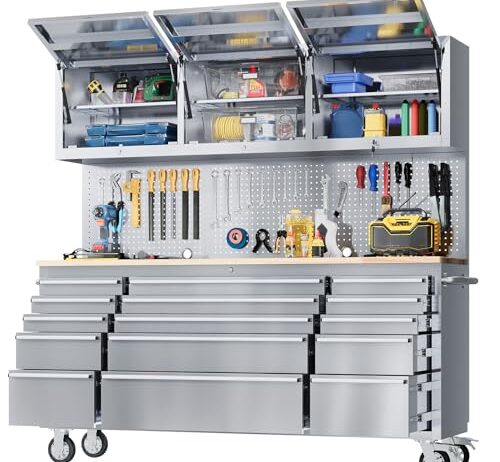
Wood absorbs what steel transmits
72-Inch Heavy-Duty Rolling Tool Chest & Mobile Workbench, 15 Drawers & 3 Top Cabinets, Rubber Wood Tabletop, Key Locking System, Drawer Liners, Wheels, Steel Storage Cabinet for Garage72 inches wide with a rubber wood worktop and drawer liners. The only cabinet here with built-in damping at both the impact surface and inside the drawers.
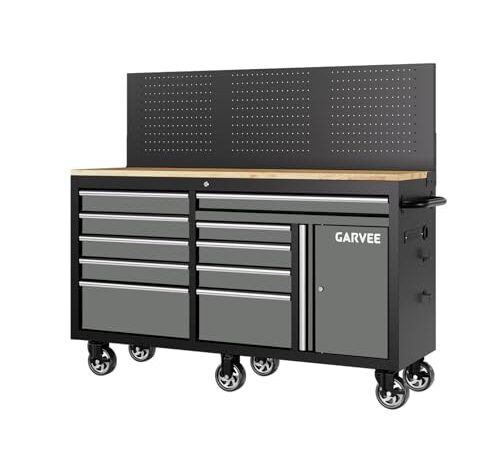
All steel, ten drawers, no damping
60 Inch Rolling Tool Chest Workbench, 10 Drawer Tool Box with Pegboard & Lock, Mobile Garage Tool Cabinet with Charging Station, Heavy Duty Workbench for Workshop, Gray | Mobile Garage Tool60 inches wide with ten drawers providing solid internal bracing. Bare steel top means aftermarket damping is worth adding if impact noise bothers you.
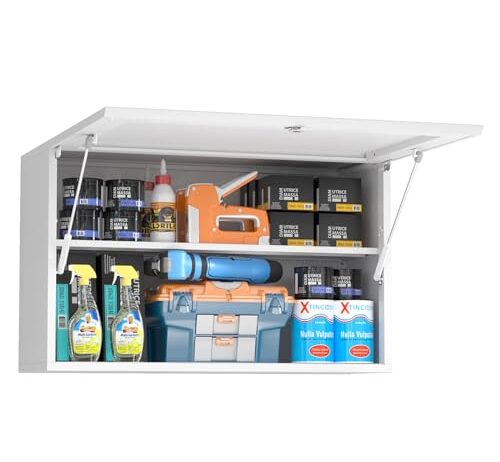
Off the floor, out of the path
Polup Metal Wall Cabinet for Garage, 20" H Garage Cabinet Wall Mounted | Lockable Small Tool Cabinet with Door and Adjustable Shelf, Hanging Cabinet for Warehouse, Workshop - Assembly RequirWall-mounted, lockable, and completely decoupled from floor vibration. Not a workstation — a secure cabinet for things that need to stay still and stay locked.
How we picked
We read specs and owner feedback. We did not roll these cabinets across a shop floor.
Width determines how low the side panels resonate. Wider means louder at frequencies ears catch.
Rubber wood and drawer liners shear under flex and convert vibration to heat. Bare steel does not.
More drawers mean more cross-braces dividing panels into smaller, higher-frequency segments.
Floor-coupled rolling cabinets receive vibration through casters. Wall-mounted units skip that path entirely.