
We research every product we recommend. We may earn a commission from the links on this page.
Toys & Games › Electric Vehicles

12 Volts Doesn’t Mean 12 Volts Under a Kid

We compare published specifications and marketplace data. We do not test these products.

Ride-On Toy Speed Claims Assume a Flat Driveway and a Light Child
Photo by Franco Monsalvo on Pexels

A 12-volt battery in a ride-on car delivers 12 volts for about half a second — the half-second before your child sits down. After that, the motor pulls current, the controller limits voltage to protect the circuit, and the actual speed depends on weight, surface, and incline far more than the number printed on the battery. Understanding why closes the gap between the speed you expected and the speed you got.

Affiliate disclosure: This article contains affiliate links. We may earn a commission if you buy through them, at no extra cost to you.

Everything we recommend
4 picks

How we picked

We did not ride these toys. Judgements are based on published specifications, motor configurations, and owner-reported performance.

Load physics, not sticker speed

A stated top speed assumes minimal resistance. We read for what happens when weight and terrain stack against it.

Motor spec transparency, not wattage alone

One disclosed wattage tells you more than two undisclosed motors. We favored products that let you calculate real output.

Age range as skill match, not suggestion

A 3-year-old cannot balance on a standing scooter. Form factor must match the motor skills the age range implies.

Owner complaints, not star counts

Recurring descriptions of speed loss on grass or hills confirm load-dependent behaviour the specs never mention.


Why does it go slower on the grass?

Rolling resistance. Pavement is hard and smooth — the tire rolls across it without deforming the surface. Grass gives way under the wheel, and that deformation absorbs energy. The difference is not small: grass typically demands three to five times more torque than concrete to maintain the same speed.

More torque means more current drawn from the battery. The electronic speed controller inside the toy monitors that current in real time. When it rises past a threshold — the point where the motor would overheat — the controller reduces the voltage it sends to the motor by trimming the duty cycle of its pulse-width modulation signal. Less voltage, less speed. The toy is protecting itself.

This is not a defect. It is exactly how every brushed DC motor in this price range works. The advertised top speed was measured on a flat, hard surface with minimal load. Your backyard is not that surface.

What does 12V actually tell you?

Almost nothing about speed. Voltage is potential — think of it as the height of a water tower. How fast the water flows depends on the pipe diameter, the distance, and what is blocking the path. Two 12V ride-on cars with different motors, different gearing, and different tire diameters will produce completely different speeds at the wheel.

It gets worse under load. A 12V battery sags to 10 or 11 volts when the motor demands peak current on a hill. That voltage drop happens inside the battery itself, before the controller even intervenes. So the motor sees less than 12V from the battery and then the controller trims it further to keep current safe. The child experiences the sum of both reductions.

Wattage is a better indicator, but only when it is disclosed. A 150-watt motor drawing from a 12V source pulls about 12.5 amps at full load. That number lets you estimate torque, heat, and duty cycle. Voltage alone cannot do any of that.

Will a heavier kid make it slower?

Yes. Directly and proportionally.

Weight adds rolling resistance on flat ground and gravitational resistance on any slope. A five-degree incline — barely visible to the eye — adds roughly 8.7 percent of the total vehicle-plus-rider weight as a constant drag force. A 40-pound child on a 20-pound car puts 5.2 pounds of gravitational drag on that grade. A 70-pound child on the same car puts 7.8 pounds. The motor does not know the difference between a hill and a heavier rider on flat ground; both demand more torque, more current, and therefore more voltage reduction from the controller.

This is why ride-on toys feel fast on day one and sluggish a year later. The child grew. The motor did not.

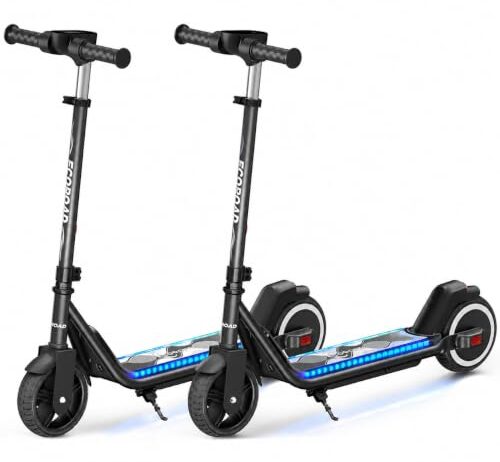
The ECOROAD EK6 is the clearest illustration of how speed control actually works in this category. Its three speed settings — 3, 6, and 10 mph — are not three motors or three gears. They are three voltage caps imposed by the controller on the same 150-watt brushed DC motor. At the lowest setting, the controller delivers roughly 30 percent of available voltage regardless of conditions. At the highest, it allows full output until current draw forces a reduction.

That 150W figure matters because it is specific. You can calculate from it: at 12V nominal, peak current is about 12.5 amps, which sets a ceiling on torque output. On flat pavement with a light rider, 10 mph is plausible. On grass with a child near the top of the 6–12 age range, the controller will pull voltage back, and actual speed drops. The adjustable modes at least let a parent start low and observe what the motor handles before unlocking the top setting.

Several owners describe durability problems within the first month — a rear fender detaching, tires losing shape, a charging port failing when the connector severed inside the housing. One owner reports the scooter struggles on flat ground and inclines alike, consistent with what a 150W motor does when loaded near its limit. The build-quality complaints are worth weighing against the price: this is a sub-$260 scooter with a disclosed motor spec, which makes its limitations predictable even if the construction is not confidence-inspiring.

Do dual motors mean twice the power?

No. Two motors splitting the work of one battery do not double the available energy — they divide it. Total wattage is what determines output, and if that wattage is not disclosed, two motors could each be half the size of a single motor in a competing product and deliver the same or less total torque.

There is a real advantage to dual motors, but it is traction, not power. Two driven wheels grip better than one on loose or uneven surfaces. The catch: without a differential or active current balancing between the two motors, the wheel with less traction spins freely and draws disproportionate current while the loaded wheel stalls. On a smooth driveway this does not matter. On grass or gravel, one motor does most of the work while the other wastes energy spinning.

The question to ask is not “how many motors” but “how many total watts, and how does the controller divide current between them.” When neither answer is available, the motor count tells you about grip geometry, not about speed or hill-climbing ability.

How much does tire size change the speed?

More than most parents expect. An 8-inch wheel must rotate 1.5 times for every single rotation of a 12-inch wheel to cover the same ground. That higher RPM demands more current from the motor at equivalent speeds, which means the controller intervenes sooner on an 8-inch tire than on a 12-inch tire carrying the same load.

Tread pattern compounds this. Off-road knobs — the kind on a dirt-bike-styled ride-on — increase rolling resistance on hard surfaces because each knob compresses and releases as it contacts the ground, converting kinetic energy into heat through hysteresis. Those knobs earn their keep on dirt and gravel, where they prevent lateral slip. On a concrete driveway, they are pure drag.

A product marketed for off-road use on small tires with aggressive tread faces a triple penalty on pavement: high RPM demand, high tread resistance, and a rider weight that was sized for trail conditions where slower speeds are expected anyway. The top speed printed on the label assumed one surface. The tires were designed for another.

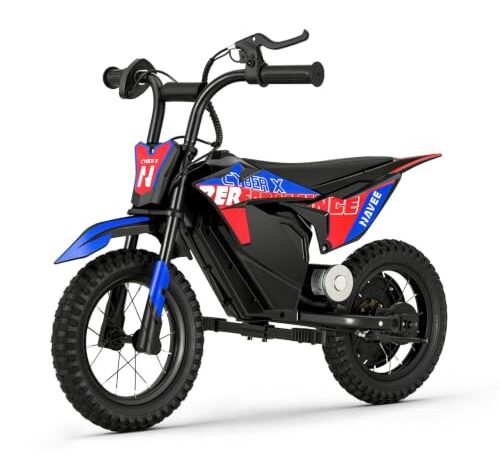
The NAVEE Cyber X runs 9.4 mph on 8-inch tires with an 88-pound weight cap and a 6-mile range. Every one of those numbers interacts with the others. The small tire diameter forces higher RPM to reach that speed. The off-road tread adds rolling resistance on hard surfaces. The 88-pound cap means a child near the top of the 5–8 age range loads the motor closer to its current limit, and the 6-mile range shrinks as current draw rises with load.

This is the product in the set where the gap between rated performance and backyard performance will be widest, because its form factor stacks every resistance factor at once: small wheels, knobby tread, foot-peg stance that shifts rider weight rearward. On actual dirt — the surface it is shaped for — the tread earns its drag and the lower effective speed is expected. On a sidewalk, a parent comparing it to a sit-in car on smooth tires will see a difference that is not about quality but about physics.

Does the age range mean it won’t work outside that window?

The age range is a proxy for two things: weight and motor skill. Neither is a cliff.

A sit-in car with a steering wheel and a parent-operated remote control requires almost nothing from the child — a three-year-old can ride while a parent drives. A standing scooter requires balance, coordination, and the judgment to brake. A foot-peg dirt bike sits between them: seated, but requiring the rider to shift weight through turns. These are fundamentally different skill demands wearing similar price tags.

Weight matters more than age for performance. A tall four-year-old who weighs 45 pounds loads a motor differently than a small three-year-old at 28 pounds, and the speed difference will be noticeable on the same machine. The upper age limit is usually where the child outgrows the fun, not where the machine stops working — though performance will degrade as weight rises toward and past the motor’s comfortable current range.

The real question: what are you buying speed or supervision?

These four products split into two groups that have almost nothing in common except a battery.

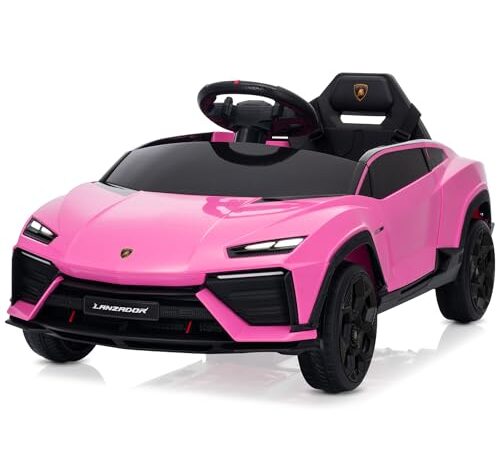
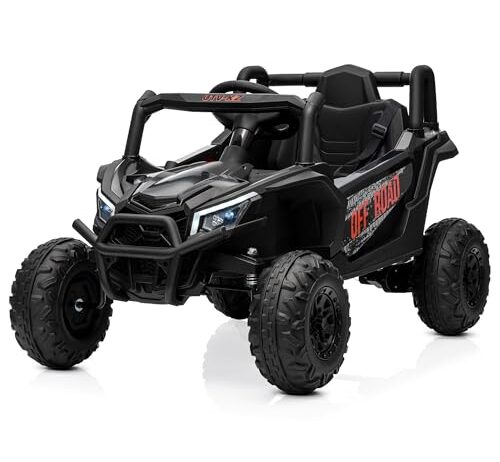
The two sit-in cars — the Lamborghini-styled Lanzador and the UTV — are remote-controlled vehicles for children aged three to six. A parent holds the override. The child steers or does not. Speed is deliberately low because the product is a controlled experience, not transportation. Whether one has dual motors and the other does not matters less than whether the remote range covers your yard and whether the suspension handles your particular sidewalk cracks.

The scooter and the dirt bike are rider-operated vehicles for children old enough to balance, steer, and brake independently. Speed is the point. A 150W motor with three selectable caps gives a parent graduated control. A 9.4-mph dirt bike with no disclosed wattage gives the rider whatever the battery and controller allow on whatever surface they find. Both will slow down on grass, on hills, and as the child grows. The difference is whether you can predict the slowdown from the specs or whether you discover it in the yard.

Voltage started this article and voltage is where it ends. Twelve volts is a battery specification. It is not a speed. It is not a promise. It is the starting condition before weight, surface, incline, tire size, tread pattern, motor wattage, and controller logic each take their cut. The number that matters is the one the motor actually receives — and that number changes every second the wheels are turning.

FAQ

Why is my kid’s ride-on car slower on grass than on the driveway?

Grass deforms under the wheels, creating three to five times more rolling resistance than pavement. The motor draws more current to compensate, the speed controller reduces voltage to prevent overheating, and actual speed drops. This is normal physics, not a defect.

Does a 12V battery mean the same speed as another 12V toy?

No. Voltage is only one factor. Motor wattage, gearing, tire diameter, and controller programming all determine wheel speed independently of battery voltage. Two 12V toys with different motors will produce different speeds under the same conditions.

Will my child outgrow the speed before outgrowing the age range?

Likely. As a child gains weight within the stated age range, the motor works harder to maintain speed. A 70-pound child on the same machine a 40-pound child used will see measurably slower performance on any surface, especially inclines.

Are dual motors better than a single motor for hills?

Not necessarily. Two motors split one battery’s energy. Without knowing the total wattage, dual motors tell you about traction geometry — two driven wheels grip better — but say nothing about total climbing power compared to a single motor of known output.