We research every product we recommend. We may earn a commission from the links on this page.

Why Things Slip, Wobble, and Drift After You Set Them

We compare published specifications and marketplace data. We do not test these products.

Why Adjustable Gear Stops Staying Adjusted
Photo by Christina & Peter on Pexels

Elastic loses grip. Brackets loosen. Telescoping columns flex more the higher they go. Every adjustable household product fights the same physics: the force holding it in place weakens over time, while the force pulling it out of place stays constant or grows. Understanding which retention mechanism your product uses — circumferential tension, bracket friction, or motor braking — tells you exactly why it moved and what will actually fix it.

Affiliate disclosure: This article contains affiliate links. We may earn a commission if you buy through them, at no extra cost to you.

Everything we looked at
4 picks

The holding force always fades — the load rarely does

Every adjustable product solves the same engineering problem: hold this thing where the user put it, against a constant force trying to move it. Gravity pulls fabric down. Body weight compresses a mattress that tugs on an elastic band. Monitor arms and coffee cups press down on a raised desktop. The load side of that equation is fixed — or worse, it accumulates.

The retention side is the variable. And it always decays.

Elastic stretches out. Screws back off a quarter-turn at a time from vibration. Telescoping columns flex more as they extend because the unsupported length grows while the tube diameter stays the same. The physics here isn’t complicated, but it explains nearly every complaint people have about products that “worked fine at first.”

What changes between products is the mechanism doing the holding — and that determines both how the failure shows up and what you can actually do about it.

Elastic tension: the simplest system, the shortest lifespan

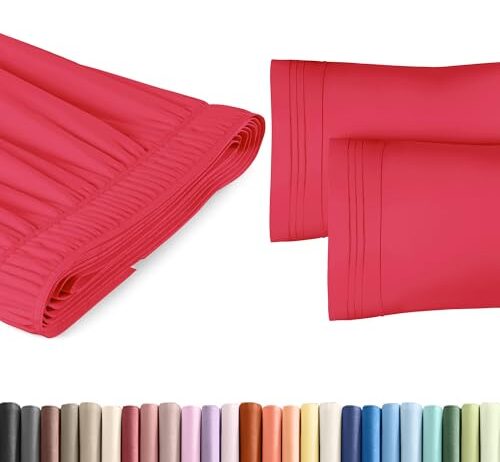
An elastic band wrapped around a mattress holds a bed skirt in place through circumferential tension. The stretched elastic pushes inward against the mattress perimeter, and friction between the band and the mattress fabric is what actually prevents slipping. Reduce the tension, and friction drops proportionally — the skirt rides up, bunches, or slides under the mattress entirely.

This is the most common complaint with wrap-around bed skirts, and it’s not a defect. Elastic fibers fatigue. The core fibers — typically spandex or rubber — degrade faster than the woven textile around them, and the process accelerates with heat, moisture, and repeated stretching. Every time you strip the bed to wash sheets, you’re pulling the elastic past its resting length and letting it snap back. Each cycle costs a fraction of a percent of recovery. Over 60 to 90 days of regular use, that fraction compounds into noticeable sag.

Polyester-core or TPU-core elastic holds up far longer under the same conditions — months instead of weeks before measurable tension loss. But most bed skirt listings don’t disclose core composition, so you’re left judging by feel on arrival: if the elastic feels barely taut when first wrapped around the mattress, the margin for degradation is already thin.

Drop length changes the math

A bed skirt’s drop — the fabric hanging from the elastic band down to the floor — isn’t just an aesthetic measurement. It’s weight hanging off the retention system.

A 15-inch drop on a Full mattress means a moderate length of pleated fabric pulling downward along the entire perimeter. A 24-inch drop on a Twin mattress means nearly 60 percent more vertical fabric, and because that fabric hangs farther from the mattress edge, it creates a longer lever arm tugging the elastic band downward. The elastic doesn’t just need to grip the mattress — it needs to resist a constant downward pull that increases with every additional inch of drop.

This is why a bed skirt that fits perfectly at installation can start slipping within weeks if the drop is long relative to the mattress size. The Twin mattress has a smaller perimeter than a Full, which means less total elastic circumference generating inward force, while the 24-inch drop adds more downward load per linear inch of band. The ratio works against you.

If you’re choosing between drop lengths, shorter is mechanically more stable. A 15-inch drop hides the box spring and stops. A 24-inch drop reaches the floor on a tall bed frame but asks the elastic to do more work indefinitely.

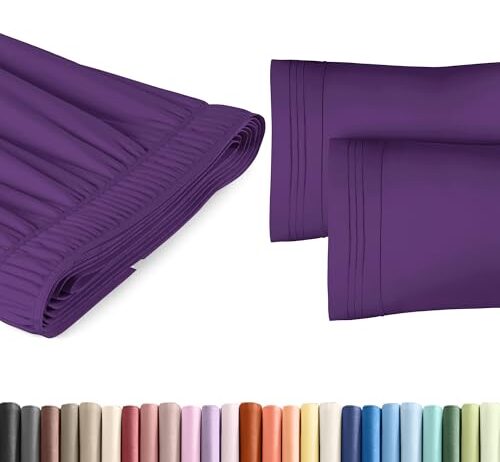
The CGK Linens Full-size bed skirt wraps around a mattress perimeter that’s roughly 162 inches — about 30 inches more than a Twin. That extra circumference means more total elastic generating inward force against the mattress, which means more friction holding the skirt in place.

Meanwhile, the 15-inch drop hangs just enough fabric to hide a standard box spring without adding the downward load that comes with floor-length drops. The pleated construction distributes fabric weight more evenly than a gathered style would, which helps prevent the bunching that concentrates pull on a single section of elastic.

None of this makes elastic immortal. You’ll still lose tension over months, and the wrap-around design still requires pulling the entire skirt off and re-tensioning it every time you strip the bed. But the physics here favor longevity more than a longer drop on a smaller mattress would.

Bracket friction: why motorized blinds sag weeks after installation

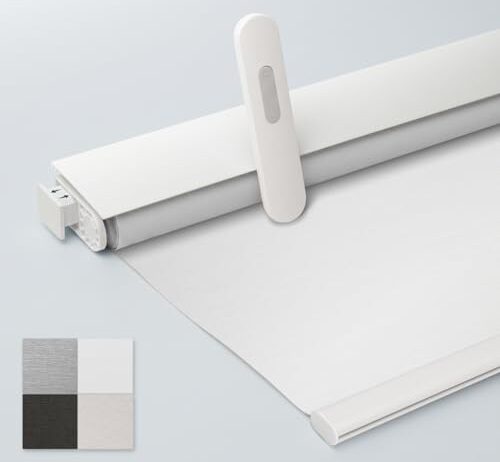
A motorized roller shade holds position through two systems working together. The motor’s internal braking mechanism locks the tube at a set rotation, and the mounting brackets hold the entire assembly against the wall or window frame. If either system fails, the blind moves.

Motor braking rarely fails on its own — it’s engineered for the weight of the shade fabric. The brackets are the weak point. A bracket that isn’t perfectly level applies uneven load to its fasteners. A screw driven into drywall without a pilot hole can slowly work loose as the wall material compresses around it. Even properly installed brackets can loosen from thermal cycling — the daily expansion and contraction of a window frame in direct sunlight.

The failure is gradual. A quarter-turn of loosening over weeks becomes a visible sag over months. And because motorized blinds don’t require daily manual interaction the way a corded blind does, the slippage often goes unnoticed until the blind is visibly crooked.

Pilot holes prevent wood splits and bracket wobble during installation. The correct screw torque is snug contact without deformation — overtightening cracks trim and crushes the mounting surface, which creates the exact looseness you’re trying to prevent.

Custom sizes multiply the bracket problem

A 58-by-78-inch motorized shade spans over four and a half feet of width. Standard bracket-spacing guidelines assume common window sizes — 36, 48, 60 inches. At 58 inches, you’re between standard recommendations, and the bracket positions that work for a 48-inch blind leave too much unsupported span at 58.

The fabric itself adds load. A 78-inch drop means more material weight than a typical 60-inch shade, and that weight hangs entirely from the mounting brackets. If the brackets are spaced for a lighter, shorter shade, the per-bracket load increases, accelerating the loosening cycle.

For non-standard widths, the fix is straightforward but rarely mentioned in installation guides: add a center support bracket. Two brackets at the edges plus one in the middle cuts the unsupported span roughly in half and distributes fabric weight across three attachment points instead of two. The hardware cost is negligible. The stability gain is significant.

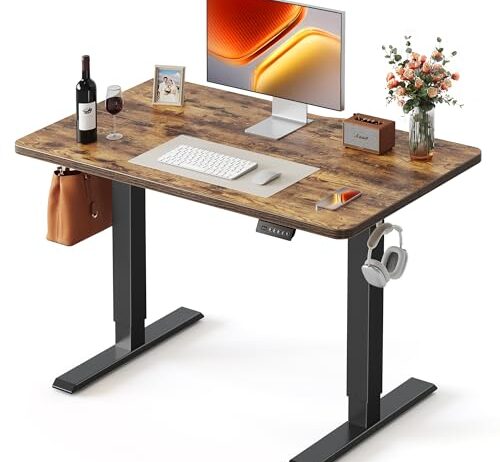
The FEZIBO standing desk uses electric lifting columns that lock position through motor braking — a fundamentally different retention mechanism from elastic or bracket friction. Once the motor stops, the column holds. There’s no elastic to fatigue, no bracket to work loose from the wall. The holding force doesn’t decay with time in the same way.

What does change is frame rigidity. Bolted connections between the legs, crossbar, and desktop experience vibration from every height adjustment, every bump of a knee against the underside, every time you lean on the edge. Over hundreds of cycles, those bolted joints can self-loosen — the fasteners back off incrementally, introducing play that shows up as wobble.

The splice-board construction — a two-piece desktop — adds a variable. If the connection between the two halves has any play, it amplifies the perceived wobble at height because the top flexes where a single-piece surface wouldn’t. At 40 by 24 inches, the desktop is compact enough that this effect stays minor, but it’s worth checking the seam bolts when you check the frame bolts.

At maximum height extension, any standing desk wobbles more than at minimum. A telescoping column’s resistance to lateral deflection drops dramatically as it extends — the physics relate to unsupported length, not build quality. If the desk feels solid at sitting height and shaky at standing height, that’s the column geometry, not a defect. Tightening all frame bolts and ensuring the leveling feet sit flat is the only user-side fix, and it’s worth doing every few months.

Why wobble gets worse at height — and where it stops being fixable

A telescoping column’s resistance to bending is proportional to the fourth power of its diameter and inversely proportional to the cube of its unsupported length. In plain terms: making the column a little wider helps a lot, and extending it a little higher hurts a lot.

This is why every height-adjustable desk, regardless of price, wobbles more at maximum extension. The column hasn’t changed. The desk hasn’t degraded. The physics of a cantilevered tube simply work against you as the free length grows. A desk that’s rock-solid at 28 inches can have a noticeable shimmy at 46.

Most height-adjustable desks lack cross support between the legs — the crossbar runs front-to-back, not side-to-side. This means lateral forces (pushing sideways against the desk edge while typing, or the inertia of heavy monitors when the desk adjusts) meet the least structural resistance. Adding a monitor arm that clamps to the rear edge shifts weight behind the column line, which can introduce a rearward lean at height that wasn’t present with monitors sitting directly on the surface.

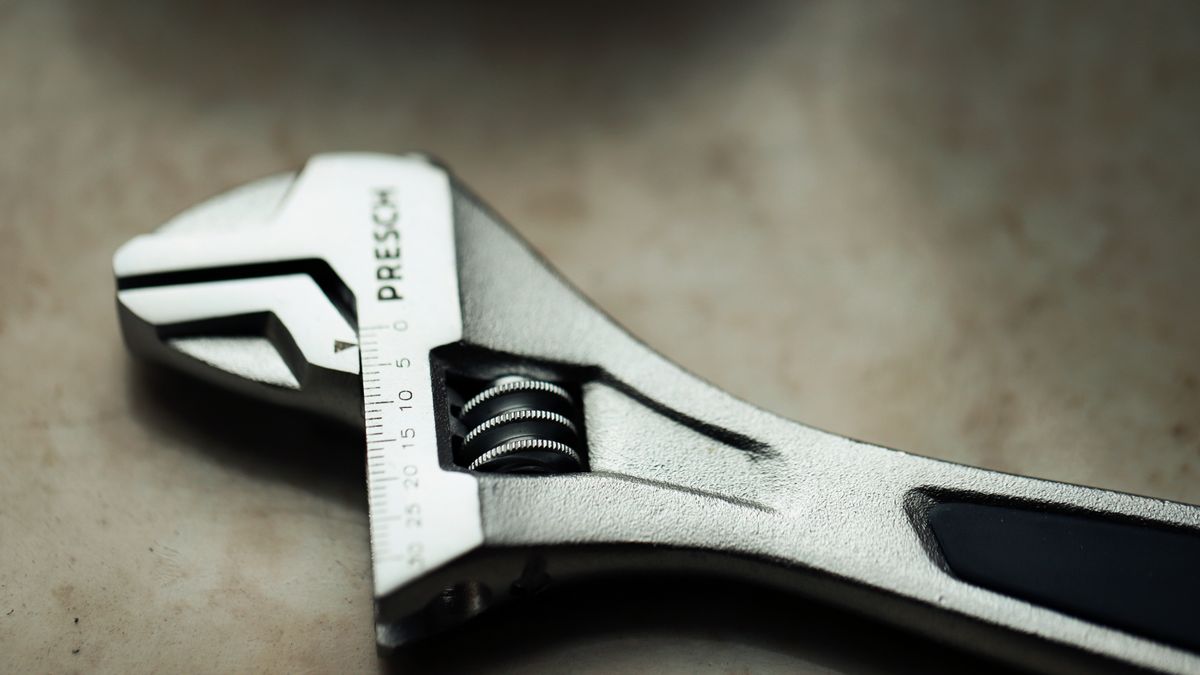
The leveling feet matter more than most people realize. A desk with one foot slightly off the floor rocks at every height. At maximum extension, that rock is magnified by the lever arm of the full column length. Five minutes with a wrench on the adjustable feet eliminates a surprising amount of what feels like structural wobble.

Fixing slippage by mechanism type

Once you know which retention system your product uses, the fix follows directly.

Elastic tension (bed skirts): Safety pins through the elastic band into the mattress fabric add a mechanical anchor that doesn’t rely on friction. Upholstery clips accomplish the same thing without puncturing the mattress. Both bypass the elastic’s grip entirely, which means the skirt stays put even after the elastic relaxes. Replacing the elastic — rather than the whole skirt — is possible with basic sewing, but the replacement elastic needs to be shorter than the mattress perimeter by 15 to 20 percent to generate sufficient initial tension.

Bracket friction (motorized blinds): Check screws every six months. If a screw spins freely, the hole is stripped — fill it with a wooden toothpick and wood glue, let it cure, then re-drive the screw into solid material. For custom-width blinds, add a center bracket if the span exceeds 48 inches. Toggle bolts instead of drywall screws provide dramatically more holding force if you’re mounting into hollow wall.

Motor braking (standing desks): If the desk drifts downward after you set the height, the motor’s holding current or brake mechanism may be failing — that’s a warranty issue, not a user fix. If it wobbles but holds position, tighten every bolt in the frame, check the splice-board connection, and level the feet. Do this quarterly.

FAQ

Why does my bed skirt keep slipping even though it fit perfectly when I installed it?

The elastic fibers inside the band fatigue from repeated stretching — every sheet change pulls the elastic past its resting length. Over 60 to 90 days, cumulative tension loss reduces the friction between the band and your mattress until the skirt slides freely. The elastic itself is degrading, not the fit.

Is it normal for a standing desk to wobble at the highest setting?

Yes. A telescoping column’s resistance to lateral bending drops sharply as it extends, because the unsupported length increases while the tube diameter stays the same. Every height-adjustable desk wobbles more at maximum height — it’s column geometry, not a defect. Tightening frame bolts and leveling the feet minimizes it.

How do I stop motorized blinds from slowly sliding down?

Check the mounting bracket screws first — a quarter-turn of loosening from vibration or thermal cycling is usually the cause, not the motor. If a screw spins in its hole, the hole is stripped: fill it with a toothpick and wood glue, let it cure overnight, then redrive the screw. For blinds wider than 48 inches, adding a center support bracket prevents the span from sagging.

Can I fix a bed skirt’s elastic instead of replacing the whole skirt?

You can. Remove the old elastic, measure the mattress perimeter, and cut replacement elastic to about 80-85 percent of that measurement — the shortfall creates the tension that holds the skirt in place. Sew it into the existing channel. Alternatively, bypass the elastic entirely with upholstery clips or safety pins that anchor the fabric directly to the mattress.

Why does my adjustable desk drift down slightly after I set the height?

Downward drift means the motor’s braking mechanism isn’t holding the column position under load. This is distinct from wobble, which is a rigidity issue. Drift is typically a motor or controller fault — check your warranty, because it’s not solvable with bolt tightening or leveling.