
We research every product we recommend. We may earn a commission from the links on this page.
Tools & Home Improvement › Job Site Lighting

Why Your 10,000-Lumen Work Light Dies After a Few Minutes

We compare published specifications and marketplace data. We do not test these products.

Work Light Runtime Drops When Brightness Climbs
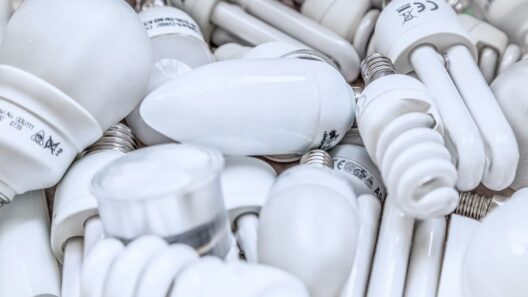
Photo by Brett Jordan on Pexels

A 6,000mAh battery powering a 100W LED lasts about 13 minutes at full draw — not the hours you expected. Rechargeable work light runtimes are real numbers attached to the lowest brightness mode, not the one you bought the light for. Here’s how to read the actual relationship between lumens, battery capacity, and runtime before the light dies mid-job.

Affiliate disclosure: This article contains affiliate links. We may earn a commission if you buy through them, at no extra cost to you.

Everything we looked at
4 picks

How we picked

We do not test these lights on job sites. Judgments derive from published battery capacities, LED power ratings, and runtime claims in marketplace listings.

Battery capacity, not lumen count

A 10,400mAh battery outlasts a 6,000mAh unit at identical draw — watt-hours determine runtime, not peak brightness claims.

Power draw at stated modes

Runtime specs tied to the lowest mode are accurate but misleading — we calculate full-brightness duration from listed wattage and battery size.

Corded option for sustained output

Mains-powered lights eliminate battery math entirely — constant brightness without runtime anxiety or recharge cycles.

Total cost, not bare-tool price

An $39.99 light head is no bargain without the $89 battery and $49 charger — we account for the complete kit cost.


A 10,000-Lumen Light With a 6,000mAh Battery: Do the Math

Battery capacity is measured in milliamp-hours — a unit of charge, not energy. To get energy, you multiply by voltage. A single lithium-ion cell runs at 3.7 volts nominal. A 6,000mAh cell at 3.7V holds 22.2 watt-hours of energy. That’s it. That’s the tank.

Now look at the engine. A light rated at 100W, if it actually draws 100W continuously, drains 22.2 watt-hours in about 13 minutes. Not 13 hours. Thirteen minutes.

So either the light doesn’t actually draw 100W at its highest setting, or it doesn’t sustain 10,000 lumens for any useful length of time, or both. The wattage figure is likely peak — the momentary draw when the LED array first fires at maximum current before thermal management steps in and pulls the driver back. That’s standard practice in portable LED design, not deception exactly, but it means the number on the housing describes a moment, not an hour.

This is why a $17 rechargeable light can print “10,000 lumens” and “6,000mAh” on the same label without technical contradiction. Both numbers can be individually accurate. They just can’t both be true at the same time for more than a few minutes.

What “80-Hour Runtime” Actually Means

Runtime claims on rechargeable work lights are measured at the lowest brightness mode. Always. A light with five modes might drop to 5–10% of its maximum output on the dimmest setting. At that level, current draw falls to a fraction of a watt, and a 10,400mAh battery — which holds about 38.5 watt-hours at 3.7V — can genuinely sustain that trickle for days.

Eighty hours at 5% brightness is real. Eighty hours at 6,000 lumens is not.

At full output, that same battery driving a 6,000-lumen LED array drawing 60–80W would last somewhere between 30 minutes and an hour, depending on the driver’s actual efficiency and how aggressively the thermal circuit throttles the current. The light doesn’t die abruptly — lithium cells sag under load, delivering less voltage as they discharge, which means the LEDs receive less current, which means the beam gets dimmer gradually. You notice it as the white shifting slightly warmer and the throw shortening before the light finally clicks off.

None of this is hidden. It’s just not explained. The runtime figure is technically the runtime. The brightness figure is technically the brightness. They belong to different settings on the same dial, and the packaging never tells you which setting pairs with which number.

Why Dimming Buys More Time Than You’d Expect

Cut an LED to half brightness and you don’t just halve the power draw — you cut it by 60–70%. LEDs operate on a curve: at lower current, each electron produces light more efficiently. The junction runs cooler, the phosphor converts more cleanly, and the driver wastes less energy as heat. So dropping from 6,000 lumens to 3,000 doesn’t cut your runtime in half — it roughly triples it.

This is the single most useful thing to understand about rechargeable work lights. The middle brightness mode is where the engineering actually works. Full blast is for brief tasks — inspecting a joint, reading a label, checking a color. Sustained lighting for a four-hour job needs the second or third setting, where the battery can keep up with the draw and the LEDs aren’t fighting their own heat.

Lights with five modes give you finer control over this trade-off than lights with two. That’s not a spec-sheet advantage — it’s a practical one. The difference between 40% and 60% brightness might be the difference between finishing a job on one charge and reaching for a headlamp at hour three.

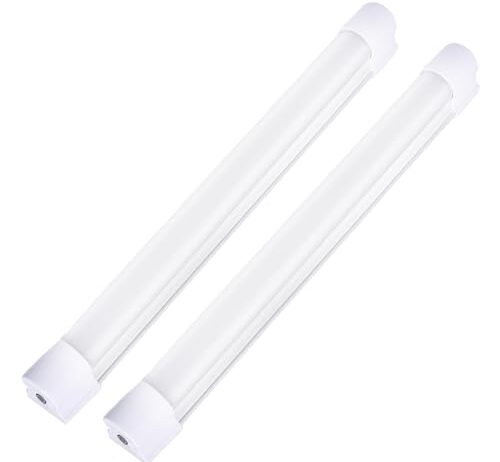
The LETOUR’s 10,400mAh battery holds roughly 38.5 watt-hours at nominal voltage — 73% more stored energy than the MASMEJOR’s 6,000mAh cell. That gap matters less at the lowest setting, where both lights sip current, and matters enormously at the second or third brightness level, where the smaller battery is already sagging while the larger one still has headroom.

Five lighting modes let you park the output where the draw matches the job. Wiring a junction box at arm’s length doesn’t need 6,000 lumens — it needs enough to see wire colors clearly, which is closer to 1,500. At that level, the 10,400mAh cell is barely working. The 80-hour claim is the lowest mode. Realistic mid-mode runtime is probably four to six hours per unit, which is where the two-pack format starts making sense: one charges while the other works.

At $79.99 for two units, the per-light cost is $40 — comparable to the Cat, which ships without a battery at all. You’re getting the cells included, and they’re large enough to be useful beyond a fifteen-minute window.

Corded vs. Rechargeable: The Brightness That Doesn’t Fade

A corded work light plugged into a wall outlet draws from mains power through a regulated AC-to-DC converter. The voltage doesn’t sag. The current doesn’t taper. The brightness at hour four is the brightness at minute one.

That consistency is worth more than the lumen count. A rechargeable light rated at 6,000 lumens delivers 6,000 lumens for the first few minutes, then gradually less as the battery discharges and the voltage drops. A corded light rated at 5,500 lumens delivers 5,500 lumens until you unplug it or the power goes out. Over a full work session, the corded light puts more total light on the subject despite the lower peak number.

The trade-off is obvious: you need an outlet, and you need an extension cord. On a construction site with temporary power, that’s fine. In a crawl space, a field, or on a roof, it’s not an option. The decision isn’t which is better — it’s whether you have AC power where you need light. If yes, corded wins on every performance axis except portability. If no, you’re managing a battery, and the rest of this article is about how to manage it honestly.

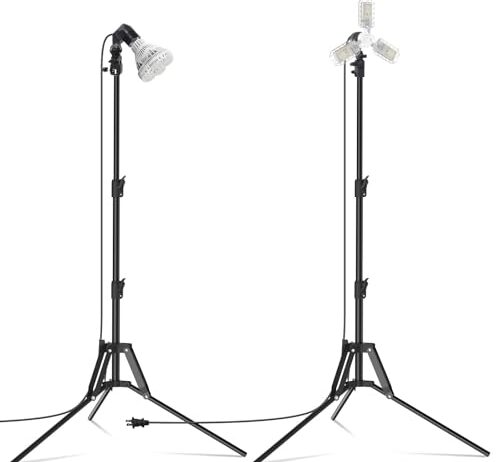
The SANSI runs corded, which eliminates every problem this article is about. No battery capacity to calculate, no voltage sag to watch, no runtime anxiety at the three-hour mark. The light at 5,500 lumens is the light at 5,500 lumens, from plug-in to plug-out.

Two output levels — 5,500 lumens and 3,300 lumens — show the non-linear relationship between brightness and power draw in a way the battery models obscure. The high setting draws the equivalent of 365W incandescent; the low, 300W equivalent. Dropping brightness by 40% only reduces the power-equivalent by 18%, because the LED is still running within a fairly efficient range at both levels. With mains power, that ratio is academic — your outlet doesn’t care. But it illustrates why battery lights gain so much runtime from a relatively small brightness reduction.

The telescoping tripod is the other practical advantage. Most rechargeable work lights sit on a surface or stick to steel with a magnet. A tripod puts light above the work plane, which changes the shadow pattern entirely — you see into cavities and behind obstructions instead of lighting the front face of everything at bench height. At $75.50, you’re paying for the stand as much as the light.

The Tool Battery Question

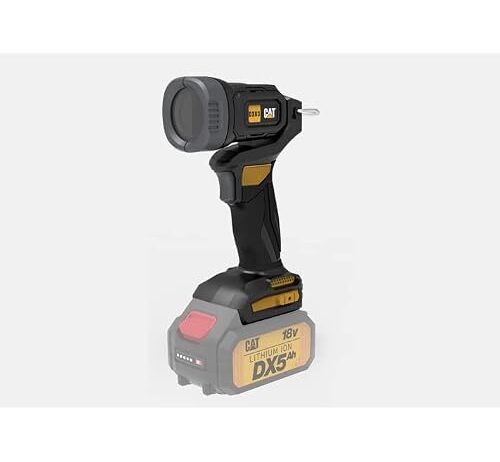
The Cat DX63B takes 18V cordless tool batteries — the same ones that run drills, impact drivers, and circular saws. No battery ships in the box. At $39.99, you’re buying a light head and housing, nothing more.

If you already own a shelf of 18V packs, this is the cheapest way to get a work light with a serious battery behind it. An 18V pack at 4.0Ah holds 72 watt-hours — more than three times the energy in the MASMEJOR’s built-in cell, and nearly double the LETOUR’s. A 6.0Ah pack holds 108 watt-hours. Runtime at any given brightness setting scales directly with that stored energy, so the same light head could last two hours or eight depending on which battery you pull off the charger.

If you don’t own compatible batteries, the math reverses. A single 18V 4.0Ah battery runs $50–$90 depending on the platform. Add that to the $39.99 light and you’re paying more than the LETOUR two-pack, for one light, with no charger. The tool-only model is a genuine value play inside an ecosystem and a bad deal outside one. There’s no middle ground.

Solar Panels on Work Lights: What 3 Watts Gets You

Integrated solar panels on portable lights generate 1 to 5 watts in direct sun. A light drawing 60W at its working brightness would need the panel to be twelve to sixty times larger to keep up. The panel isn’t powering the light. It’s trickle-charging the battery when the light is off.

In full sun over a full day — eight hours of good exposure — a 3W panel puts back roughly 24 watt-hours. That’s enough to replenish a 6,000mAh cell from dead to full, once, slowly. If you’re on a multi-day camping trip and can leave the light face-up in sunlight between uses, the panel extends the number of nights you get light. If you’re on a job site and need the light running during the day, the panel contributes nothing meaningful. It cannot charge while sustaining any useful output level.

Solar is a recovery feature, not a power source. Judge the light on its battery and draw. If the solar panel is a bonus on a light you’d buy anyway, fine. If it’s the reason you’re choosing this model over one with a larger battery, reconsider.

How to Estimate Real Runtime Yourself

The formula is simple. You need three numbers: battery capacity in mAh, battery voltage (usually 3.7V for a single lithium cell, 18V or 20V for tool packs), and the wattage draw at the brightness you plan to use.

Step one: convert mAh to watt-hours. Multiply mAh by voltage, divide by 1,000. A 10,400mAh cell at 3.7V: 10,400 × 3.7 ÷ 1,000 = 38.5 watt-hours.

Step two: divide watt-hours by the draw. If the light pulls 40W at a medium setting: 38.5 ÷ 40 = 0.96 hours — just under an hour. At 10W on a low setting: 38.5 ÷ 10 = 3.85 hours.

The catch is that manufacturers rarely publish wattage at each brightness level. You usually get the peak wattage and the total lumen count. As a rough guide, LEDs in consumer work lights produce about 80–100 lumens per watt after thermal and driver losses. So a 3,000-lumen output implies roughly 30–38W of draw. That’s an estimate, not a guarantee, but it gets you within the right hour, which is more than the printed runtime does.

FAQ

How long does a rechargeable LED work light actually last at full brightness?

Most rechargeable work lights last 30 minutes to 2 hours at their highest brightness setting, depending on battery capacity and actual wattage draw. The advertised runtime — often 20, 50, or 80 hours — is measured at the lowest mode, which may be 5–10% of maximum output. To estimate full-brightness runtime, convert battery capacity to watt-hours (mAh × voltage ÷ 1,000) and divide by the light’s wattage.

Does dimming an LED work light to 50% double the battery life?

It more than doubles it. Cutting brightness to 50% typically reduces power draw by 60–70%, not just 50%, because LEDs run more efficiently at lower current. So halving the brightness can roughly triple your runtime, making mid-level settings the practical sweet spot for sustained use.

Can a solar panel on a work light keep it running while it’s on?

No. Integrated solar panels on portable lights generate 1–5 watts. A work light at working brightness draws 30–100 watts. The panel can trickle-charge the battery when the light is off — replenishing a full charge over a day in direct sun — but it cannot meaningfully sustain the light during use.

Is a corded work light brighter than a rechargeable one?

Not necessarily brighter at peak, but brighter over time. Battery-powered lights lose brightness as voltage sags during discharge. Corded lights draw from mains power through a regulated converter, delivering the same brightness from start to finish. Over a four-hour session, a corded light rated at 5,500 lumens puts more total light on the work than a rechargeable rated at 6,000.

How do I calculate the real runtime of a work light from its battery specs?

Multiply the battery’s mAh by its voltage, then divide by 1,000 to get watt-hours. Divide watt-hours by the light’s wattage at your chosen brightness. Example: a 10,400mAh battery at 3.7V holds 38.5Wh. At 40W draw, that’s about 58 minutes. At 10W, nearly 4 hours. Manufacturers rarely list wattage per mode, but LEDs in consumer lights produce roughly 80–100 lumens per watt, so you can estimate draw from the lumen output.