A water filter rated for 1,000 gallons doesn’t last 1,000 gallons in your house. That number comes from a lab running challenge water with known hardness and contaminant levels through the media under controlled pressure. Your tap water carries a different load — more calcium if you’re in Phoenix, more sediment if you’re on a well, more chlorine if the municipal plant just bumped dosing for summer. Every milligram of material the filter captures or adsorbs is capacity spent, and heavier water spends it faster. The gallon count on the box is a starting point, not a guarantee, and most people discover this only when taste changes or flow drops to a trickle weeks ahead of schedule.
Affiliate disclosure: This article contains affiliate links. We may earn a commission if you buy through them, at no extra cost to you.
Everything we recommend
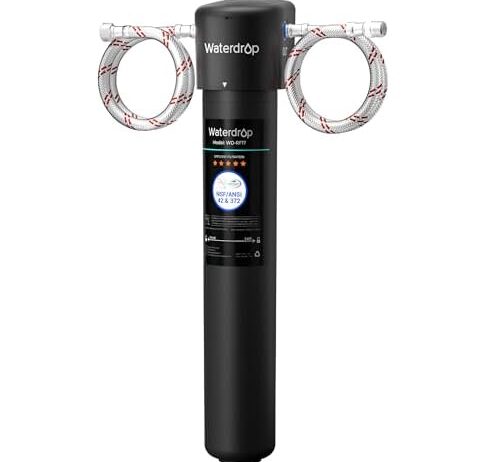
Longest replacement cycle, lowest annual cost
Waterdrop 17UA Under Sink Water Filter System, 3 Years | Under Sink Water Filtration System, Reduces PFAS, PFOA/PFOS, Lead, Chlorine, Under Sink Water Filter, NSF/ANSI 42 CertifiedUnder-sink carbon block with a three-year cartridge, NSF/ANSI 42 certified, reduces PFAS and lead — set it and check flow rate seasonally.
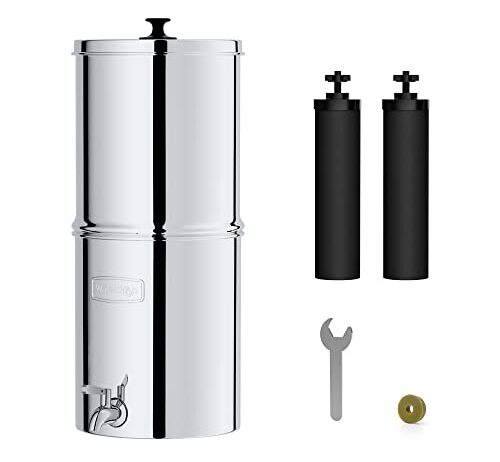
No power, no plumbing, no pretense
Waterdrop TK-A Gravity Water Filter System, NSF/ANSI 42&372 Certified | Reduces Lead and Up to 98% of Chlorine, with 2 Black Carbon Filters and Metal Spigot for Home, Travel, 2.25GGravity-fed carbon filter at $99.99, NSF/ANSI 42 and 372 certified — effective for chlorine and lead in municipal water, portable enough to move between apartments.
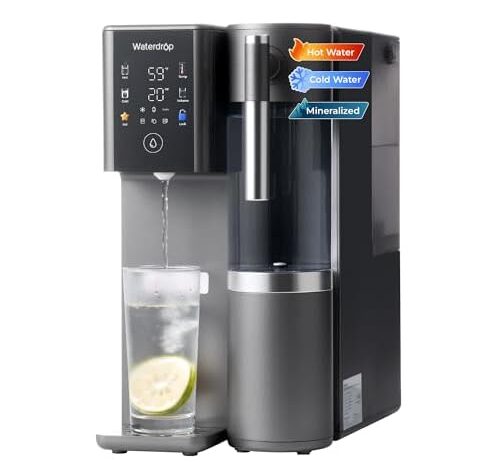
RO with a built-in kettle
Waterdrop A2G Mineral Reverse Osmosis System Countertop, Instant Hot & ColdCountertop reverse osmosis with remineralization and instant hot and cold dispensing — replaces a filter, a kettle, and a water cooler if you use all three.
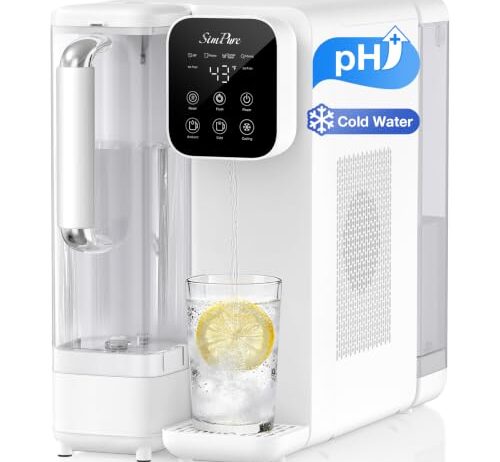
RO plus UV for untreated sources
SimPure Y11C-A Cold Reverse Osmosis Water Filter Countertop, UV RO SystemCountertop RO with UV sterilization — the UV stage matters if your water comes from a well or rainwater catchment without chemical disinfection.
A carbon block filter and a reverse osmosis membrane both remove things from water. They do it in completely different ways, and that difference determines how your water quality affects their lifespan.
Carbon works by adsorption. Contaminant molecules bind to the internal surface area of the carbon through van der Waals forces — weak attractions that hold molecules in place on the pore walls. A carbon block compresses granular carbon into a solid matrix with uniform pore size, which forces water into longer contact with the media and improves capture efficiency. But the total number of binding sites is fixed. Every chlorine molecule, every organic compound, every trace of lead that sticks to a pore wall is one fewer site available for the next gallon. When the sites fill, the filter passes contaminants through as if it weren’t there.
RO works by rejection. Water is forced under pressure through a semi-permeable membrane with pores small enough to block dissolved ions. The membrane doesn’t capture contaminants the way carbon does — it deflects them. But dissolved minerals, especially calcium and magnesium, concentrate at the membrane surface as water passes through. When that concentration exceeds the solubility limit, the minerals precipitate as scale directly on the membrane. Scale is a physical barrier. It reduces water flux — the volume that can pass through per unit time — and eventually chokes the membrane until replacement.
Both mechanisms exhaust. But carbon exhausts by filling up, and RO exhausts by crusting over. The distinction matters because they respond to different things in your water.
How we picked
We did not install or run these filters. Selections are based on published specifications, filtration technology, and owner-reported experience.
RO membrane rejection, carbon adsorption, and gravity feed each exhaust differently under hard water. We picked across all three.
A stated lifespan matters less than whether the system gives you a way to detect exhaustion — flow rate drop, TDS creep, or taste change.
Under-sink and countertop systems face different replacement friction. We included both so the tradeoff is visible.
NSF/ANSI 42 certifies chlorine taste reduction under tested conditions. Where certification status is absent, we say so and weigh accordingly.